What Is Hexarelin Acetate?
Hexarelin is a synthetic six amino acid peptide in the growth hormone releasing peptide (GHRP) family. It was developed in the early 1990s as a more stable analog of GHRP-6 and is supplied for research as hexarelin acetate, the acetate salt form of the peptide.
Hexarelin is studied mainly for two reasons. First, it is a potent agonist of the growth hormone secretagogue receptor (GHS-R1a), the same receptor that responds to the hormone ghrelin. Second, it binds a separate receptor, CD36, which has made it a tool in cardiovascular research that is independent of growth hormone.
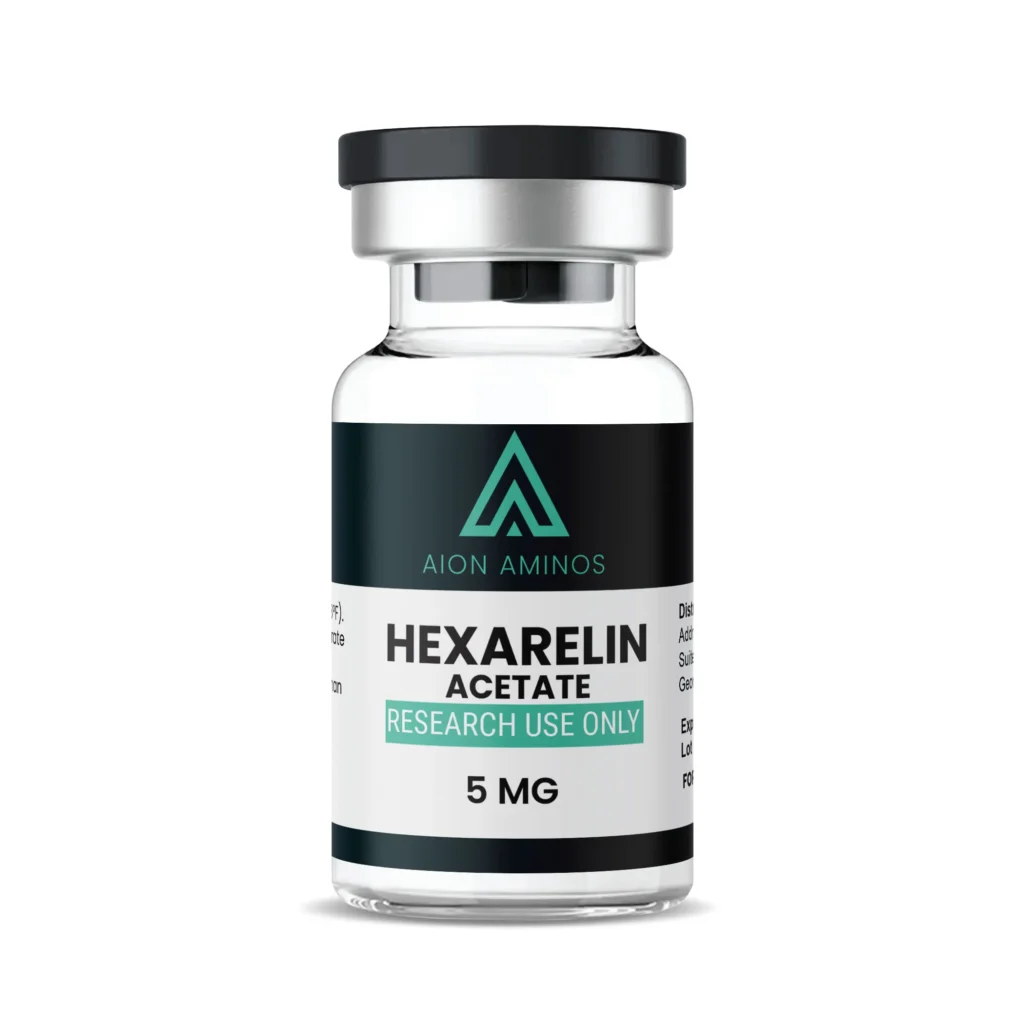
The Aion Aminos Hexarelin Acetate is supplied as a 5 mg lyophilized powder for laboratory research use only.
Structure and Chemistry
Hexarelin’s sequence is His-D-2-methyl-Trp-Ala-Trp-D-Phe-Lys-NH2. Compared with GHRP-6, it carries a methyl group on the D-tryptophan residue, a change that was designed to improve chemical stability and receptor activity.
- Class: Synthetic hexapeptide, growth hormone secretagogue
- Molecular weight: approximately 887 g/mol (free base)
- Form: Acetate salt, lyophilized white powder
- Key structural features: Two D-amino acids and a C-terminal amide, which slow enzymatic breakdown
Mechanism of Action in Research Context
GHS-R1a and the Growth Hormone Axis
In pituitary and hypothalamic models, hexarelin activates GHS-R1a and triggers growth hormone release. This effect is separate from, and can add to, the GHRH pathway that peptides such as CJC-1295 act on. That is why GHRPs and GHRH analogs are often studied together. Our article on the growth hormone and IGF axis gives more background.
Studies in the 1990s also reported that hexarelin can raise prolactin and ACTH/cortisol at higher exposures, making it less selective than some later secretagogues such as ipamorelin.
CD36 Binding and Cardiovascular Research
Hexarelin is unusual among GHRPs because it also binds CD36, a scavenger receptor found on heart muscle cells, blood vessel cells and macrophages. Animal studies have used hexarelin to examine:
- Cardiac function in models of ischemia and reperfusion
- Heart muscle remodeling after experimental injury
- Cholesterol handling in macrophages through CD36 and PPARγ signaling
Several of these effects were seen in growth hormone deficient animals, which suggests they do not depend on growth hormone release.
Receptor Desensitization
Repeated or continuous exposure to hexarelin has been reported to reduce the growth hormone response over time, a pattern known as desensitization or tachyphylaxis. This is an important variable for any study design that involves repeated exposure.
Areas of Research Interest
- Growth hormone secretion: Comparison with other secretagogues such as GHRP-2, GHRP-6 and ipamorelin
- Cardioprotection: CD36-mediated effects in ischemia models
- Muscle and metabolism: Effects on muscle tissue and metabolic markers in animal models
- Receptor pharmacology: How structure changes affect potency and selectivity
Hexarelin Compared With Related Peptides
- GHRP-6: The parent compound. Hexarelin is generally reported as more potent and more stable.
- Ipamorelin: A newer GHS-R1a agonist that is reported to have little effect on cortisol and prolactin, making it more selective.
- Tesamorelin and CJC-1295: These act on the GHRH receptor rather than GHS-R1a. See our tesamorelin and CJC-1295 product pages.
What the Research Does Not Show
- Most hexarelin data come from animal models and small, short human pharmacology studies from the 1990s and early 2000s.
- Hexarelin is not approved by the FDA for any medical use.
- Cardiovascular findings in animals have not been established as effects in people.
Product Specifications and Laboratory Handling
- Amount: 5 mg per vial
- Form: Lyophilized powder
- Storage: Cold and away from light before reconstitution, typically -20°C for long-term storage
- After reconstitution: Refrigerate at 2 to 8°C and avoid repeated freeze and thaw cycles
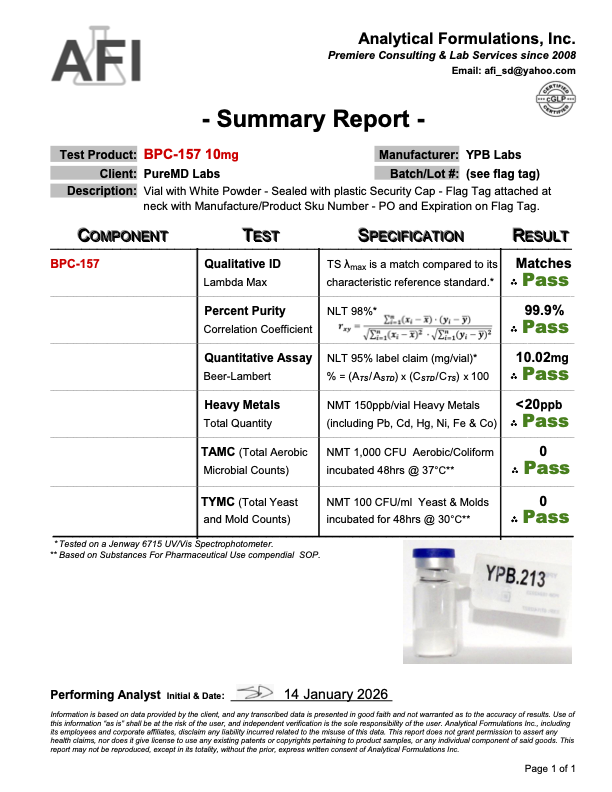
- Verification: Check the certificate of analysis on the product page for identity, purity and amount
See our reconstitution lab guide and COA guide for more detail.
Summary
Hexarelin acetate is a potent synthetic GHRP that activates the ghrelin receptor and also binds CD36, giving it a place in both growth hormone and cardiovascular research. Its main research caveats are lower selectivity than newer secretagogues, desensitization with repeated exposure, and an evidence base that is mostly preclinical.
Research Use Only Statement
Hexarelin Acetate from Aion Aminos is sold strictly for laboratory research use only. It is not intended for human or animal consumption and is not a drug, food, supplement or cosmetic. Nothing in this article is medical advice or a claim that any product diagnoses, treats, cures or prevents any disease.