$129.00
You’ll be briefly redirected to Link Money, our secure ACH payment partner, to connect your bank and complete payment.
– Your bank login is never visible to or stored by us
– Encrypted, bank-level security
– A standard, trusted payment process
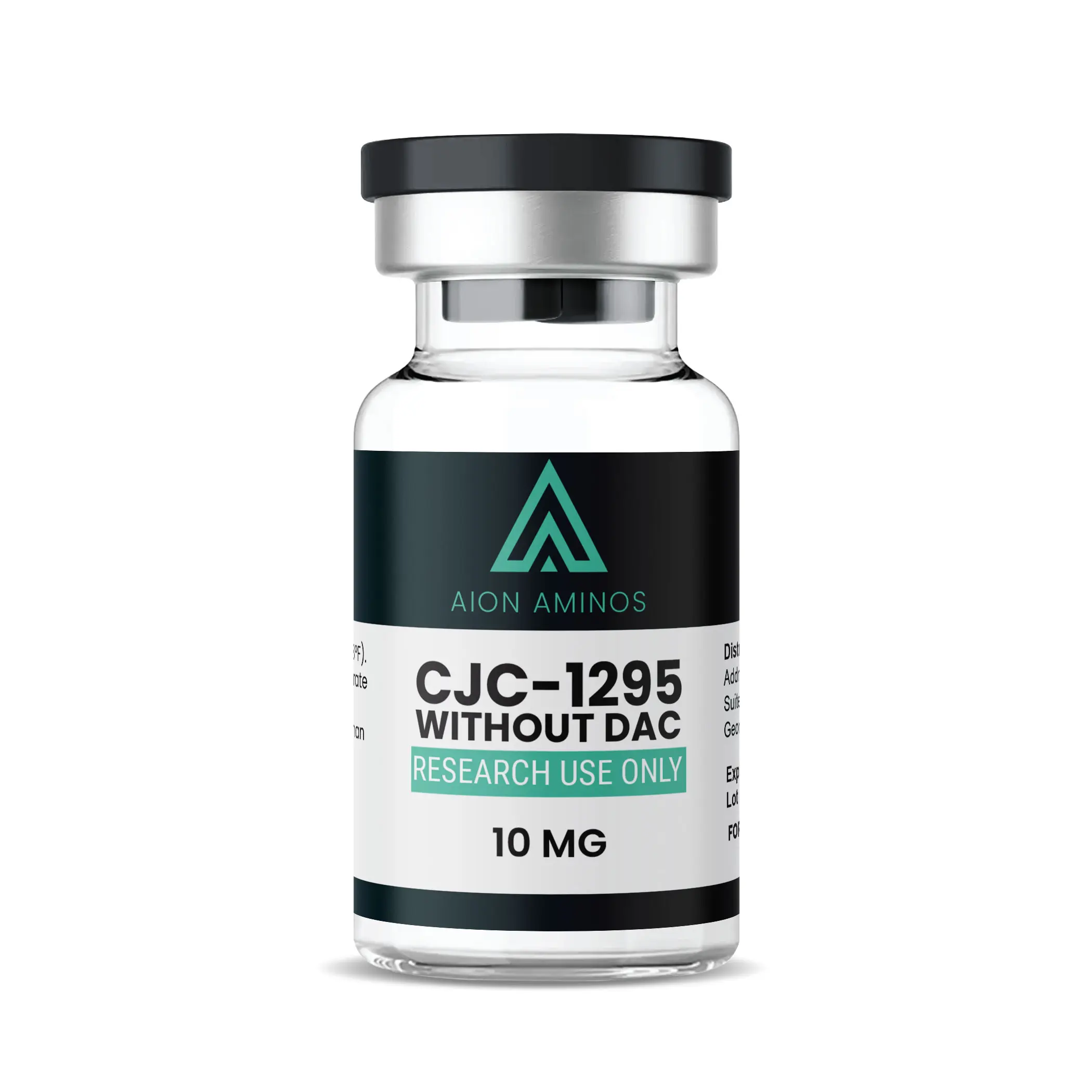
In laboratory studies, the No DAC form is examined to investigate growth hormone releasing hormone signaling and its relationship to endocrine regulation. Researchers frequently characterize how the peptide interacts with the GHRH receptor in pituitary models and how that interaction associates with GH release and downstream signaling pathways. Comparative research applications position the No DAC form alongside the DAC peptide including catalog presentations such as the DAC 5mg format to isolate the contribution of the Drug Affinity Complex to signaling duration.
Experimental models within research settings often focus on transient or pulsatile endocrine signaling patterns, allowing investigators to analyze how short-acting GHRH analogs relate to pulsatile GH release, gh pulse dynamics, and natural GH pulse patterns observed in animal and in vitro systems. Studies commonly reference GH secretion, GH levels, and GH release across time, and may measure associated parameters such as IGF 1 levels and IGF 1 elevation, comparing the compound’s profile with endogenous GHRH within laboratory research.
Scientific literature spanning preclinical models and clinical research examines how GHRH analogs interact with broader hormonal signaling networks. Experimental documentation in animal models may reference injection methodologies, injection site observations, and dose-response relationships strictly within research protocols — for example, characterizing how a given dose relates to signaling output, how repeated dose intervals influence receptor behavior, and how physiological parameters such as water retention are recorded in preclinical models. All such investigations remain confined to laboratory research purposes and do not represent approved therapeutic applications. Buyer assumes full responsibility for proper handling and research use.
CJC 1295 No DAC is used for research use in laboratory studies exploring GH release, GH secretion, GH levels, and gh pulse dynamics. Researchers examine its interaction with the GHRH receptor and its association with IGF 1 levels within controlled research settings. As a research peptide, it is commonly compared with the DAC peptide to characterize the role of the Drug Affinity Complex in peptide stability and signaling duration. No information is provided regarding human use.
Unlike CJC 1295 DAC, CJC 1295 No DAC does not incorporate a Drug Affinity Complex, resulting in a shorter half-life and more transient activity. This distinction makes the No DAC form useful in laboratory research investigating natural GH pulse patterns, pulsatile GH release, and GHRH receptor behavior under repeated exposure. Comparisons between the DAC form and the No DAC form including reference formats such as DAC 5mg are valuable in comparative peptide research and preclinical models.
This lyophilized peptide is prepared through reconstitution in laboratory settings using an appropriate reconstitution solution, commonly bacteriostatic water, for research purposes only. The white lyophilized powder is handled under controlled conditions and stored according to stability requirements (for example, refrigerated conditions depending on study design) to preserve purity and 99% purity specifications. No dose, injection, or administration guidance for human use is provided; any reference to a dose, injection methodology, or injection site pertains solely to documented animal-model or in vitro research protocols.
Within research applications, the CJC 1295 peptide appears in laboratory research examining protein synthesis pathways, metabolic regulation, and endocrine signaling in preclinical models, as well as comparative studies of endogenous GHRH signaling. Experimental systems may reference injection methodologies, dose-response documentation, and parameters such as water retention or IGF 1 elevation strictly for research documentation, including studies reviewed by organizations such as the World Anti-Doping Agency. This material is distributed only to qualified research institutions for laboratory research purposes.
New to Aion? Use the code below at checkout and save 25% on your first purchase.
Valid on first purchase only. One use per customer. Cannot be combined with other offers.