$144.00
You’ll be briefly redirected to Link Money, our secure ACH payment partner, to connect your bank and complete payment.
– Your bank login is never visible to or stored by us
– Encrypted, bank-level security
– A standard, trusted payment process
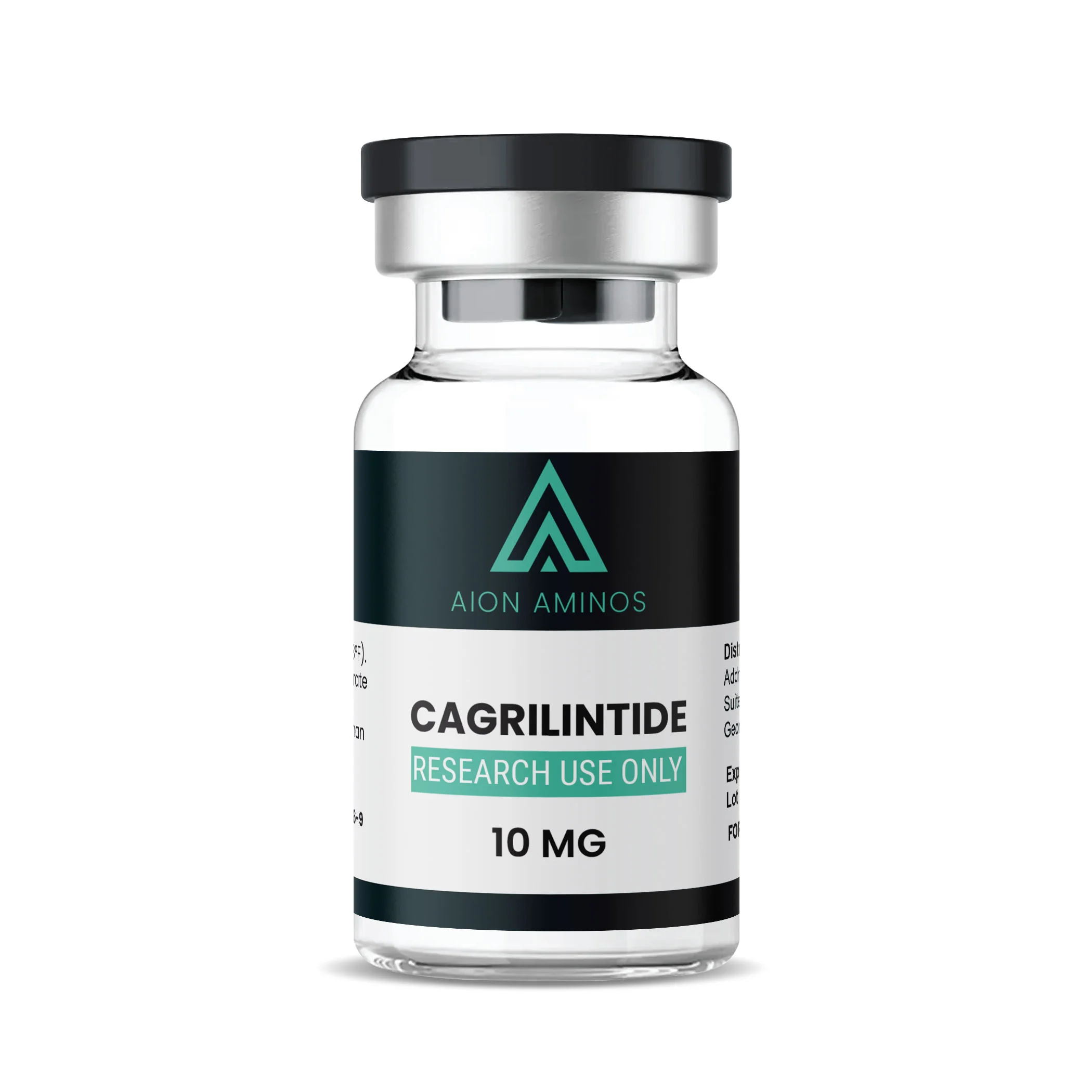
Cagrilintide is used in laboratory studies to explore amylin receptor agonist activity, calcitonin receptor agonistinteractions, weight, food intake, satiety, and gastric emptying. Researchers also study its effects on glycemic control, glucagon secretion, and appetite suppression in controlled clinical research models. It is strictly for research use and not for human consumption.
This synthetic peptide is provided as a stable, lyophilized powder, suitable for in vitro studies. It is often referenced in clinical trials, clinical studies, and preclinical models exploring metabolic health, metabolic disorder, weight, and insulin signaling. Researchers may study coadministered Cagrilintide, once weekly Cagrilintide, or Cagrilintide monotherapy protocols.
Cagrilintide supports studies on GLP-1 receptor agonists, GLP-1 therapy, GLP-1 drugs, and combination therapy. Laboratory research investigates its impact on weight, appetite, food intake, satiety, glycemic control, gastric emptying, and metabolic health pathways. Preclinical models also explore its calcitonin receptor activity, amylin analogue properties, and pharmacokinetic stability for experimental designs.
As an amylin receptor agonist, Cagrilintide interacts with the calcitonin receptor and RAMPs to regulate food intake, satiety, glycemic control, and metabolic health mechanisms. Researchers may use it in clinical studies, clinical trials, or reference case reports and New England Journal publications for in vitro experimental designs. Its effects are studied alongside insulin, GLP-1 receptor agonists, and peptide therapy models in lab research.
New to Aion? Use the code below at checkout and save 25% on your first purchase.
Valid on first purchase only. One use per customer. Cannot be combined with other offers.