
$89.00
You’ll be briefly redirected to Link Money, our secure ACH payment partner, to connect your bank and complete payment.
– Your bank login is never visible to or stored by us
– Encrypted, bank-level security
– A standard, trusted payment process
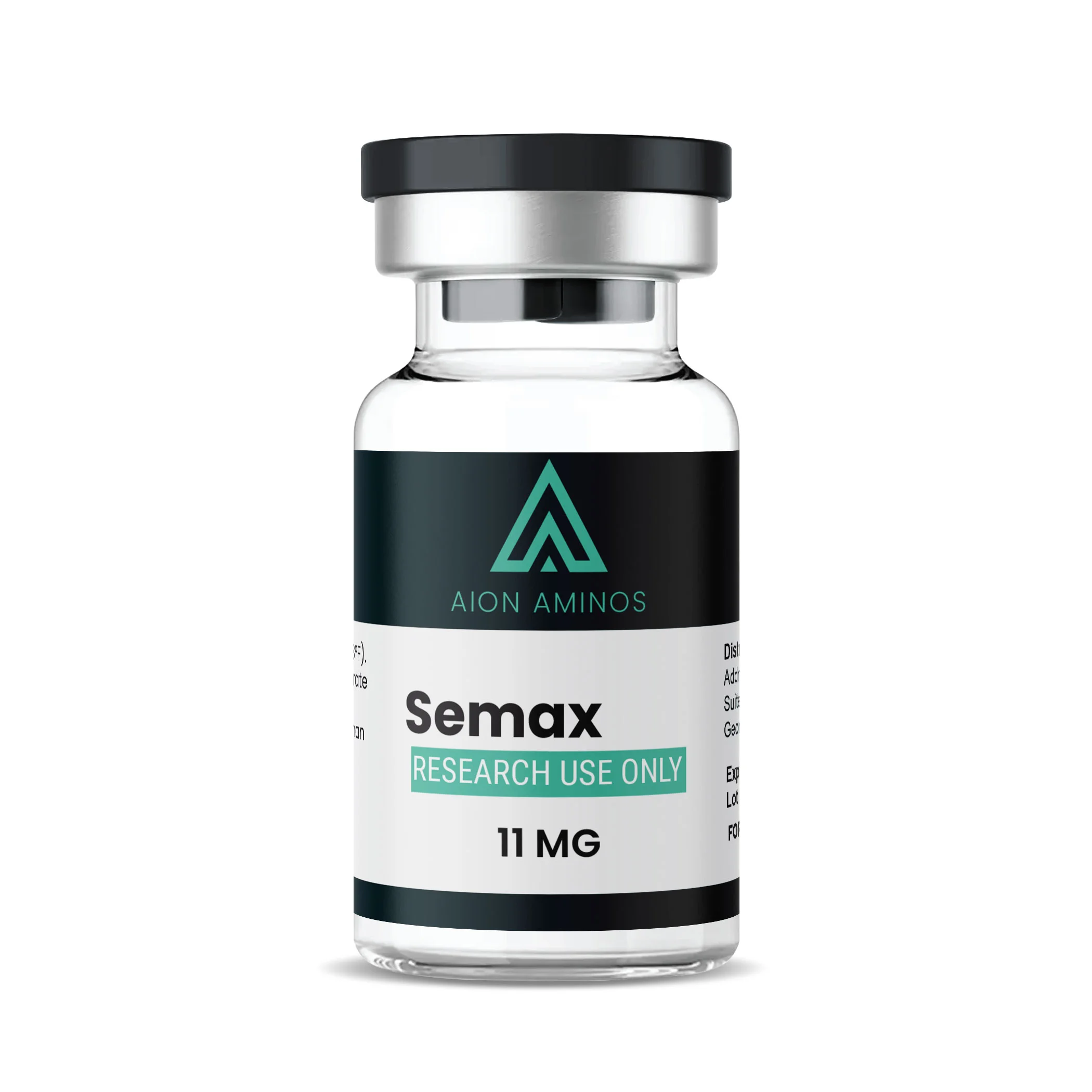
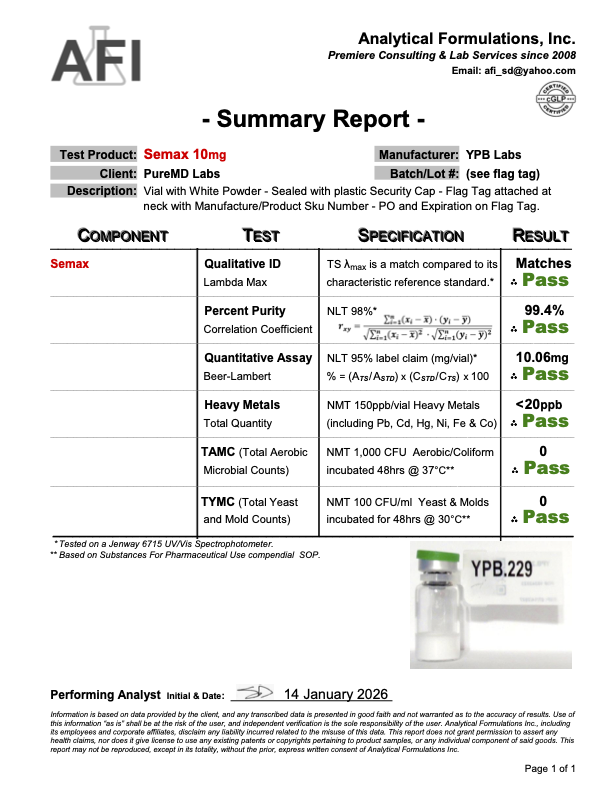
In laboratory environments, Semax peptide is studied for its interaction with neurobiological signaling pathways within the brain. Research in experimental biology frequently investigates Semax in models examining stress, neurotransmitter regulation, and neurotrophic signaling.
Scientific publications describe investigations involving brain derived neurotrophic factor, neuronal signaling, and cellular pathways related to oxidative stress in neural systems. Additional research examines how Semax interacts with pathways involved in synaptic plasticity, neurochemical communication, and brain cell signaling mechanisms.
Academic literature also references experimental frameworks studying cognitive function, cognitive performance, mental performance, and theoretical models related to cognitive decline, cognitive disorders, and neurodegenerative diseases. Studies in these areas often involve animal studies exploring neurological signaling under conditions such as chronic stress, mental fatigue, or experimentally induced neurological models such as brain injury or ischemic stroke.
Research discussions may reference behavioral or neurological outcomes related to mood regulation, anxiety, and stress-adaptive pathways. These references are confined strictly to laboratory research contexts and do not represent approved medical application.
Not approved for peptide therapy or medical application
Semax peptide is a synthetic heptapeptide derived from a fragment of adrenocorticotropic hormone. It is studied in laboratory settings for its role in neurobiological signaling and central nervous system research.
No. This product is not Semax nasal spray, not intranasal Semax, and is not formulated for administration. It is supplied strictly as a research-grade peptide powder.
No. Although scientific literature may explore mechanisms related to cognitive enhancement, cognitive function, and brain health, this product is not approved for peptide therapy or any therapeutic use.
Research publications reference experimental models examining anxiety, neurological signaling, and stress-related pathways in laboratory systems and animal studies. These investigations remain confined to research contexts and do not represent approved medical use.
New to Aion? Use the code below at checkout and save 25% on your first purchase.
Valid on first purchase only. One use per customer. Cannot be combined with other offers.