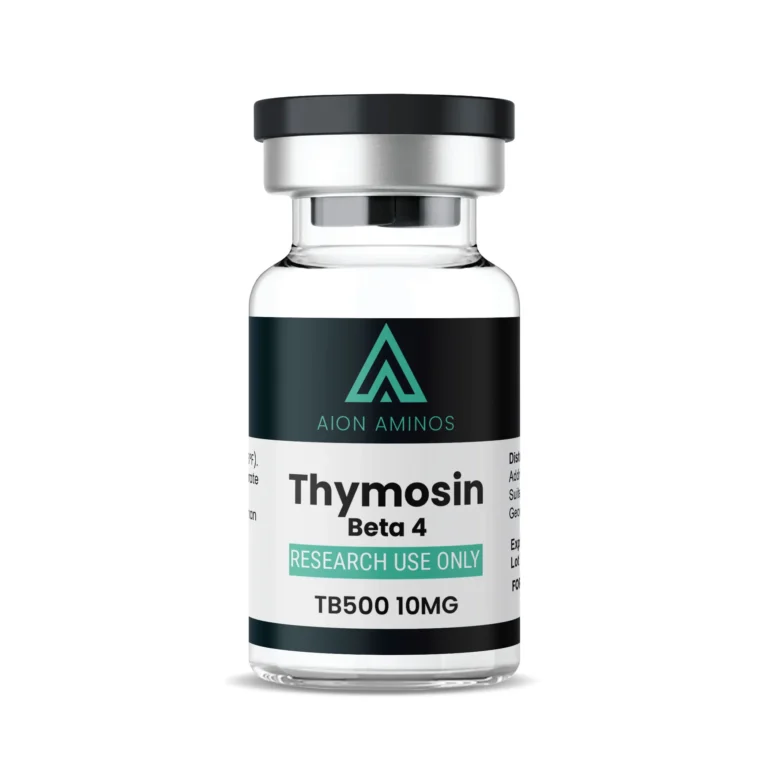
A peptide blend is a single lyophilized vial that holds two or more research peptides at fixed, labeled amounts. Instead of reconstituting several separate vials, a lab works from one vial with a known ratio of each component. This guide explains why labs use blends, how a research blend is put together and verified, and how the four Aion Aminos peptide blends compare.
All Aion Aminos peptide blends are supplied for laboratory research use only. They are not drugs, supplements or cosmetics, and they are not intended for human or animal use.
What Is a Peptide Blend?
A peptide blend (sometimes called a peptide stack or combination vial) combines peptides that are often studied side by side. Each component is labeled by mass, for example 10 mg of one peptide and 10 mg of another, so the total vial content is the sum of its parts. Once reconstituted, every withdrawal carries the same ratio of components.
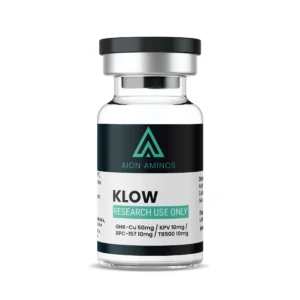
Blends are usually named after their components or after a shorthand the research market has settled on. KLOW, for example, takes its name from the earlier GLOW blend with the K standing for KPV, the extra peptide it adds.
Why Research Labs Use Peptide Blends
- A fixed ratio. Every draw from the vial contains the same proportion of each peptide, which removes one source of variation between runs.
- Fewer handling steps. One reconstitution and one vial to track instead of two, three or four.
- Side-by-side pathway work. Peptides with overlapping literature, such as those studied in tissue signaling models, can be examined together.
There are trade-offs. A blend cannot be adjusted one component at a time, so studies that need to vary a single peptide, or include a single-peptide control, still need individual vials such as BPC-157, GHK-Cu or KPV.
How a Research Blend Is Put Together
- Choosing components. Peptides are grouped because they appear together in the research literature or are studied in the same models.
- Setting the ratio. Each component is assigned a labeled mass. The ratio stays fixed for the life of the vial.
- Combining and lyophilizing. The peptides are combined and freeze-dried together into a single cake, so the powder holds every component in the labeled proportion.
- Testing. HPLC should resolve a separate peak for each peptide, and mass spectrometry should confirm the identity of each component. A blend COA is more complex than a single-peptide COA for exactly this reason.
Aion Aminos Peptide Blends Compared
Amounts below are as labeled per vial. Always confirm against the vial label and the certificate of analysis for your lot.
| Blend | Components (labeled) | Total | Studied in |
|---|
| KLOW Blend | GHK-Cu 50 mg, BPC-157 10 mg, TB-500 10 mg, KPV 10 mg | 80 mg | Tissue signaling, extracellular matrix and inflammatory pathway models |
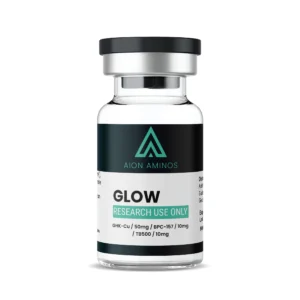
| GLOW Blend | GHK-Cu 50 mg, BPC-157 10 mg, TB-500 10 mg | 70 mg | Copper peptide and extracellular matrix models |
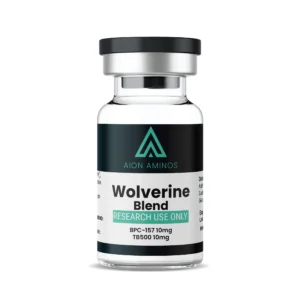
| Wolverine Blend | BPC-157 10 mg, TB-500 10 mg | 20 mg | Tissue repair models |
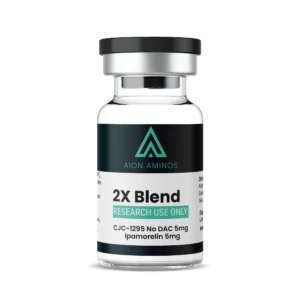
| 2x Blend | CJC-1295 (no DAC) 5 mg, Ipamorelin 5 mg | 10 mg | Growth hormone secretagogue and pituitary signaling models |
Peptide Blends vs Single Peptides
| Peptide blend | Single-peptide vials |
|---|
| Ratio | Fixed by the label | Set by the lab |
| Handling | One vial to reconstitute and track | One vial per peptide |
| Study design | Good for combined, side-by-side work | Needed for single-variable work and controls |
| COA | Several peaks to check | One main peak to check |
Reconstituting a Peptide Blend
A blend is reconstituted the same way as a single peptide, with one diluent for the whole vial. The difference is the math: the volume you add sets the concentration of every component at once.
For example, a Wolverine Blend vial labeled 10 mg BPC-157 and 10 mg TB-500 reconstituted with 2 mL of Reconstitution Solution contains 5 mg/mL of each peptide (10 mg/mL total). Record both the total and the per-component concentration on the vial label.
Our reconstitution lab guide covers technique, and our 10 mL vs 30 mL guide helps you pick a diluent vial size.
Reading a Blend Certificate of Analysis
On a blend COA, look for one identified peak per component on the HPLC chromatogram and a mass spectrometry result for each peptide. If a component is missing from the report, ask for it. Our guide on how to read a peptide certificate of analysis explains each section.
Browse research peptide blends
KLOW, GLOW, Wolverine and 2x blends with third-party lab testing. For research use only.
Frequently Asked Questions
Is a peptide blend weaker than single peptides?
Not necessarily. Each component is present at its labeled amount. The difference is that the ratio between components is fixed.
Can I mix single peptide vials into my own blend?
Combining separately reconstituted vials adds handling steps, contamination risk and uncertainty about compatibility and stability in solution. A manufactured blend is tested as a finished product.
What does "2x" mean in 2x Blend?
It refers to the two components, CJC-1295 without DAC and Ipamorelin, in a single vial.
How should peptide blends be stored?
Like single peptides: lyophilized vials cold and away from light as labeled, and reconstituted material refrigerated, avoiding repeated freeze and thaw cycles.