Short answer: the 10 mL and 30 mL vials hold the same reconstitution solution, sterile water with 0.9% benzyl alcohol. The only differences are volume and cost per mL. Pick the 10 mL vial if you reconstitute a few peptide vials a month. Pick the 30 mL vial if you will use most of the 30 mL within 28 days of the first puncture, which is the usual discard point for a preserved multi-withdrawal vial.
Aion Aminos Reconstitution Solution is a laboratory diluent for reconstituting lyophilized research peptides. It is for research use only and is not intended for human or animal use.
10 mL vs 30 mL at a Glance
| 10 mL vial | 30 mL vial |
|---|
| Formula | Sterile water with 0.9% benzyl alcohol | Sterile water with 0.9% benzyl alcohol |
| Volume | 10 mL | 30 mL |
| Container | Sealed, sterile glass multi-withdrawal vial | Sealed, sterile glass multi-withdrawal vial |
| Peptide vials covered at 2 mL each | About 5 | About 15 |
| Peptide vials covered at 1 mL each | About 10 | About 30 |
| Cost per mL (listed price, Nov 2026) | $1.20 | $0.80 |
| Discard after first puncture | 28 days | 28 days |
| Best for | Small studies and occasional use | Higher throughput and multi-vial studies |
Coverage figures are approximate. A little volume is always lost to the needle hub and the bottom of the vial, so plan for slightly less than the nominal volume.
Same Formula, Different Volume
Both sizes are the same diluent that many labs call bacteriostatic water. The 0.9% benzyl alcohol limits bacterial growth after the stopper has been punctured, which is what allows several sterile withdrawals from one vial. If you are unsure how this compares to plain sterile water, our reconstitution solution vs bacteriostatic water lab guide covers it in detail.
The 28-Day Rule Decides the Size
A preserved multi-withdrawal vial is generally discarded 28 days after it is first punctured, and sooner if the solution turns cloudy or shows particles. That rule is the same for both sizes, so a bigger vial does not last longer once opened. What matters is how much of it you will actually use in those 28 days.
- If you will use 10 mL or less in 28 days, the 10 mL vial avoids waste.
- If you will use more than 10 mL, one 30 mL vial costs less than three 10 mL vials and means fewer new vials to open.
- If you will use well under 30 mL, the unused volume in a 30 mL vial is discarded, which can cancel out the lower cost per mL.
How to Choose: Three Questions
1. How many peptide vials will you reconstitute in 28 days?
Count the lyophilized vials you expect to bring into solution during the next four weeks.
2. How much diluent does each one take?
Multiply the number of vials by the volume you add to each. A lab reconstituting three vials with 2 mL each needs about 6 mL, so the 10 mL vial fits. A lab reconstituting ten vials with 2 mL each needs about 20 mL, so the 30 mL vial is the better buy.
3. How many punctures will the stopper take?
Every withdrawal is a chance to introduce contamination or core the stopper. A 30 mL vial used heavily will see more punctures than a 10 mL vial, so technique matters even more: swab the stopper with alcohol before each entry, use a fresh sterile needle every time and never return unused liquid to the vial.
Storage and Handling
- Store unopened vials at controlled room temperature, away from light.
- Write the date of first puncture on the label.
- Discard 28 days after first puncture, or sooner if the solution looks cloudy or contains particles.
- Add diluent slowly down the side of the peptide vial and swirl gently rather than shaking.
New to reconstitution? Our lab handling guide covers concentration math step by step, and our COA guide explains how to check what is in each peptide vial.
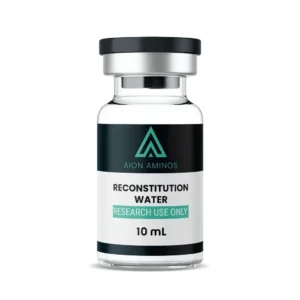
Reconstitution Solution 10 mL
Sealed 10 mL multi-withdrawal vial. Suits small studies and occasional use.
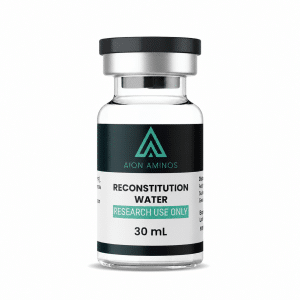
Reconstitution Solution 30 mL
Larger 30 mL vial at a lower cost per mL for multi-vial studies.
Frequently Asked Questions
Is reconstitution solution the same as bacteriostatic water?
Yes. Both names describe sterile water with 0.9% benzyl alcohol. “Reconstitution solution” describes the job it does in the lab, while “bacteriostatic water” describes the preservative effect.
Does the 30 mL vial last longer after opening?
No. The 28-day guideline after first puncture applies to both sizes. The 30 mL vial only saves money if you use most of it within that window.
Can I use plain sterile water instead?
Sterile water without a preservative is meant for a single withdrawal. For a vial you will enter more than once, a preserved diluent such as reconstitution solution is the usual choice.
Which size do most labs choose?
Labs running occasional or single-peptide work usually choose 10 mL. Labs working through several peptide vials or peptide blends each month often move to 30 mL.