Introduction
Growth hormone releasing peptides are a class of peptide compounds studied in clinical endocrinology for their interaction with pathways that regulate growth hormone signaling. Growth hormone is a critical peptide hormone involved in numerous physiological processes, including growth, metabolism, and cellular communication.
Rather than supplying human growth hormone directly, these growth hormone peptides are investigated for how they influence upstream signaling pathways that regulate growth hormone release, gh secretion, and overall hormone levels.
These peptides are often discussed in broader contexts such as peptide therapy, hgh peptide therapy, or growth hormone therapy, but their primary role remains within controlled research environments.
The Growth Hormone Signaling Axis
The regulation of growth hormone involves a coordinated system of signaling between the brain and endocrine tissues.
Hypothalamus
The hypothalamus produces regulatory signals including:
- Growth hormone releasing hormone (GHRH), which stimulates gh release
- Somatostatin, which inhibits growth hormone secretion
These signals act as a releasing factor that controls downstream endocrine communication.
Pituitary Gland
The pituitary gland contains specialized cells called pituitary somatotrophs, which respond to GHRH receptor activation by releasing growth hormone into circulation.
Peripheral Tissues
Once released, growth hormone influences tissues throughout the body and stimulates production of insulin like growth factor (IGF-1), which mediates many downstream effects related to growth, muscle, and metabolism.
Why Researchers Study Growth Hormone Releasing Peptides
Researchers investigate growth hormone releasing peptides to better understand how endocrine signaling is regulated.
Studying GH Pulsatility
Growth hormone is released in pulses rather than continuously. These pulses influence gh levels, receptor signaling, and endocrine balance. Studying gh releasing peptide activity helps researchers understand these rhythms.
Investigating Receptor Signaling
These peptides interact with specific receptors such as:
- GHRH receptor
- Growth hormone secretagogue receptor (also known as the ghrelin receptor)
This allows scientists to study gh response, receptor activation, and endocrine feedback loops.
Understanding Endocrine Regulation
Because these compounds influence upstream pathways, they are useful for studying how the hypothalamus and pituitary gland coordinate hormone signaling.
Types of Growth Hormone Releasing Peptides
GHRH Analogs
These synthetic peptide compounds mimic growth hormone releasing hormone and act on the GHRH receptor.
Examples include:
These are studied for their influence on growth hormone production, gh secretion, and signaling patterns similar to native GHRH.
Ghrelin Receptor Agonists
These compounds activate the ghrelin receptor, also known as the growth hormone secretagogue receptor.
Examples include:
These growth hormone secretagogue compounds are studied for their ability to stimulate gh release through alternative pathways involving ghrelin signaling.
Key Peptides in Research
CJC-1295
A GHRH Analog
CJC-1295 is a synthetic peptide designed to mimic growth hormone releasing hormone. It interacts with the GHRH receptor on pituitary somatotrophs, influencing growth hormone secretion.
- Without DAC: shorter activity, closer to natural signaling
- With DAC: extended activity due to binding properties
Ipamorelin
A Selective Ghrelin Receptor Agonist
Ipamorelin is an hgh peptide that activates the ghrelin receptor, stimulating gh release through growth hormone secretagogue pathways.
It is studied for selective receptor activation in endocrine signaling models.
Tesamorelin
A Stabilized GHRH Analog
Tesamorelin closely resembles native GHRH but includes structural modifications that enhance stability. It is studied for its role in growth hormone secretion and endocrine rhythm regulation.
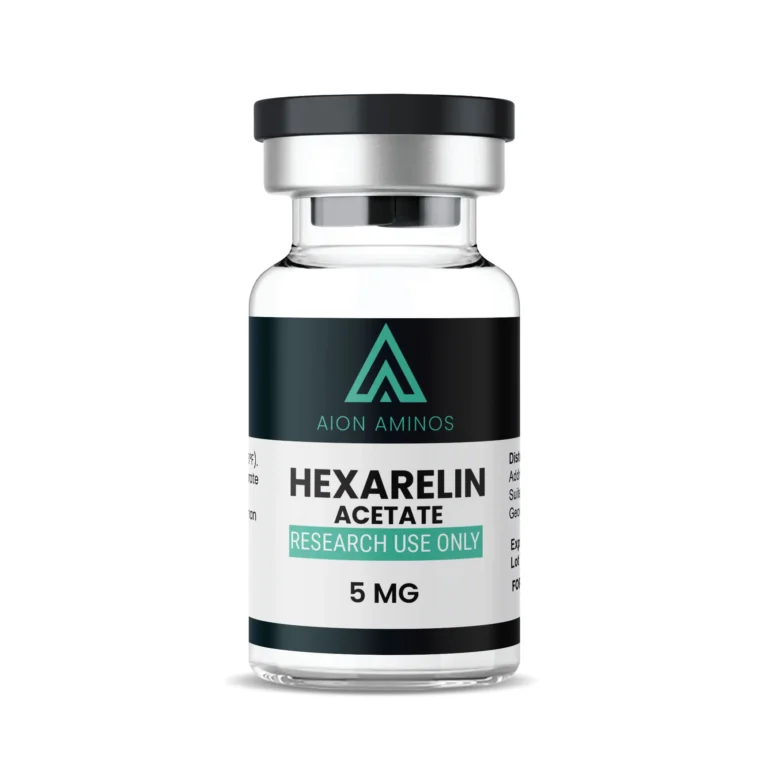
Hexarelin
A Potent GH Secretagogue
Hexarelin is another growth hormone secretagogue that activates the ghrelin receptor, influencing gh secretion and receptor signaling pathways.
Growth Hormone and Biological Processes
Growth hormone plays a role in numerous biological systems, including:
- Muscle growth and muscle mass regulation
- Cellular growth and development
- Insulin sensitivity and metabolic signaling
- Regulation of body fat and energy balance
These processes are often studied in models involving gh deficiency, growth hormone deficiency, and endocrine signaling disruptions such as insulin resistance.
GH Pulsatility and Hormone Balance
One of the defining features of growth hormone signaling is its pulsatile release pattern.
Researchers studying growth hormone releasing peptides often analyze:
- Timing and amplitude of gh release
- Variations in gh levels
- Interactions with downstream signals such as insulin like growth factor
Understanding this pulsatility is essential for studying endocrine regulation and hormone levels.
Research Context and Clarification
While growth hormone peptides, hgh peptides, and injectable peptides are often discussed in consumer contexts such as:
- Peptide therapy
- Growth hormone therapy
- HGH peptide therapy
these terms differ significantly from controlled research applications.
These compounds are not equivalent to synthetic hormones used clinically and are not approved for treating hgh deficiency or gh deficiency unless explicitly regulated.
Summary
Growth hormone releasing peptides are valuable tools in endocrine research, allowing scientists to study how growth hormone signaling is regulated at the receptor and cellular level.
Compounds such as CJC-1295, Ipamorelin, Tesamorelin, and Hexarelin interact with:
- GHRH receptor pathways
- Ghrelin receptor signaling
- Endocrine feedback systems controlling growth hormone release
By examining these pathways, researchers gain insight into the biological mechanisms underlying growth, metabolism, and hormonal regulation.
Research Use Disclaimer
This article is provided for scientific and educational discussion only.
All peptide compounds referenced are intended for laboratory research use and are not approved for human or veterinary use unless explicitly stated under regulatory frameworks. They are not drugs and are not intended to diagnose, treat, cure, or prevent any disease.