
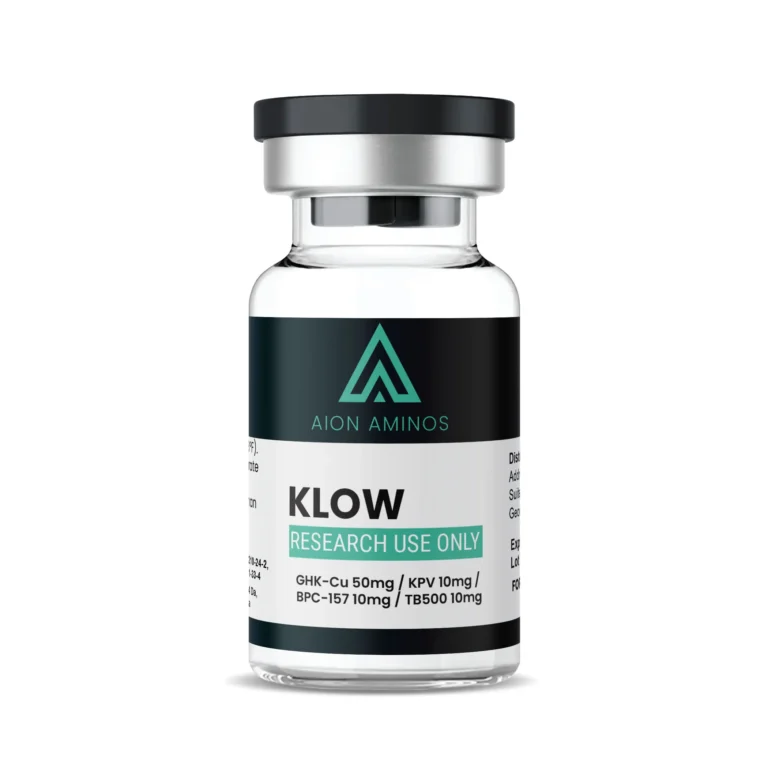
KLOW Peptide Blend: A Research Overview of GHK-Cu, BPC-157, TB-500 and KPV
What the KLOW peptide blend contains, how each of its four components is studied in laboratory models, and what the research does and does not show.
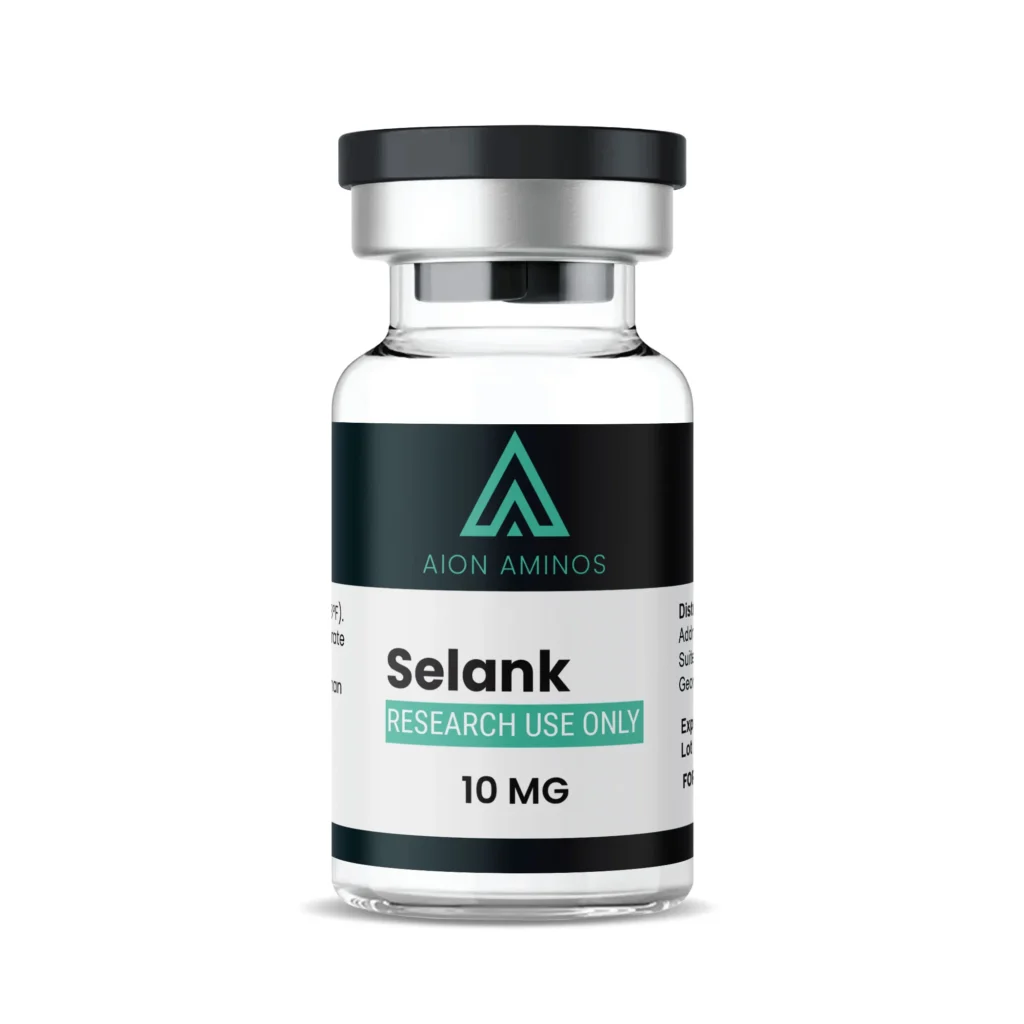
Selank is a synthetic peptide studied in laboratory research examining neurotransmitter signaling, neuroendocrine communication, and stress-response pathways. Derived from the endogenous immune peptide tuftsin, selank is investigated in experimental biology as a tool for understanding how peptide signaling molecules interact with the central nervous system.
Because the nervous system relies on complex signaling molecules to coordinate communication between neurons, the peptide selank is frequently examined in research models exploring neuropeptide signaling, regulatory networks, and the modulation of neurotransmitter systems. Aion Aminos supplies selank strictly as a research peptide for qualified researchers conducting work in controlled laboratory settings.
Selank is a synthetic peptide developed as a modified analog of tuftsin, a naturally occurring tetrapeptide involved in immune system signaling. The compound was originally developed in Russia through collaborative work associated with the Russian Academy of Sciences and the V.V. Zakusov Research Institute of Pharmacology, where researchers studied neuropeptide signaling within the central nervous system.
As a synthetic peptide composed of seven amino acids, selank is examined in research exploring how peptide derivatives influence neurotransmitter and neuroendocrine communication. The peptide selank remains a frequently studied compound in experimental biology because it sits at the intersection of immune signaling and neural regulation.
Selank is a synthetic heptapeptide built from seven amino acids. The peptide sequence described in research literature is:
Thr-Lys-Pro-Arg-Pro-Gly-Pro
This structure was designed as an analog of tuftsin, a four-amino-acid immune peptide derived from the Fc fragment of immunoglobulin G (IgG). The structural modifications applied to create selank allow researchers to examine how a stabilized peptide can influence neurotransmitter signaling and neuroendocrine pathways within experimental models.
In laboratory research, selank has been studied for its interaction with several biological signaling systems associated with neurobiology. Research examining the selank mechanism often focuses on the modulation of neurotransmitter pathways within the central nervous system.
A significant portion of selank research examines interactions with the GABA receptor system. Because gamma-aminobutyric acid (GABA) is a primary inhibitory neurotransmitter, studies have explored how selank may relate to GABAergic modulation. Animal-model research has investigated anxiolytic effects and anxiety-reduction signaling, examining how selank interacts with pathways relevant to generalized anxiety and stress reactivity. Research literature exploring anxiety relief in experimental contexts often references these GABA receptor interactions, though such findings remain confined to controlled research settings rather than human-use claims.
Selank has also been studied in research examining serotonin and dopamine communication networks. These neurotransmitters are associated with mood, emotional regulation, and emotional balance signaling. Experimental models exploring the modulation of these pathways help researchers understand how a single neuropeptide may interact with multiple neurotransmitter systems at once.
Because neuropeptides participate in stress-response signaling, selank is investigated in research examining stress, stress reduction, and the broader stress response. Studies model how peptide signaling molecules may influence the regulatory networks that coordinate the body’s response to physiological and environmental stressors.
Selank is frequently examined in research exploring cognitive signaling systems. Investigations in this area study pathways relevant to cognitive function, cognitive performance, and cognitive enhancement, as well as research models examining cognitive impairment. Related work explores signaling associated with memory, mental clarity, and mental performance.
Researchers studying these cognitive networks use selank as one of several neuropeptides that help illustrate how peptide signaling molecules may interact with learning and memory pathways in experimental biology. As with all selank research, these areas of study are observed in cellular and animal models rather than approved applications.
Because selank interacts with neurotransmitter and stress-response systems, it is studied in research contexts relevant to mental health signaling pathways, including mood and stress regulatory networks. These investigations sit within neuroscience research rather than therapeutic practice, and they help researchers map how immune-derived peptides may influence neural communication.
Research literature describes a selank nasal spray formulation used during experimental study, with intranasal delivery examined as one route of selank administration. The nasal spray format is referenced in Russian research where the peptide was investigated within controlled protocols.
Some research literature uses the term selank therapy when describing these experimental administration models. Outside of those research settings, selank is not an approved therapy of any kind and is supplied strictly for laboratory study.
Research involving selank has explored several biological systems associated with neuropeptide signaling. Areas of investigation include:
Researchers exploring the potential benefits of neuropeptide signaling examine selank within experimental biology models designed to investigate these mechanisms. Much of this research has been conducted in cellular and animal systems built to study neurobiological signaling.
Researchers studying neuropeptide signaling frequently investigate complementary compounds alongside selank. Related products and research peptides include:
Together, these compounds allow researchers to investigate multiple aspects of neural signaling biology.
Aion Aminos supplies selank with documentation to support rigorous research. Product specifications include:
Researchers should review the purity COA and confirm that handling aligns with their institutional protocols before use.
What is selank? Selank is a synthetic neuropeptide and tuftsin analog studied in research examining neurotransmitter signaling, neuroendocrine communication, and neuroimmune regulatory pathways within the central nervous system.
Is selank safe? Questions about whether selank is safe fall outside the scope of research-use materials. Because this compound has not been approved for human or veterinary use, all study remains confined to controlled research settings under qualified researcher oversight.
What is selank used for in research? Selank is used for research purposes only. Researchers study it to examine neurotransmitter modulation, anxiolytic-related signaling, stress response, and cognitive signaling systems in experimental models.
How is selank administered in research? Research literature describes routes of selank administration including intranasal delivery, often referencing a selank nasal spray formulation used in experimental protocols.
What does selank do at the receptor level? The selank mechanism studied in research includes interactions with the GABA receptor system, along with serotonin and dopamine signaling pathways, supporting investigations into the modulation of neurotransmitter networks.
For Research Use Only (RUO). This product is intended strictly for laboratory research and educational purposes by qualified researchers. Selank is not approved for human or veterinary use and is not intended to diagnose, treat, cure, or prevent any disease.
What the KLOW peptide blend contains, how each of its four components is studied in laboratory models, and what the research does and does not show.
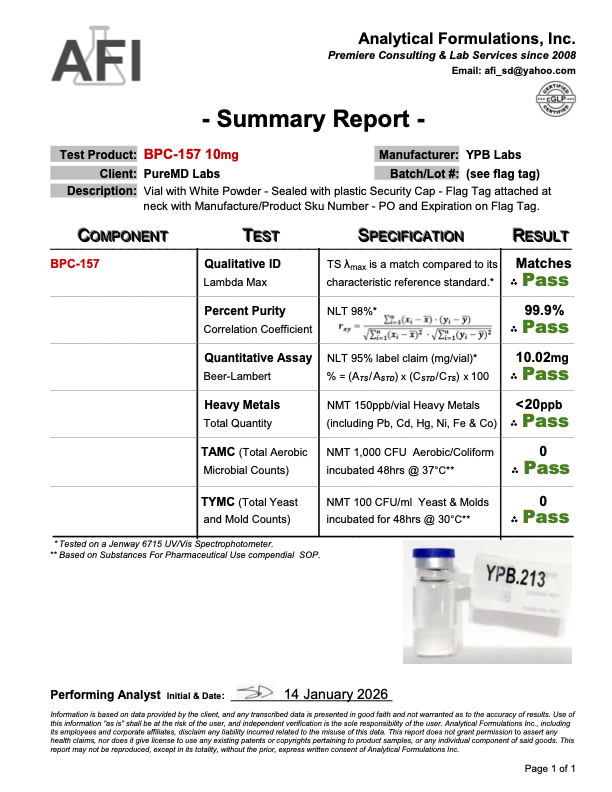
A practical guide to peptide certificates of analysis: what HPLC, mass spectrometry and UV-Vis results mean, how to read purity and assay numbers, and which red flags to watch for.
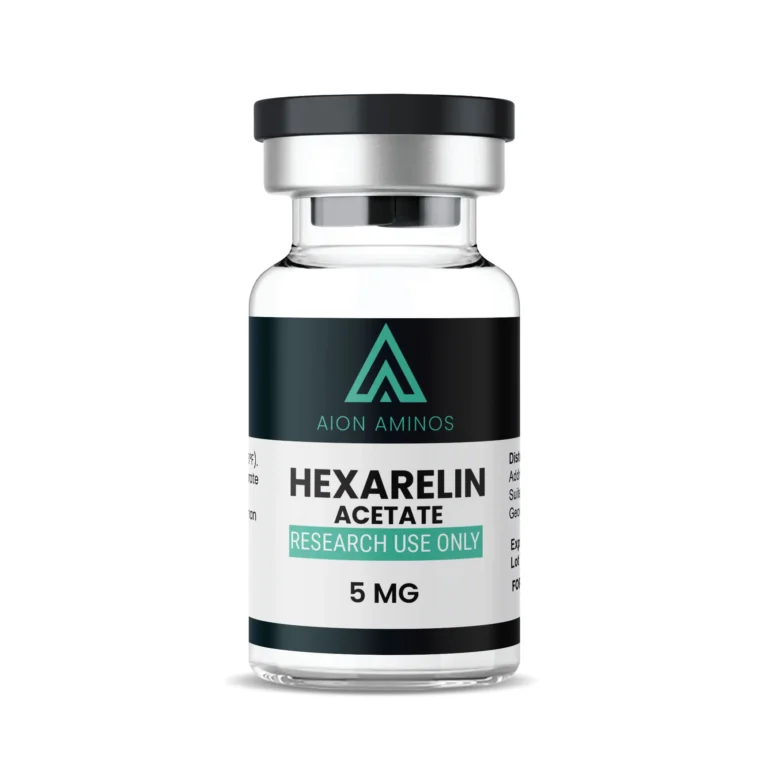
Hexarelin acetate explained for researchers: structure, receptor targets including GHS-R1a and CD36, key preclinical findings and the limits of the evidence.
New to Aion? Use the code below at checkout and save 25% on your first purchase.
Valid on first purchase only. One use per customer. Cannot be combined with other offers.