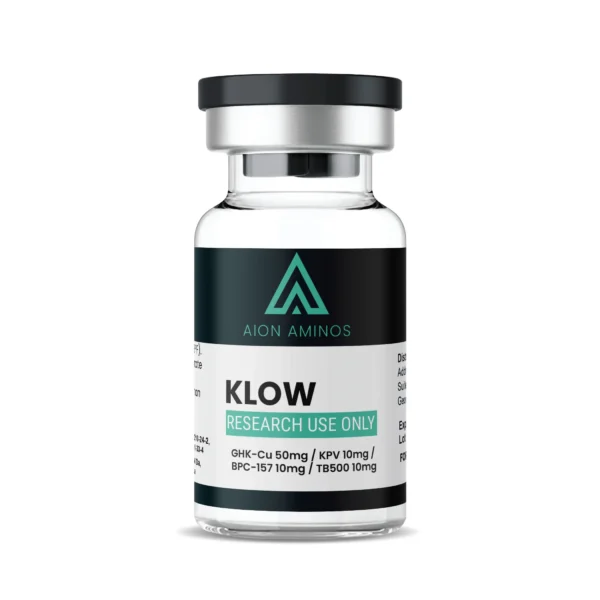
$119.00
You’ll be briefly redirected to Link Money, our secure ACH payment partner, to connect your bank and complete payment.
– Your bank login is never visible to or stored by us
– Encrypted, bank-level security
– A standard, trusted payment process
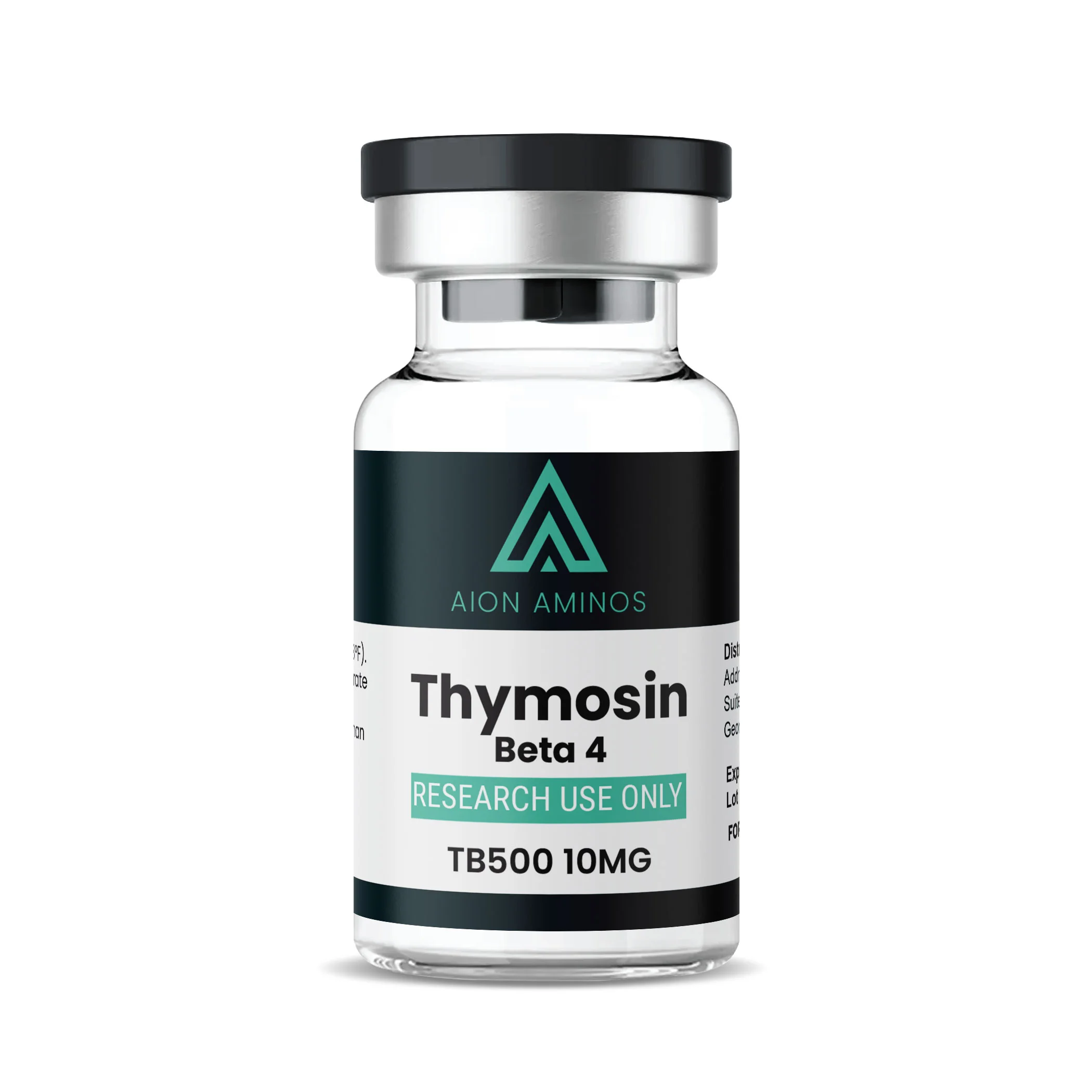
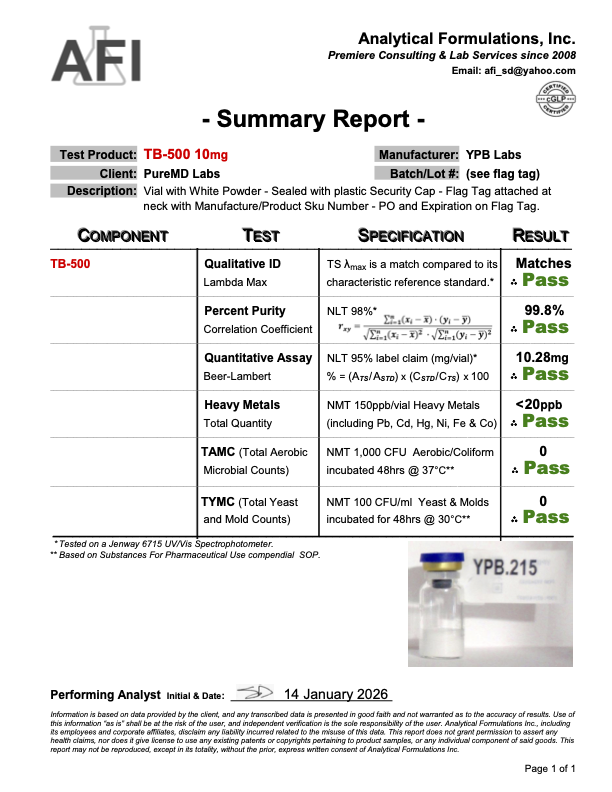
In laboratory environments, thymosin beta 4 is studied for its involvement in cellular signaling pathways associated with cell migration, cytoskeletal organization, and extracellular matrix interaction. Research frequently examines how thymosin β4 influences communication between cells during processes related to cellular repair, regeneration, and tissue-level structural adaptation.
Experimental studies often analyze biological responses associated with wound healing, tissue repair, and cellular adaptation to injury. Investigations commonly explore pathways involving angiogenesis, the formation of new blood vessels, and signaling mechanisms affecting blood flow within cellular models.
Research publications also discuss experimental models examining inflammation, chronic inflammation, and cellular responses to oxidative stress in damaged tissue or injured tissue systems. Some laboratory frameworks explore signaling processes associated with cell death, immune-related cellular communication, and broader biological pathways involved in recovery and regeneration.
Additional studies reference theoretical frameworks involving regenerative medicine, stem cell signaling pathways, and cellular responses within soft tissue models. References to conditions such as heart attack or other forms of injury appear in experimental research literature but remain confined strictly to laboratory research contexts.
Not intended for peptide therapy or human consumption
Thymosin Beta 4 is a naturally occurring peptide composed of 43 amino acids and studied in laboratory environmentsfor its role in cytoskeletal regulation, cell migration, and cellular signaling related to tissue-level biological processes.
Scientific literature commonly references thymosin beta 4 in studies examining wound healing, tissue repair, angiogenesis, and cellular signaling pathways involved in regeneration and inflammation.
Although research literature may reference peptide therapy, this product is supplied strictly for research purposes and is not intended for therapeutic use.
No. While laboratory research may investigate biological processes associated with healing, recovery, and tissue repair, this product is supplied solely for laboratory research and is not intended for human use.
New to Aion? Use the code below at checkout and save 25% on your first purchase.
Valid on first purchase only. One use per customer. Cannot be combined with other offers.