$57.00
You’ll be briefly redirected to Link Money, our secure ACH payment partner, to connect your bank and complete payment.
– Your bank login is never visible to or stored by us
– Encrypted, bank-level security
– A standard, trusted payment process
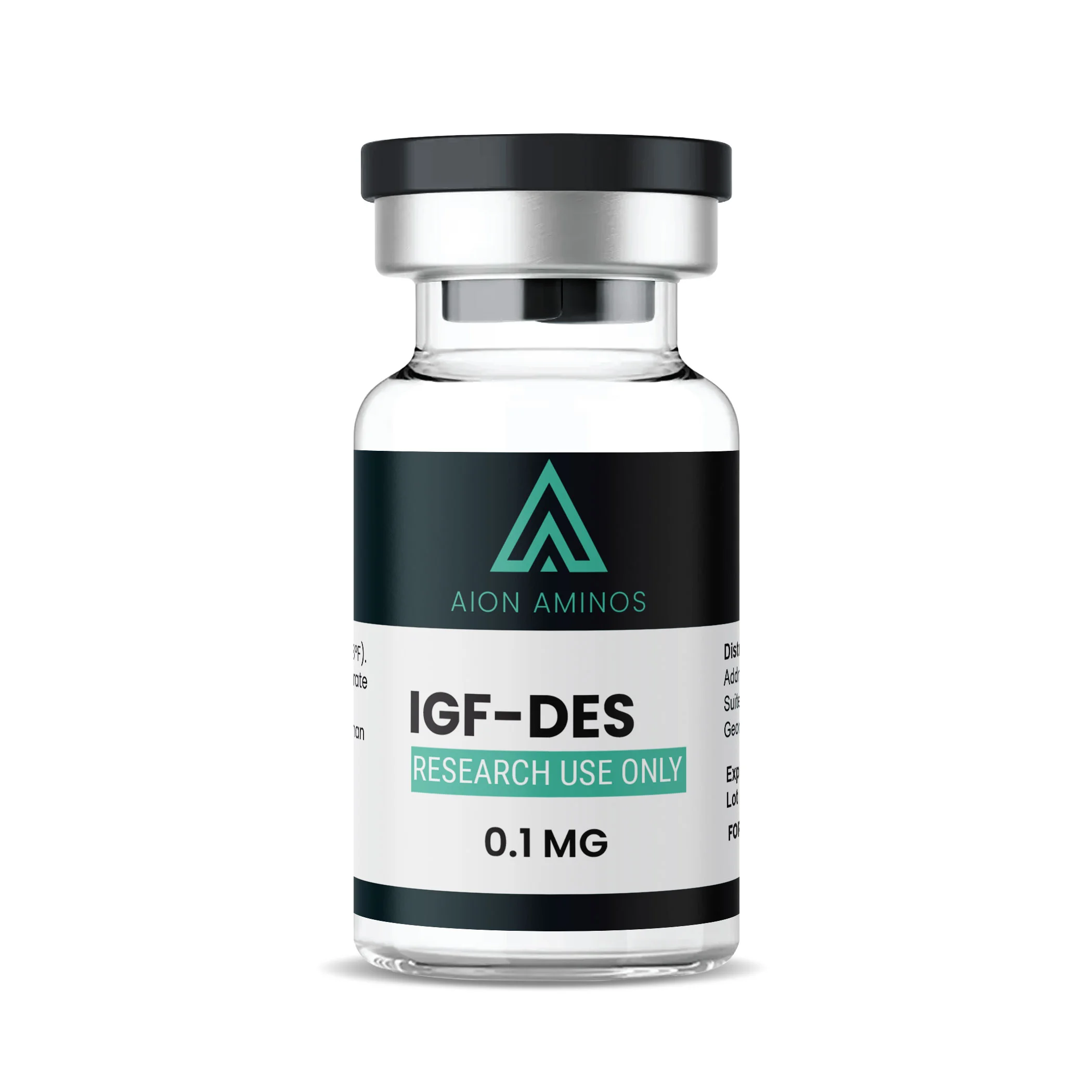
In laboratory environments, IGF-1 DES is studied as a growth factor involved in cellular signaling pathways related to cellular growth and metabolic regulation. Research commonly explores how the peptide interacts with the IGF 1 receptor to influence downstream signaling pathways associated with protein synthesis, cell proliferation, and cellular communication networks.
Experimental models often investigate how insulin like growth factor signaling interacts with pathways influenced by growth hormone and insulin. These studies frequently examine cellular mechanisms related to muscle growth, muscle tissue development, and structural adaptation in muscle cells.
Scientific publications also reference experimental frameworks examining satellite cell activation, muscle hypertrophy, and signaling pathways involved in recovery and cellular growth processes in laboratory systems. Additional research models explore theoretical frameworks related to tissue regeneration, metabolic signaling, and cellular responses associated with endocrine communication networks.
Some research literature discusses potential links between IGF 1 levels, insulin sensitivity, metabolic signaling, and pathways associated with fat loss or metabolic adaptation. These references remain limited strictly to laboratory research contexts and do not represent approved medical or performance applications.
IGF-1 DES is a truncated IGF 1 analog derived from insulin like growth factor 1. It is studied in laboratory environments for its interaction with the IGF 1 receptor and growth-related signaling pathways.
Both compounds are modified peptides derived from insulin like growth factor. IGF 1 LR3 contains structural changes that extend circulation time, while IGF-1 DES is a truncated variant with reduced interaction with IGF binding proteins in research models.
Scientific studies frequently examine IGF DES in cellular models exploring growth factor signaling, cell proliferation, protein synthesis, and biological processes associated with muscle growth and cellular growth pathways.
No. This peptide is sold strictly for research purposes and is not intended for human consumption, supplementation, ortherapeutic use.
New to Aion? Use the code below at checkout and save 25% on your first purchase.
Valid on first purchase only. One use per customer. Cannot be combined with other offers.