
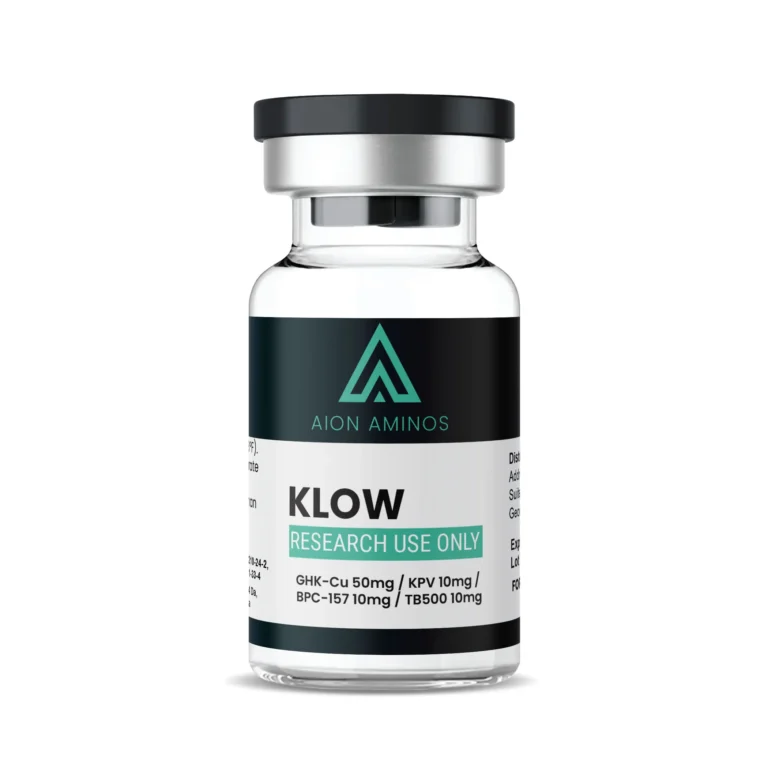
KLOW Peptide Blend: A Research Overview of GHK-Cu, BPC-157, TB-500 and KPV
What the KLOW peptide blend contains, how each of its four components is studied in laboratory models, and what the research does and does not show.
The IGF-1 signaling pathway is one of the most extensively studied biological systems involved in cellular growth, metabolism, and endocrine communication. This complex signaling pathway centers around insulin like growth factor 1 (IGF-1), a signaling protein closely associated with growth hormone regulation and tissue adaptation.
The pathway functions through highly coordinated interactions between a circulating ligand, membrane-bound receptor proteins, intracellular kinases, and downstream transcriptional regulators. Through this system, IGF-1 influences processes such as:
Because of the central role of the IGF 1 signaling pathway in molecular biology, researchers frequently study both natural IGF-1 and engineered variants such as:
These modified peptides help scientists investigate how structural changes involving specific amino acid sequences and receptor interactions alter biological signaling.
Insulin like growth factor 1, historically referred to as Somatomedin C, is a protein hormone composed of 70 amino acid residues. It shares structural similarities with insulin and interacts with both the IGF 1 receptor and, to a lesser extent, the insulin receptor.
IGF-1 is produced primarily in the liver under stimulation from growth hormone, although local tissues also synthesize IGF-1 for autocrine and paracrine signaling.
The molecule functions as a biological ligand, binding to specific receptor systems that regulate:
This integrated endocrine system forms one of the body’s most important signal transduction networks.
The IGF 1 signaling pathway operates closely with growth hormone signaling.
The hypothalamus releases growth hormone releasing hormone (GHRH), initiating endocrine signaling processes that stimulate the pituitary gland.
The pituitary gland releases pulsatile growth hormone, which enters circulation and acts on peripheral tissues.
In response to growth hormone, the liver synthesizes IGF-1. Peripheral tissues may also produce local IGF-1, contributing to regional pathway activation and tissue-specific signaling.
This integrated endocrine network is often called the GH–IGF axis.
The biological activity of IGF-1 depends primarily on binding to the IGF1 receptor (IGF1R), also known as the IGF I receptor.
The IGF receptor belongs to the receptor tyrosine kinase family and contains:
The extracellular portion of the receptor includes structural regions such as the L1 domain, which contributes to ligand recognition and receptor binding specificity.
Upon ligand interaction, the receptor undergoes conformational changes leading to:
These events initiate downstream signal transduction pathways.
After IGF1R activation, several intracellular cascades become activated.
This downstream pathway regulates:
Akt signaling also interacts with FOXO transcription factors, which regulate stress-response genes and metabolic adaptation.
Another major signaling pathway activated through the receptor is the MAPK/ERK cascade.
This pathway influences:
The MAPK pathway is often associated with mitogenic signal transduction.
Most circulating IGF-1 exists bound to regulatory binding proteins known as IGFBPs.
These binding proteins regulate:
Because IGFBPs strongly influence receptor activation, many research peptides are designed to alter these interactions.
IGF-1 LR3 is a modified version of IGF-1 engineered to reduce interaction with binding proteins.
Two structural changes distinguish IGF-1 LR3:
These modifications reduce affinity for IGFBPs and prolong receptor availability.
Researchers study IGF-1 LR3 to investigate:
IGF-1 DES removes the first three amino acid residues from the molecule.
This alteration changes interaction with binding proteins and modifies signaling behavior.
IGF-1 DES is often studied for:
Its reduced affinity for binding proteins allows more direct interaction with the IGF 1 receptor.
The IGF 1 signaling pathway is a classic example of signal transduction biology.
Activation of the receptor tyrosine kinase initiates intracellular phosphorylation cascades involving:
This signaling network regulates gene expression through multiple transcription factor systems.
Researchers in cell biology often study how different receptor states influence:
Because IGF signaling regulates cellular growth, researchers frequently investigate its relationship to diseases involving dysregulated growth signaling.
The IGF receptor has been extensively studied in cancer biology because excessive signaling activity may influence uncontrolled cell proliferation.
Research has explored:
Additional studies evaluate concepts such as:
These remain experimental research areas.
IGF-like signaling systems are highly conserved evolutionarily.
Model organisms such as C elegans have contributed significantly to understanding how insulin-like signaling influences lifespan, metabolism, and developmental signaling pathways.
Researchers also compare the IGF receptor system to the insulin receptor, as the two are structurally related and share similar intracellular signaling mechanisms.
Important structural elements of the IGF receptor system include:
Some receptor subunits share similarities with an identical protein architecture seen in related receptor tyrosine kinases.
The IGF 1 signaling pathway is fundamental to understanding:
This research contributes to broader understanding of how cells coordinate adaptation, communication, and tissue regulation.
The IGF-1 signaling pathway is a highly coordinated biological system involving growth hormone, insulin like growth factor, receptor-mediated signaling, and intracellular kinase activation.
Through interaction with the IGF 1 receptor, IGF-1 activates multiple downstream signaling cascades that regulate:
Modified peptides such as IGF-1 LR3 and IGF-1 DES provide researchers with important tools for studying receptor signaling dynamics and growth factor biology.
This article is provided for scientific and educational discussion only.
Compounds referenced within the Aion Research Library are research materials and are not approved for human or veterinary use unless explicitly stated within regulatory frameworks. They are not drugs and are not intended to diagnose, treat, cure, or prevent any disease.
What the KLOW peptide blend contains, how each of its four components is studied in laboratory models, and what the research does and does not show.
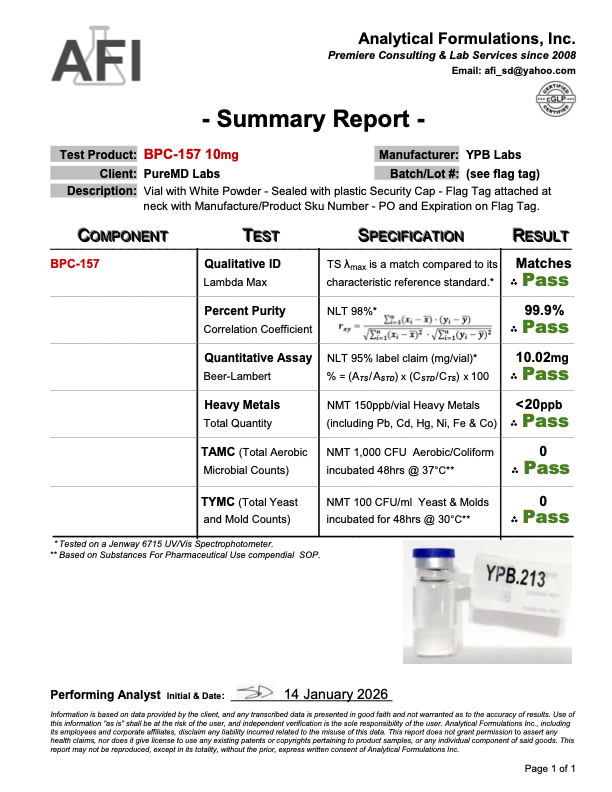
A practical guide to peptide certificates of analysis: what HPLC, mass spectrometry and UV-Vis results mean, how to read purity and assay numbers, and which red flags to watch for.
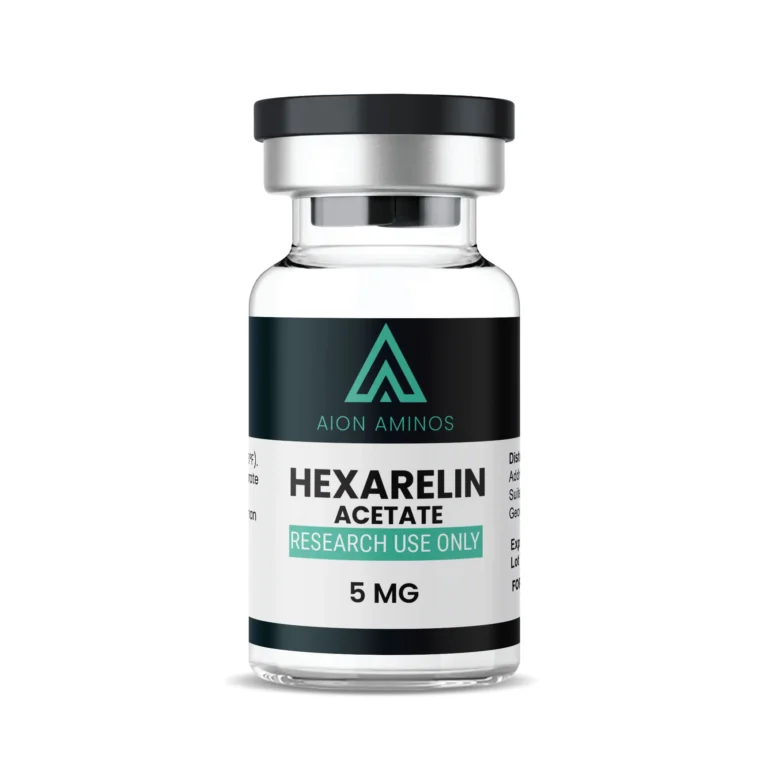
Hexarelin acetate explained for researchers: structure, receptor targets including GHS-R1a and CD36, key preclinical findings and the limits of the evidence.
New to Aion? Use the code below at checkout and save 25% on your first purchase.
Valid on first purchase only. One use per customer. Cannot be combined with other offers.