
$77.00
You’ll be briefly redirected to Link Money, our secure ACH payment partner, to connect your bank and complete payment.
– Your bank login is never visible to or stored by us
– Encrypted, bank-level security
– A standard, trusted payment process
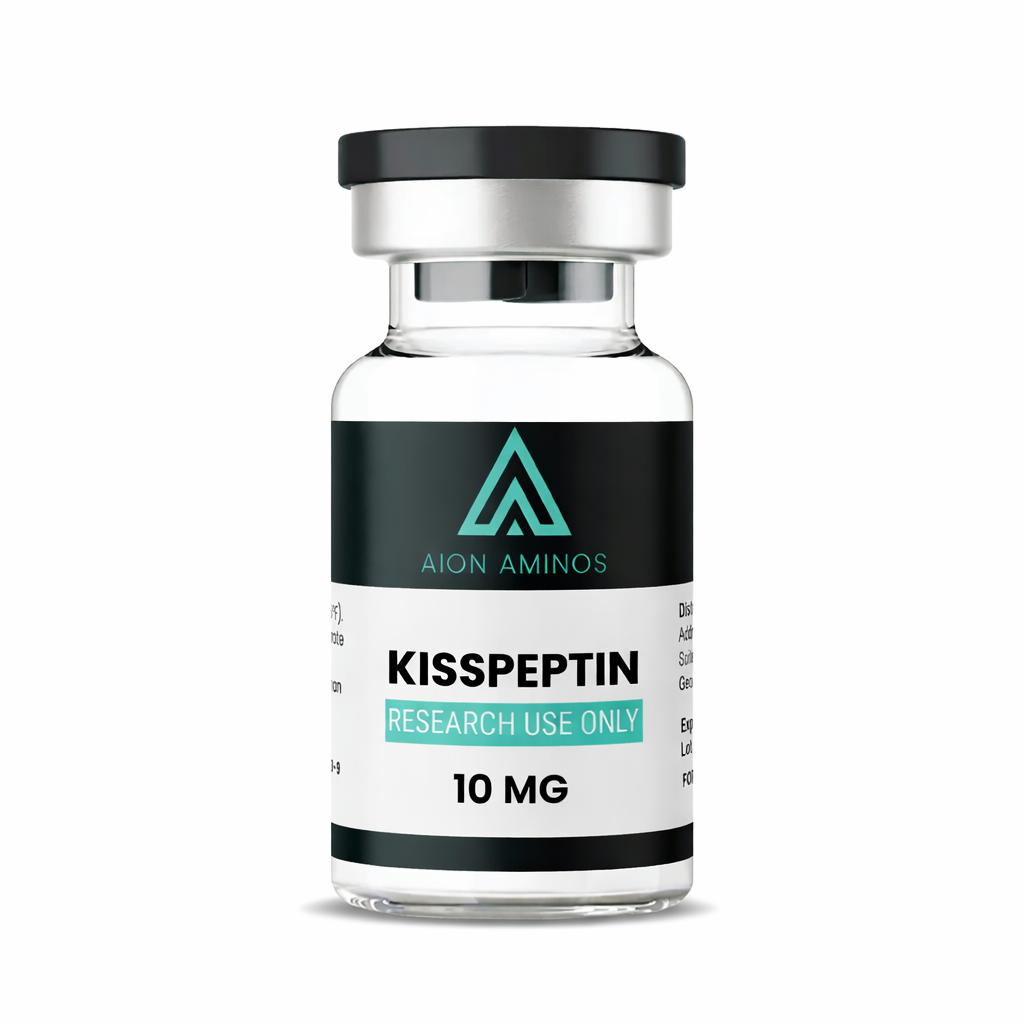
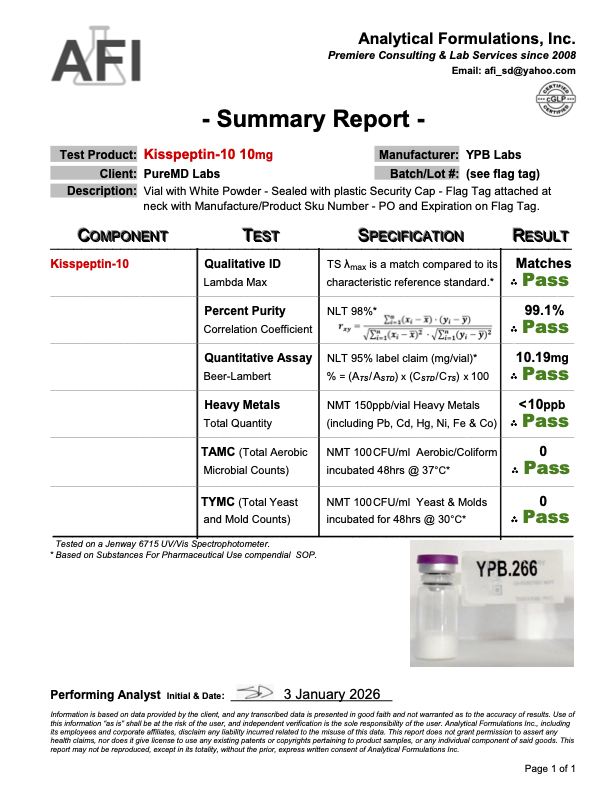
Research Applications (Laboratory Use Only)
In laboratory environments, kisspeptin is studied for its critical role in regulating GnRH secretion and downstream gonadotropin signaling pathways. Researchers frequently investigate how kisspeptin neurons and hormone neurons coordinate signaling between the hypothalamus and endocrine system.
Experimental models often focus on how kisspeptin signalling influences luteinizing hormone release, including mechanisms associated with the LH surge and pulsatile hormone secretion. Studies also examine how kisspeptin levels affect communication between GnRH neurons and other neuroendocrine systems.
Additional research explores how kisspeptin administration impacts pathways related to sexual desire, sexual arousal, and responses to sexual stimuli in controlled laboratory settings. Investigations may also analyze interactions with metabolic pathways, including limited research on insulin secretion, as well as regulatory networks involving estrogen receptor signaling.
Scientific literature also examines kisspeptin in experimental models related to conditions such as hypogonadotropic hypogonadism and hypogonadotrophic hypogonadism, as well as its theoretical relevance in frameworks involving fertility treatments. These references remain strictly within research contexts and do not represent approved clinical applications.
Kisspeptin is a regulatory peptide that plays a central role in endocrine signaling by influencing GnRH neurons and downstream gonadotropin pathways. It is considered a key upstream regulator of hormone secretion, particularly in relation to luteinizing hormone and other reproductive hormones. Because of this, it is widely studied in clinical endocrinology and neuroendocrine research.
Research shows that kisspeptin neurons directly stimulate GnRH neurons, leading to increased GnRH secretion and subsequent activation of downstream hormone release pathways. This interaction is mediated through the kisspeptin receptor, which is expressed on GnRH-producing cells and plays a critical role in coordinating endocrine signaling.
Kisspeptin signalling involves a complex network of hormone neurons, including ARC kisspeptin neurons, and interacts with pathways involving neurokinin B, NPY neurons, and estrogen receptor–mediated feedback. These pathways regulate pulsatile hormone secretion, including the LH surge, and are essential for understanding neuroendocrine communication systems.
While clinical trials and academic research have explored the role of exogenous kisspeptin in areas such as hypogonadotropic hypogonadism and fertility treatments, these applications remain investigational. This product is not approved for kisspeptin therapy, kisspeptin infusion, or any medical use and is supplied strictly for laboratory research.


New to Aion? Use the code below at checkout and save 25% on your first purchase.
Valid on first purchase only. One use per customer. Cannot be combined with other offers.