
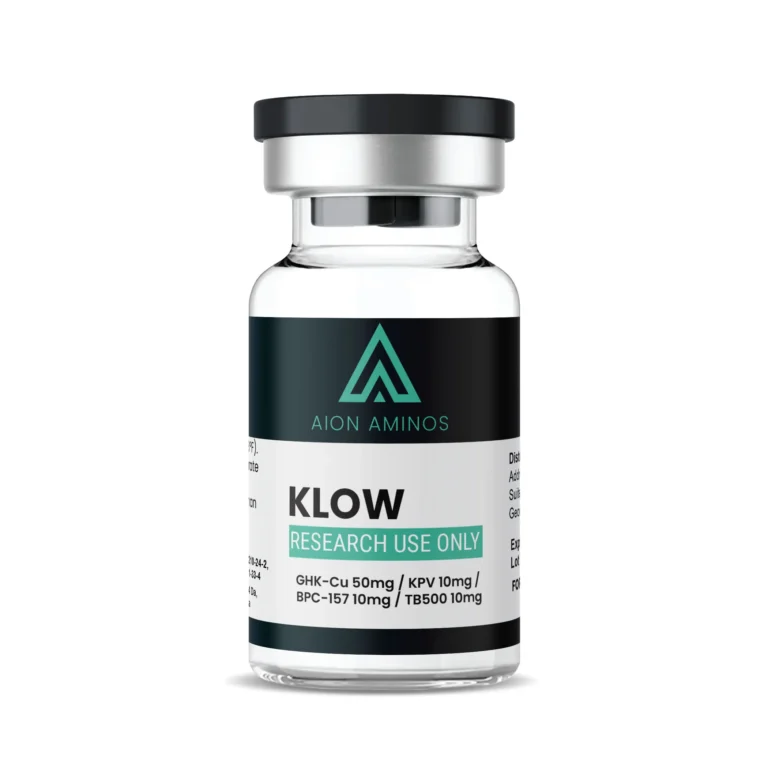
KLOW Peptide Blend: A Research Overview of GHK-Cu, BPC-157, TB-500 and KPV
What the KLOW peptide blend contains, how each of its four components is studied in laboratory models, and what the research does and does not show.

Few molecules illustrate the idea of a “mitochondrial targeted peptide” as clearly as elamipretide. First described in academic laboratories as SS-31 (and later known as MTP-131 or Bendavia), elamipretide is a small synthetic peptide engineered to concentrate inside the mitochondria and to interact with a specific lipid on the inner mitochondrial membrane. That single interaction, elamipretide binding cardiolipin, sits at the center of a large and growing body of research on mitochondrial function, mitochondrial dysfunction, and the diseases that follow when cellular energy production falters.
This article describes what the published science reports about how elamipretide works, the research fields it has been studied in, and its clinical development history. It is educational and is not medical advice.
Elamipretide is a water-soluble tetrapeptide, four amino acids carrying an aromatic-cationic motif that lets the peptide cross membranes and accumulate where cardiolipin is densest. The compound is often handled in its salt form, elamipretide hydrochloride (elamipretide HCl), and it has a relatively low molecular weight for a peptide, on the order of 640 g/mol for the free base. Because of that compact size and its selective distribution, researchers frequently classify elamipretide as the archetypal mitochondrial targeted peptide.
The interest is easy to understand. Mitochondria are the cell’s energy factories, and their inner membrane is where the electron transport chain assembles to produce ATP. When that machinery is disrupted, cells across the heart, muscle, and nervous system struggle, which is why a peptide that acts directly at the inner mitochondrial membrane became such a compelling research subject.
Cardiolipin is a signature phospholipid of the inner mitochondrial membrane, and it does more than form a barrier: it organizes the folds (cristae) that give the membrane its shape and it helps hold the respiratory complexes in place. Published mechanistic work describes elamipretide associating with cardiolipin and, in doing so, helping to preserve mitochondrial structure. By stabilizing cristae architecture, the peptide is studied for its ability to keep the electron transport chain properly organized so that electron transfer proceeds efficiently.
That structural role connects to the bioenergetic story. When cristae are disorganized, electrons can escape prematurely, an “electron leak” that generates reactive oxygen species and drives oxidative stress. Research on elamipretide examines whether tightening membrane organization reduces this electron leak, lowers reactive oxygen species production, and thereby supports mitochondrial bioenergetics. In model systems, investigators have linked the cardiolipin interaction to improved mitochondrial function and reduced markers of oxidative stress, framing elamipretide as a tool for probing how mitochondrial structure governs energy output.
None of this happens by adding energy directly. Instead, the research narrative is about restoring order to the membrane so the mitochondria’s own electron transfer chemistry can operate as designed, a subtle but important distinction that shapes how scientists interpret every downstream result.
Because mitochondrial dysfunction sits upstream of so many conditions, elamipretide has been examined across a wide research landscape. The most prominent is Barth syndrome, an ultra-rare, X-linked genetic mitochondrial disease in which a defect in cardiolipin remodeling produces cardiac and skeletal problems, exercise intolerance, and pronounced muscle weakness. As a mitochondrial disease driven directly by faulty cardiolipin, Barth syndrome offered researchers an unusually clean way to test a cardiolipin-binding peptide. Elamipretide’s direct relationship to cardiolipin made Barth syndrome a natural focus, and patient communities such as the Barth Syndrome Foundation have been closely involved in the research effort.
Beyond Barth syndrome, elamipretide has appeared in studies of primary mitochondrial myopathy and other mitochondrial disorders, in heart failure research where energy-starved cardiac muscle is a core problem, and in ophthalmology research on dry AMD (the atrophic form of age-related macular degeneration). Across these very different settings, the unifying thread is the same: a molecule studied for its potential to counter mitochondrial dysfunction at the level of the inner membrane. That breadth is why reviewers so often discuss elamipretide’s therapeutic potential in the context of mitochondrial medicine as a whole.
Elamipretide’s clinical development was led by Stealth BioTherapeutics (Stealth BioTherapeutics Inc, now operating as Mighty Therapeutics). The pivotal evidence for Barth syndrome came from the TAZPOWER trial, whose open-label extension reported improvements in knee-extensor muscle strength from baseline in treated Barth syndrome patients. In the pivotal program, elamipretide was administered as once-daily subcutaneous injections.
That work culminated in a significant regulatory milestone. In September 2025 the FDA granted accelerated approval to FORZINITY (elamipretide HCl) to improve muscle strength in adult and pediatric Barth syndrome patients weighing at least 30 kg, making it the first FDA approved therapy for this mitochondrial disease. Under accelerated approval, continued approval for the indication may be contingent upon verification of clinical benefit in one or more confirmatory clinical trials, a limitation the label makes explicit. According to the approved prescribing information, the most common adverse reactions are injection site reactions, and the medicine is distributed through specialty pharmacy as a prescription treatment rather than a general consumer product. As with any approval, the prescribing information and its stated limitations are the authoritative source on how the treatment is defined.
For context, this approval was widely covered as a landmark in mitochondrial medicine, since it delivered a first approved treatment where none had existed for a disease affecting only around 150 patients in the United States.
Here is the line that matters for anyone reading about elamipretide in a research-supply context. FORZINITY is an approved prescription medicine, developed and commercialized by the drug’s sponsor and available only through a clinical channel. Research-grade elamipretide, the reference material used to study the peptide’s chemistry, its cardiolipin binding, and its effects on mitochondrial structure, is a different thing entirely. It is sold strictly for research use, and is not the FDA approved therapy, not a substitute for it, and not intended for human use.
In other words, the exciting clinical benefit data, the trials, the muscle-weakness endpoints, and the prescribing information all describe the approved medicine and its clinical program in patients. They are reported here as published facts about elamipretide’s clinical development, not as claims about, or instructions for, any research material. An elamipretide injection studied in a clinical trial and a vial of research peptide on a laboratory bench are governed by completely different rules.
Elamipretide is a mitochondria-targeted peptide whose defining feature is how it interacts with the inner mitochondrial membrane: by associating with cardiolipin, it is studied for stabilizing mitochondrial structure, supporting electron transfer, reducing electron leak and reactive oxygen species, and countering oxidative stress that stems from mitochondrial dysfunction. That mechanism has driven research across Barth syndrome, mitochondrial myopathy, heart failure, and dry AMD, and it underpinned the accelerated FDA approval of FORZINITY (elamipretide HCl) for Barth syndrome patients. Understanding both the science and the regulatory history helps separate what the peptide is in the laboratory from what the approved medicine is in the clinic.
Compliance notice: Products referenced by Aion Aminos are sold strictly for laboratory and research use. Not for human use. Research-grade elamipretide is not the FDA approved therapy FORZINITY and is not a treatment for any condition. The information provided is for educational purposes only, is not medical advice, and is not intended to diagnose, treat, cure, or prevent any disease.
Sources: Stealth BioTherapeutics / Mighty Therapeutics FDA accelerated-approval announcement for FORZINITY (elamipretide HCl), 2025; FDA prescribing information (NDA 215244); TAZPOWER trial disclosures; published reviews of elamipretide’s mitochondrial mechanism of action.
What the KLOW peptide blend contains, how each of its four components is studied in laboratory models, and what the research does and does not show.
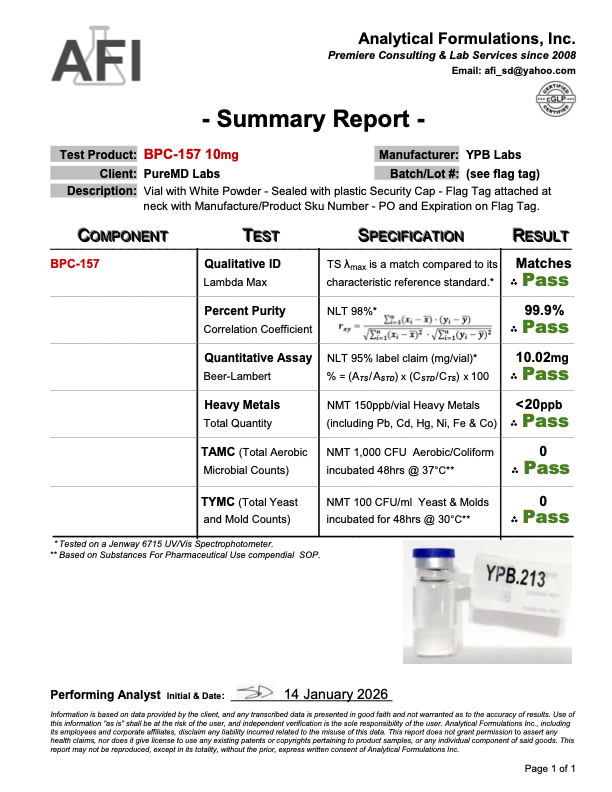
A practical guide to peptide certificates of analysis: what HPLC, mass spectrometry and UV-Vis results mean, how to read purity and assay numbers, and which red flags to watch for.
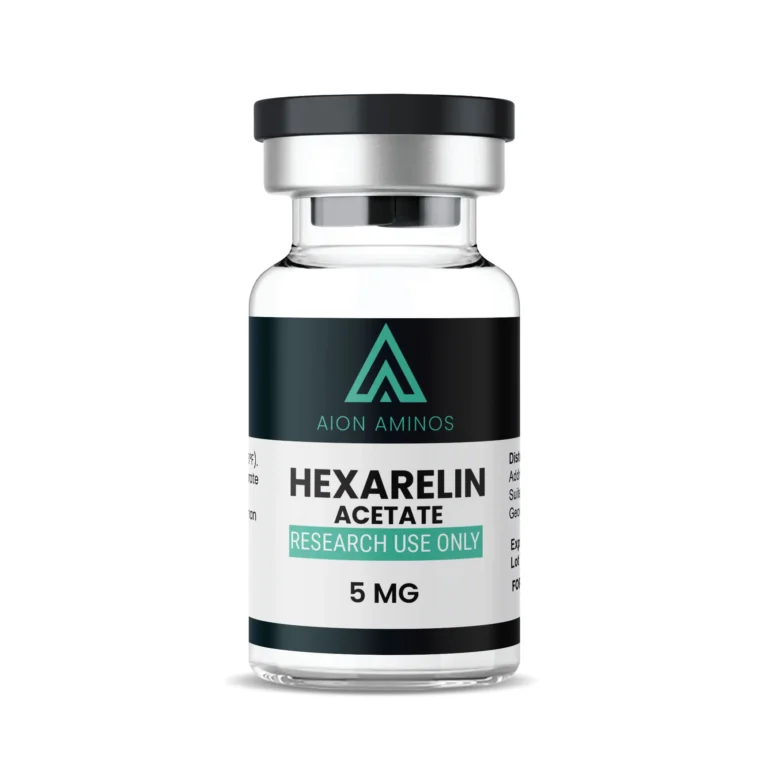
Hexarelin acetate explained for researchers: structure, receptor targets including GHS-R1a and CD36, key preclinical findings and the limits of the evidence.
New to Aion? Use the code below at checkout and save 25% on your first purchase.
Valid on first purchase only. One use per customer. Cannot be combined with other offers.