
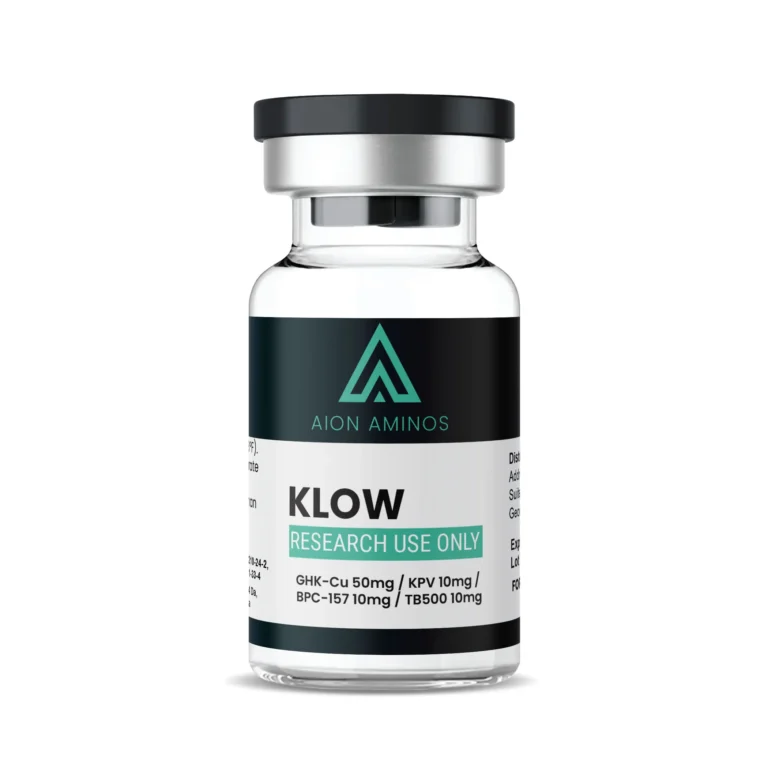
KLOW Peptide Blend: A Research Overview of GHK-Cu, BPC-157, TB-500 and KPV
What the KLOW peptide blend contains, how each of its four components is studied in laboratory models, and what the research does and does not show.

Article Snapshot Cagrilintide is a long-acting amylin analogue developed by Novo Nordisk as an investigational compound and studied across a growing body of clinical trials. This overview describes what the published science reports about how the molecule engages amylin receptors, how it differs from GLP-1 medications, and what researchers have measured in trial participants. Key insight: cagrilintide acts on the amylin pathway rather than the incretin pathway, which is why so much research has examined it alongside GLP-1 therapy in the CagriSema combination.
For Research Use Only. Not for Human Consumption. The information below is educational and is not medical advice.
Cagrilintide is a synthetic amylin analogue, a peptide engineered to mimic amylin, a hormone that pancreatic beta cells co-secrete with insulin after a meal. Because native amylin breaks down quickly, chemists attached a fatty-acid chain that binds albumin and extends the molecule’s half-life, allowing the compound to persist long enough to be studied on a once-weekly schedule. In the research literature the cagrilintide peptide is consistently described as an investigational compound: a research peptide characterized in the laboratory and evaluated in clinical trials, not a consumer product.
Interest in cagrilintide grew quickly because the amylin pathway is distinct from the mechanism targeted by most modern weight and metabolic research. Where a GLP-1 receptor agonist works through the incretin system, cagrilintide engages a separate set of receptors and a separate appetite-signaling route, and that separation is central to why Novo Nordisk has invested so heavily in trials examining the two mechanisms together, including trials tracking body weight over many months.
Amylin signals through receptors assembled from the calcitonin receptor combined with receptor-activity-modifying proteins (RAMPs). These receptors are concentrated in brainstem regions associated with satiety, including the area postrema and the nucleus tractus solitarius. When cagrilintide binds these amylin receptors, published mechanistic work describes cAMP-mediated signaling that produces several downstream effects studied in the laboratory: a central appetite signal linked to satiety, delayed gastric emptying, and suppression of glucagon secretion.
Each of these threads shows up repeatedly in the research. Slower gastric emptying changes the rate at which nutrients reach circulation; the satiety signal is associated with reduced food intake in study models; and suppressed, lower postprandial glucagon is of interest to researchers studying glucose regulation. Investigators studying the compound frequently frame appetite suppression as an amylin-pathway phenomenon rather than an incretin effect, which is precisely what makes the amylin analogue an object of study distinct from the GLP-1 class.
A recurring theme in the literature is the contrast between amylin biology and GLP-1 biology. A GLP-1 receptor agonist such as semaglutide is an incretin-based GLP-1 drug that acts on the GLP-1 receptor; cagrilintide does not. Because the two operate through different receptors, researchers have hypothesized that pairing an amylin analogue with a GLP-1 agonist could produce additive effects that neither GLP-1 monotherapy nor amylin monotherapy achieves alone.
That hypothesis is why so many trials place cagrilintide next to GLP-1 therapy. GLP-1 medications and amylin analogues are studied as complementary tools operating on parallel satiety systems, and the comparison between GLP-1 monotherapy and combination approaches is one of the most active questions in the field. Other developers, including Eli Lilly, are advancing their own amylin candidates, underscoring how much scientific attention the calcitonin-receptor-linked amylin pathway now receives.
The most-studied application of the molecule is the CagriSema combination, a fixed-dose formulation pairing cagrilintide 2.4 mg with the GLP-1 receptor agonist semaglutide 2.4 mg, evaluated as a once-weekly subcutaneous injection. This is the “coadministered cagrilintide and semaglutide” approach that gives the combination therapy its name, and it reflects the underlying research logic: engage the amylin pathway and the GLP-1 receptor at the same time.
Early combination research reported that coadministered cagrilintide and semaglutide was associated with roughly 17.1% mean weight reduction in participants over 20 weeks, compared with about 11.8% for cagrilintide as monotherapy in phase 2 work, a difference researchers attribute to the two pathways acting together. (Note: doses in the published trials are reported as 2.4 mg; there is no 24 mg cagrilintide dose in the literature.)
The most detailed data come from Novo Nordisk’s phase 3 REDEFINE program. In REDEFINE 1, a 68-week, double-blind, placebo-controlled clinical trial of 3,417 adults with overweight or obesity, participants receiving the CagriSema combination showed a mean weight reduction of 22.7% at 68 weeks versus 2.3% in the placebo group under full adherence. In REDEFINE 2, which enrolled 1,206 participants with type 2 diabetes, the trial reported a 15.7% mean weight reduction versus 3.1% for placebo. These results were published in The New England Journal of Medicine in 2025 and presented at a major scientific meeting.
Read carefully, these clinical trials describe outcomes measured in enrolled participants under controlled conditions with a defined dose and a placebo comparison. They are reports of what investigators observed in a research setting, not statements about how any product should be used. The type 2 diabetes findings are of particular interest to metabolic researchers because amylin signaling, glucagon secretion, appetite regulation, and glucose handling intersect in ways the trials were designed to probe, with body weight tracked as a primary endpoint throughout.
As of this writing, cagrilintide remains an investigational compound. The combination has been the subject of regulatory review and filings, but readers should not assume any particular regulatory approval status for a given region; that landscape changes as trials conclude. Within the research-supply context, cagrilintide is handled strictly as a research peptide, a laboratory reference material for scientists studying the amylin pathway, its receptors, and how amylin analogues compare with GLP-1 medications.
This distinction matters. Describing what a clinical trial reported about weight loss drugs and amylin analogues is not the same as recommending, dosing, or endorsing anything for human use. Nothing here is medical advice, and nothing here is intended to diagnose, treat, cure, or prevent any disease.
Cagrilintide is a long-acting amylin analogue and research peptide studied by Novo Nordisk across multiple clinical trials. It engages amylin receptors built on the calcitonin receptor, influencing satiety, gastric emptying, food intake, and glucagon secretion in research models, a mechanism distinct from GLP-1 medications. The CagriSema combination pairs it with a GLP-1 agonist, and New England Journal of Medicine data describe substantial weight changes in trial participants, including those with type 2 diabetes.
Compliance notice: Products referenced by Aion Aminos are sold strictly for laboratory and research purposes. Not for human use. The information provided is for educational purposes only and is not intended to diagnose, treat, cure, or prevent any disease, and is not medical advice.
Sources: New England Journal of Medicine (REDEFINE 1 and coadministered cagrilintide-semaglutide reports, 2025); Novo Nordisk trial disclosures; published amylin-analogue mechanism reviews.
What the KLOW peptide blend contains, how each of its four components is studied in laboratory models, and what the research does and does not show.
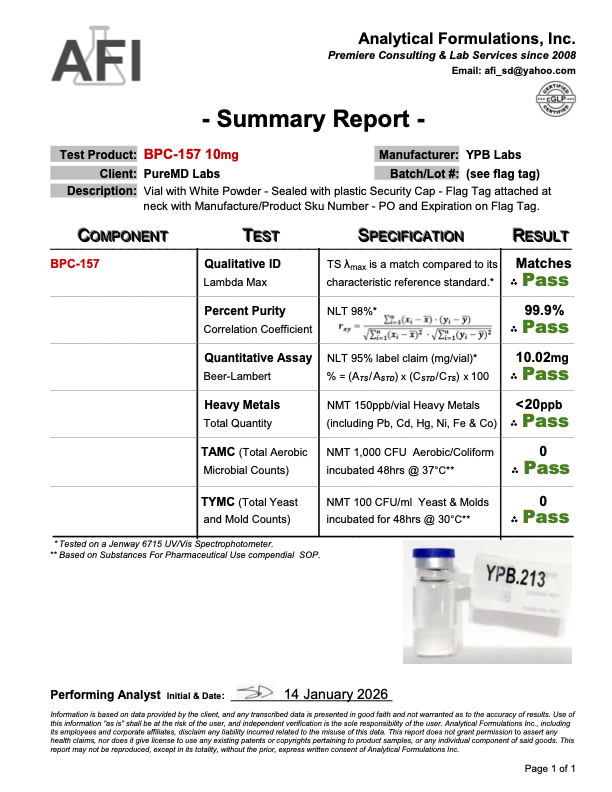
A practical guide to peptide certificates of analysis: what HPLC, mass spectrometry and UV-Vis results mean, how to read purity and assay numbers, and which red flags to watch for.
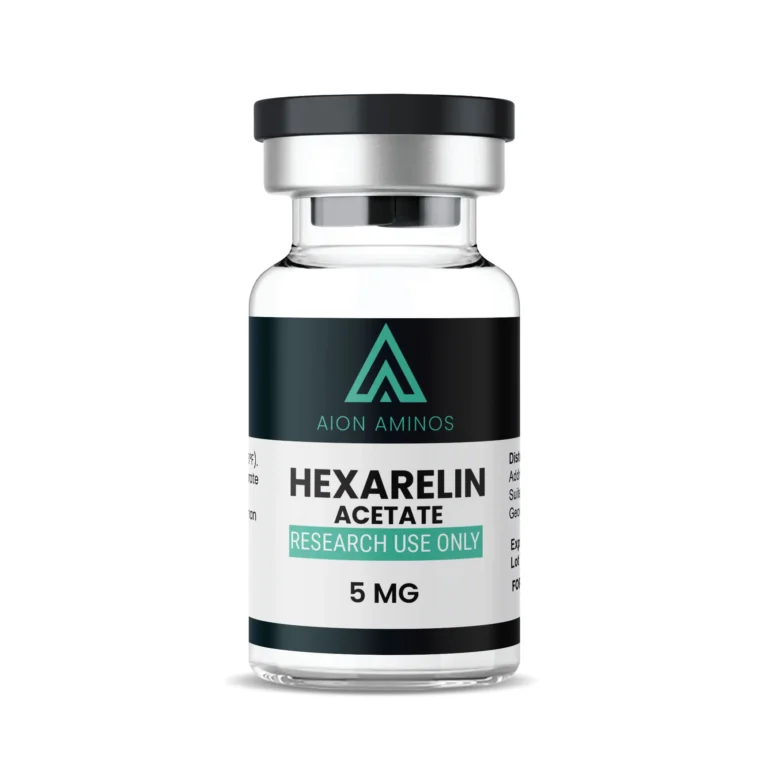
Hexarelin acetate explained for researchers: structure, receptor targets including GHS-R1a and CD36, key preclinical findings and the limits of the evidence.
New to Aion? Use the code below at checkout and save 25% on your first purchase.
Valid on first purchase only. One use per customer. Cannot be combined with other offers.