
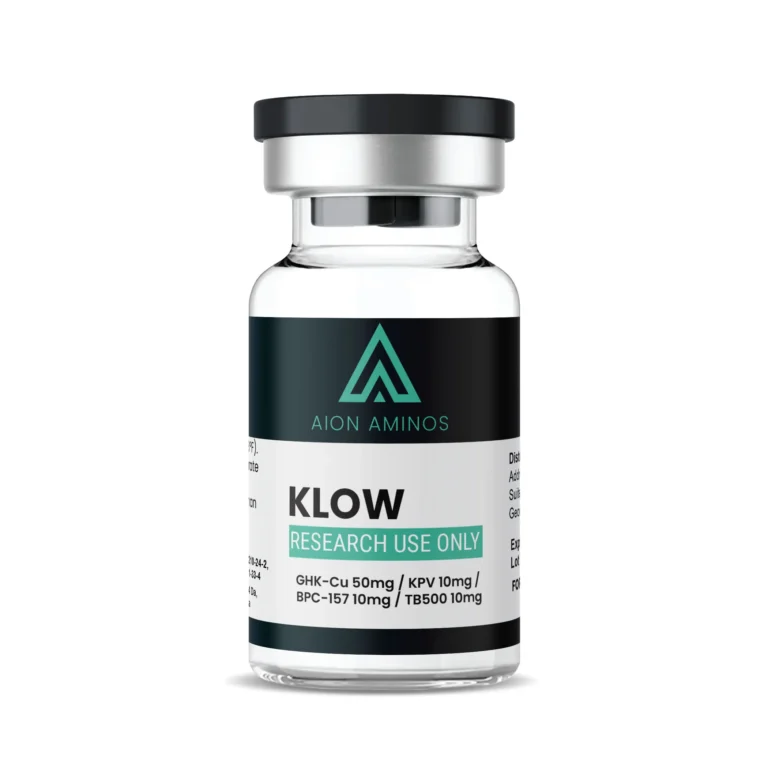
KLOW Peptide Blend: A Research Overview of GHK-Cu, BPC-157, TB-500 and KPV
What the KLOW peptide blend contains, how each of its four components is studied in laboratory models, and what the research does and does not show.

What is growth hormone? Growth hormone (GH) is a naturally occurring peptide hormone produced by specialized cells within the anterior pituitary gland. As one of the body’s most important endocrine signaling molecules, growth hormone helps regulate numerous biological processes related to growth, metabolism, cellular communication, and tissue maintenance.
Researchers studying endocrine biology frequently investigate how growth hormone, insulin like growth factor (IGF-1), and related signaling molecules interact within a coordinated regulatory system known as the Growth Hormone–IGF Axis. This network helps regulate processes involving bone growth, protein synthesis, cellular adaptation, and metabolic signaling throughout the body.
Understanding what is growth hormone provides insight into one of the most extensively studied hormonal pathways in human biology and helps explain why researchers continue investigating peptides that influence GH-related signaling mechanisms.
The growth hormone axis begins in the hypothalamus, a region of the brain responsible for coordinating endocrine communication.
The hypothalamus regulates growth hormone secretion through two primary signaling molecules:
Growth hormone releasing hormone stimulates the pituitary gland to release growth hormone into circulation.
Somatostatin acts as an inhibitory hormone that reduces growth hormone release and helps regulate hormonal balance.
Together, these opposing signals tightly control growth hormone levels and maintain appropriate endocrine regulation.
The pituitary gland, specifically the anterior pituitary, contains specialized cells known as somatotrophs.
These cells synthesize and release human growth hormone in pulsatile patterns throughout the day.
The largest pulses of growth hormone secretion often occur during deep sleep, although secretion patterns vary based on age, physiology, and metabolic status.
Because the pituitary gland serves as the primary source of circulating GH, researchers frequently investigate signaling pathways that regulate pituitary activity and hormone production.
After entering circulation, growth hormone binds to receptors located on numerous cell types throughout the body.
This receptor activation initiates signaling pathways involved in:
Two major intracellular pathways include:
This pathway regulates gene transcription associated with growth, metabolism, and cellular communication.
MAPK pathways influence cellular adaptation, proliferation, and signaling responses.
Together, these pathways help explain why growth hormone is considered one of the body’s most influential endocrine regulators.
One of the primary downstream effects of growth hormone signaling is stimulation of insulin like growth factor production.
IGF-1 is produced primarily in the liver, although many tissues can generate IGF-1 locally.
Researchers often view IGF-1 as a secondary mediator of human growth hormone signaling because it contributes to numerous biological effects associated with growth factor activity.
This relationship forms the foundation of the Growth Hormone–IGF Axis.
IGF-1 interacts with the IGF-1 receptor, a receptor tyrosine kinase found on many cell types.
Activation of this receptor influences:
Two major signaling pathways include:
This pathway plays an important role in metabolic regulation and protein synthesis.
MAPK signaling contributes to gene expression and cellular communication.
These pathways are central components of endocrine biology and growth factor research.
Most circulating IGF-1 does not remain free within the bloodstream.
Instead, it binds to specialized proteins known as IGF binding proteins (IGFBPs).
These proteins help regulate:
Researchers frequently investigate IGFBPs because they strongly influence how IGF-1 signaling occurs throughout the body.
Scientists studying endocrine disorders often investigate conditions involving growth hormone deficiency and related hormonal abnormalities.
Research literature discusses several conditions involving reduced GH production, including:
In pediatric populations, insufficient GH production has been associated with conditions involving:
In adults, research examining adult growth hormone deficiency frequently evaluates changes in:
Organizations such as the Endocrine Society and journals within clinical endocrinology continue to publish research exploring these endocrine conditions.
Scientific literature often references:
Researchers studying endocrine medicine investigate these topics within clinical settings involving diagnosed hormone deficiencies and growth disorders.
Additional clinical topics may include:
These areas are distinct from peptide research products and fall within regulated medical practice.
Researchers frequently study peptides that interact with specific portions of the GH–IGF signaling network.
These compounds mimic natural GHRH signaling.
Examples include:
These peptides bind receptors involved in growth hormone release and endocrine signaling.
Growth hormone secretagogues activate the ghrelin receptor pathway.
Examples include:
These compounds are studied for their effects on pathways associated with growth hormone production and hormone signaling.
Researchers also investigate:
These modified molecules allow scientists to study growth factor signaling under controlled laboratory conditions.
Like most endocrine systems, the GH–IGF axis uses feedback loops to maintain balance.
Elevated IGF-1 concentrations can signal the hypothalamus and pituitary to reduce growth hormone secretion.
Somatostatin provides inhibitory control over growth hormone release, helping maintain stable hormone levels.
These mechanisms ensure appropriate endocrine regulation throughout life.
Researchers study growth hormone because it participates in numerous biological systems.
Areas of investigation include:
Although popular discussions often focus on human growth hormone, researchers primarily investigate the molecular signaling pathways that govern endocrine function.
Understanding what is growth hormone remains important because GH serves as a central regulator within human endocrine biology.
Research involving growth hormone signaling helps scientists better understand:
These investigations continue to expand scientific knowledge regarding how hormones coordinate complex physiological processes throughout the body.
What is growth hormone? Growth hormone is a naturally occurring peptide hormone produced by the anterior pituitary gland that plays a central role in endocrine signaling.
Through interaction with receptors throughout the body and stimulation of insulin like growth factor production, growth hormone influences numerous biological processes related to growth, metabolism, cellular communication, and tissue regulation.
Researchers continue studying the Growth Hormone–IGF Axis to better understand how hormones, receptors, and signaling pathways coordinate complex physiological functions across the lifespan.
This article is provided for scientific and educational discussion only.
Compounds referenced within the Aion Aminos Research Library are research materials and are not approved by the FDA for human or veterinary use unless explicitly stated under applicable regulatory frameworks. They are not drugs and are not intended to diagnose, treat, cure, or prevent any disease.
What the KLOW peptide blend contains, how each of its four components is studied in laboratory models, and what the research does and does not show.
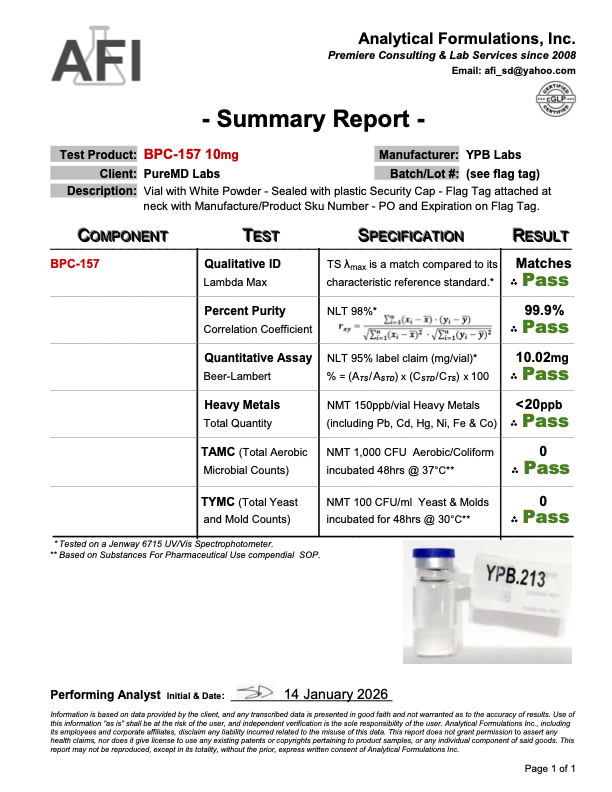
A practical guide to peptide certificates of analysis: what HPLC, mass spectrometry and UV-Vis results mean, how to read purity and assay numbers, and which red flags to watch for.
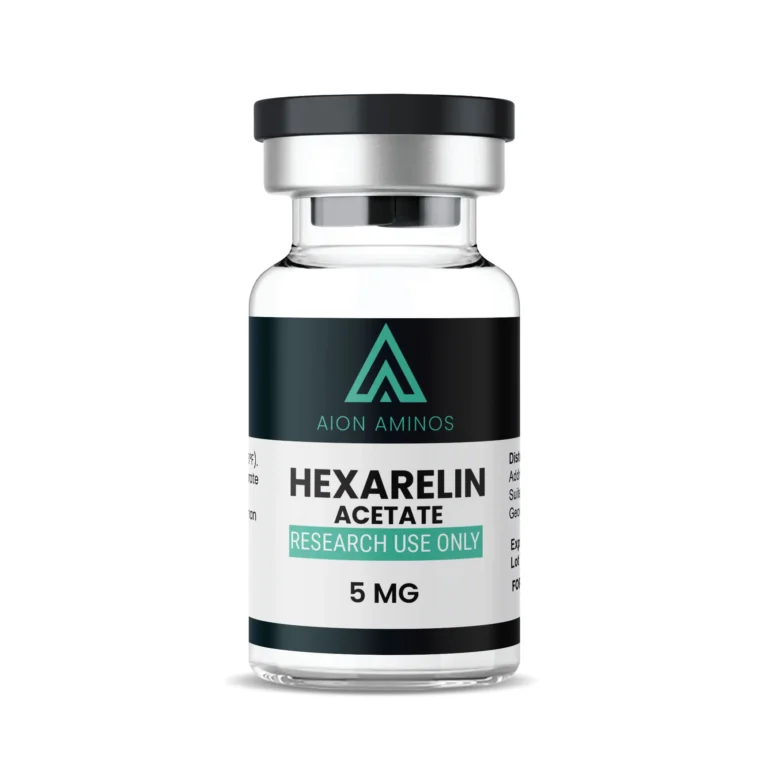
Hexarelin acetate explained for researchers: structure, receptor targets including GHS-R1a and CD36, key preclinical findings and the limits of the evidence.
New to Aion? Use the code below at checkout and save 25% on your first purchase.
Valid on first purchase only. One use per customer. Cannot be combined with other offers.