
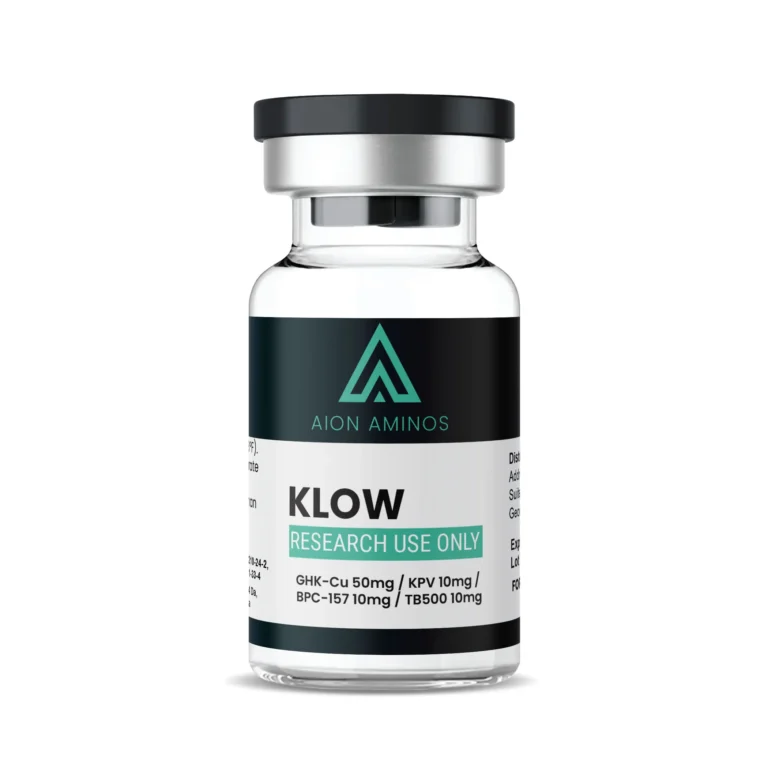
KLOW Peptide Blend: A Research Overview of GHK-Cu, BPC-157, TB-500 and KPV
What the KLOW peptide blend contains, how each of its four components is studied in laboratory models, and what the research does and does not show.
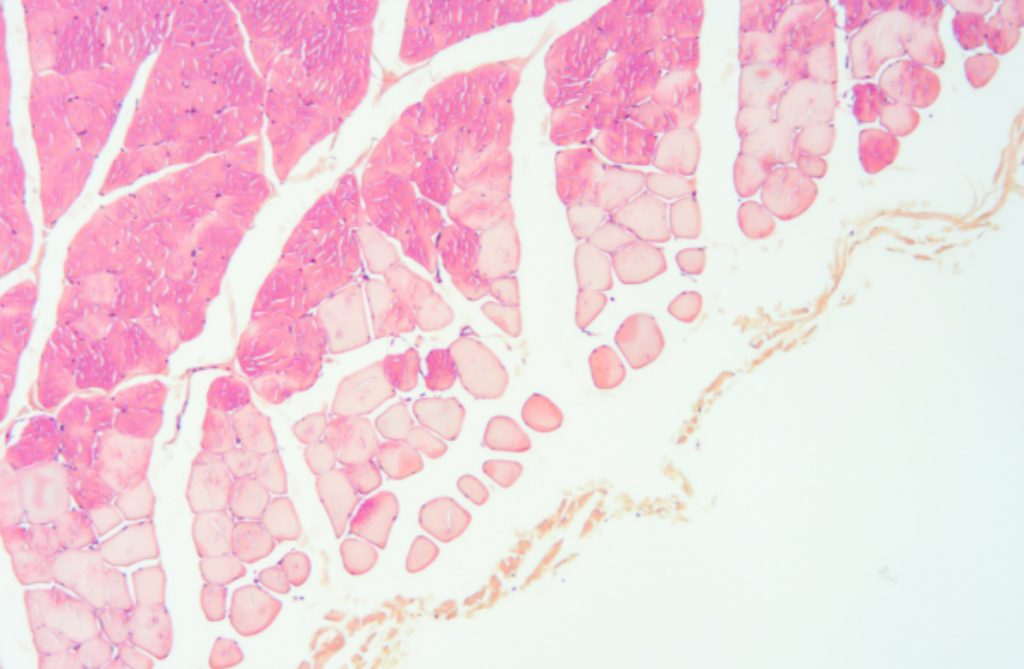
The Angiogenesis Signaling Pathway is one of the most important biological systems involved in vascular development, tissue adaptation, and cellular communication. Angiogenesis refers to the process through which new blood vessels develop from pre existing blood vessels, allowing tissues to receive oxygen, nutrients, and an adequate blood supply.
Researchers studying vascular biology frequently investigate the molecular and cellular mechanisms that regulate blood vessel formation, endothelial behavior, and growth factor signaling. These systems are critical to normal physiological processes and are also studied in contexts involving tissue remodeling, metabolic adaptation, and disease-related vascular changes.
Understanding the Angiogenesis Signaling Pathway provides valuable insight into how cells, growth factors, and signaling networks coordinate vascular development throughout the body.
Angiogenesis is the biological process through which new blood vessels emerge from existing vascular networks.
This process differs from vasculogenesis, which refers to the formation of blood vessels during embryonic development.
In adults, angiogenesis is commonly studied in relation to:
Because tissues depend on oxygen and nutrient delivery through the circulation, angiogenesis remains a central focus of vascular research.
The inner lining of all blood vessels is composed of specialized cells known as vascular endothelial cells.
These cells serve as the primary drivers of angiogenesis.
During blood vessel formation, endothelial cells undergo a series of coordinated events:
The first stage involves endothelial cell activation by angiogenic signals released from nearby tissues.
Following activation, endothelial cell migration occurs as cells move toward areas requiring vascular growth.
Researchers frequently study endothelial cell proliferation, which allows vascular structures to expand and form new branches.
Migrating endothelial cells organize into tubular structures that ultimately become functional blood vessels.
Together, these processes represent the fundamental biological basis of angiogenesis.
One of the strongest triggers of angiogenesis is hypoxia, a condition characterized by reduced oxygen availability.
When oxygen levels decline, cells activate a transcription factor known as Hypoxia-Inducible Factor-1 (HIF-1).
HIF-1 influences:
One of the most important downstream products of this response is vascular endothelial growth factor (VEGF).
Vascular endothelial growth factor is considered the master regulator of angiogenesis.
VEGF functions as a powerful growth factor that promotes vascular development by interacting with endothelial cells.
Researchers studying the VEGF pathway examine how VEGF coordinates:
VEGF exerts its biological effects through interaction with the VEGF receptor family found on endothelial cells.
When VEGF binds its receptor, multiple intracellular signaling pathways become activated.
This receptor-mediated signaling pathway regulates:
Because VEGF signaling is central to angiogenesis, it remains one of the most extensively studied pathways in vascular biology.
This pathway promotes:
MAPK signaling contributes to:
Focal adhesion kinase (FAK) regulates cellular adhesion and migration.
Researchers frequently investigate FAK because it plays a major role in endothelial movement during angiogenesis.
Together, these pathways coordinate the complex molecular events required for vascular growth.
Scientists generally recognize two primary forms of angiogenesis.
Sprouting angiogenesis occurs when endothelial cells extend outward from existing vessels to form new vascular branches.
This process involves specialized leading cells known as tip cells and supporting stalk cells that help extend the growing vessel.
Intussusceptive angiogenesis occurs through the internal splitting of existing vessels rather than outward sprouting.
Both mechanisms contribute to vascular adaptation and remodeling.
The extracellular matrix provides structural support for tissues and vascular networks.
During angiogenesis, enzymes known as matrix metalloproteinases break down portions of the extracellular matrix, allowing endothelial cells to migrate and reorganize.
Researchers study extracellular matrix remodeling because it plays an essential role in:
Angiogenesis often occurs alongside inflammatory signaling.
Immune cells release signaling molecules that influence vascular development and communication between tissues.
Researchers investigate how inflammatory mediators contribute to:
Understanding these interactions helps explain how vascular systems adapt during biological stress.
One of the most extensively studied areas of angiogenesis involves cancer biology.
Growing tumors require an adequate blood supply to obtain oxygen and nutrients.
Researchers examine how tumor cells influence the surrounding tumor microenvironment by releasing angiogenic factors that promote vascular growth.
This process is known as tumor angiogenesis.
Areas frequently investigated include:
Research published in journals such as Nat Rev Cancer has significantly expanded understanding of these mechanisms.
While angiogenesis is a normal biological process, excessive or abnormal vascular growth is often referred to as pathological angiogenesis.
Researchers study pathological angiogenesis in various disease models to better understand how signaling pathways become dysregulated.
These investigations contribute to the development of:
Several research peptides are frequently examined in experimental models involving angiogenic signaling.
BPC-157 is a synthetic peptide studied for its interactions with:
TB-500, derived from thymosin beta-4, is investigated in research involving:
GHK-Cu is a copper-binding peptide studied for its relationship with:
Researchers utilize these compounds to investigate various aspects of vascular signaling and tissue biology.
The ability to form new blood vessels allows tissues to adapt to changing physiological demands.
Examples include:
Through angiogenesis, tissues can improve oxygen delivery, nutrient transport, and overall vascular efficiency.
Numerous signaling molecules participate in angiogenesis.
Important examples include:
These angiogenic factors work together through interconnected signaling networks to regulate vascular development.
Researchers study the Angiogenesis Signaling Pathway to better understand:
These investigations help scientists uncover the molecular mechanisms that regulate vascular growth and tissue survival.
Because blood vessels are essential for delivering oxygen and nutrients throughout the body, angiogenesis remains one of the most important areas of biological research.
The Angiogenesis Signaling Pathway governs how new blood vessels form from pre existing blood vessels through highly coordinated interactions between endothelial cells, growth factors, and signaling networks.
Central components of this pathway include vascular endothelial growth factor, VEGF receptor activation, endothelial migration, extracellular matrix remodeling, and vascular adaptation.
Researchers continue to investigate angiogenesis because it provides valuable insight into tissue biology, vascular development, cellular communication, and the broader mechanisms that regulate blood vessel growth throughout the body.
This article is provided for scientific and educational discussion only.
Compounds referenced within the Aion Aminos Research Library are research materials and are not approved by the FDA for human or veterinary use unless explicitly stated under applicable regulatory frameworks. They are not drugs and are not intended to diagnose, treat, cure, or prevent any disease.
What the KLOW peptide blend contains, how each of its four components is studied in laboratory models, and what the research does and does not show.
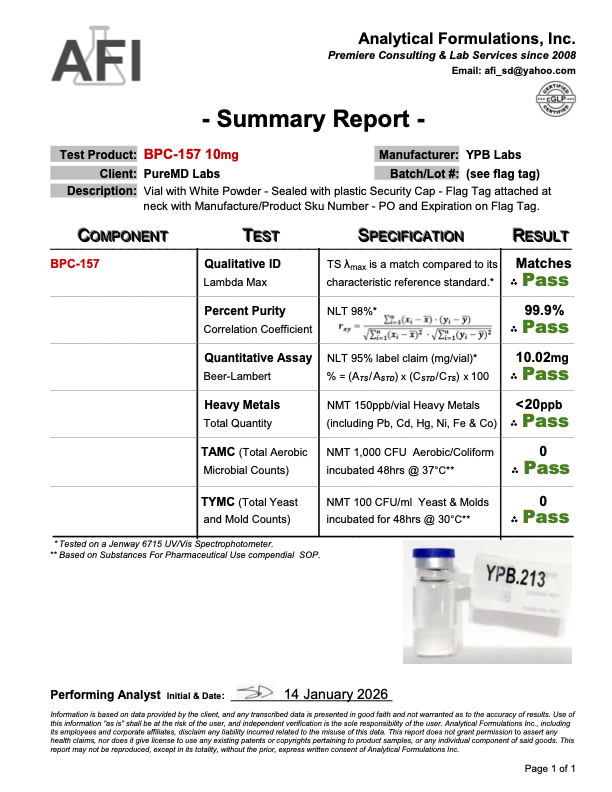
A practical guide to peptide certificates of analysis: what HPLC, mass spectrometry and UV-Vis results mean, how to read purity and assay numbers, and which red flags to watch for.
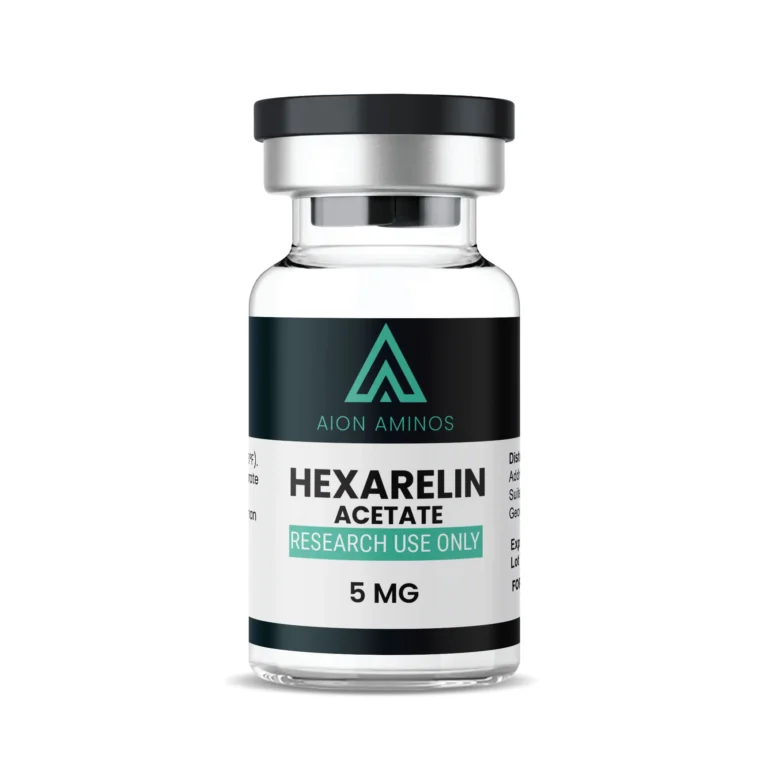
Hexarelin acetate explained for researchers: structure, receptor targets including GHS-R1a and CD36, key preclinical findings and the limits of the evidence.
New to Aion? Use the code below at checkout and save 25% on your first purchase.
Valid on first purchase only. One use per customer. Cannot be combined with other offers.