$119.00
You’ll be briefly redirected to Link Money, our secure ACH payment partner, to connect your bank and complete payment.
– Your bank login is never visible to or stored by us
– Encrypted, bank-level security
– A standard, trusted payment process
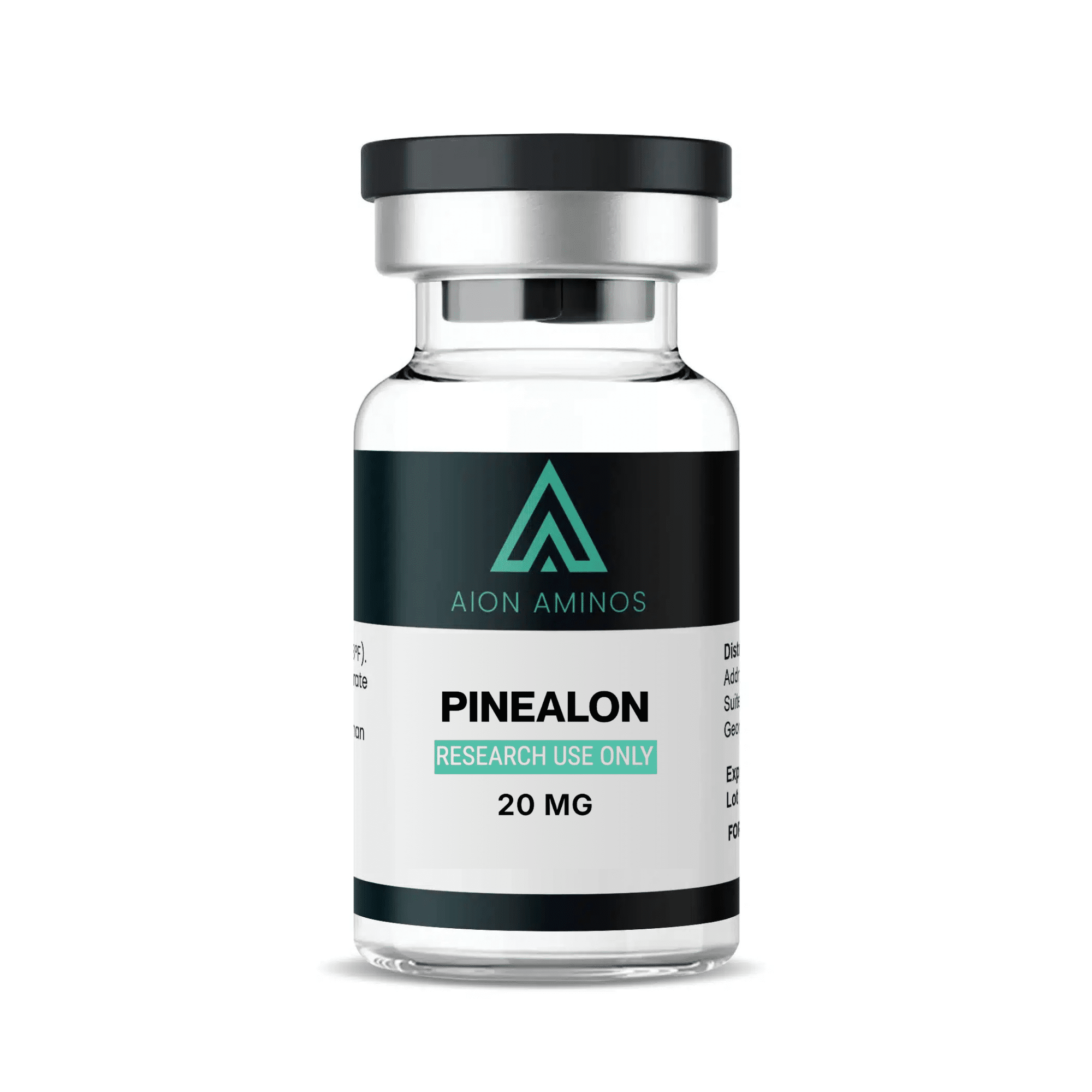
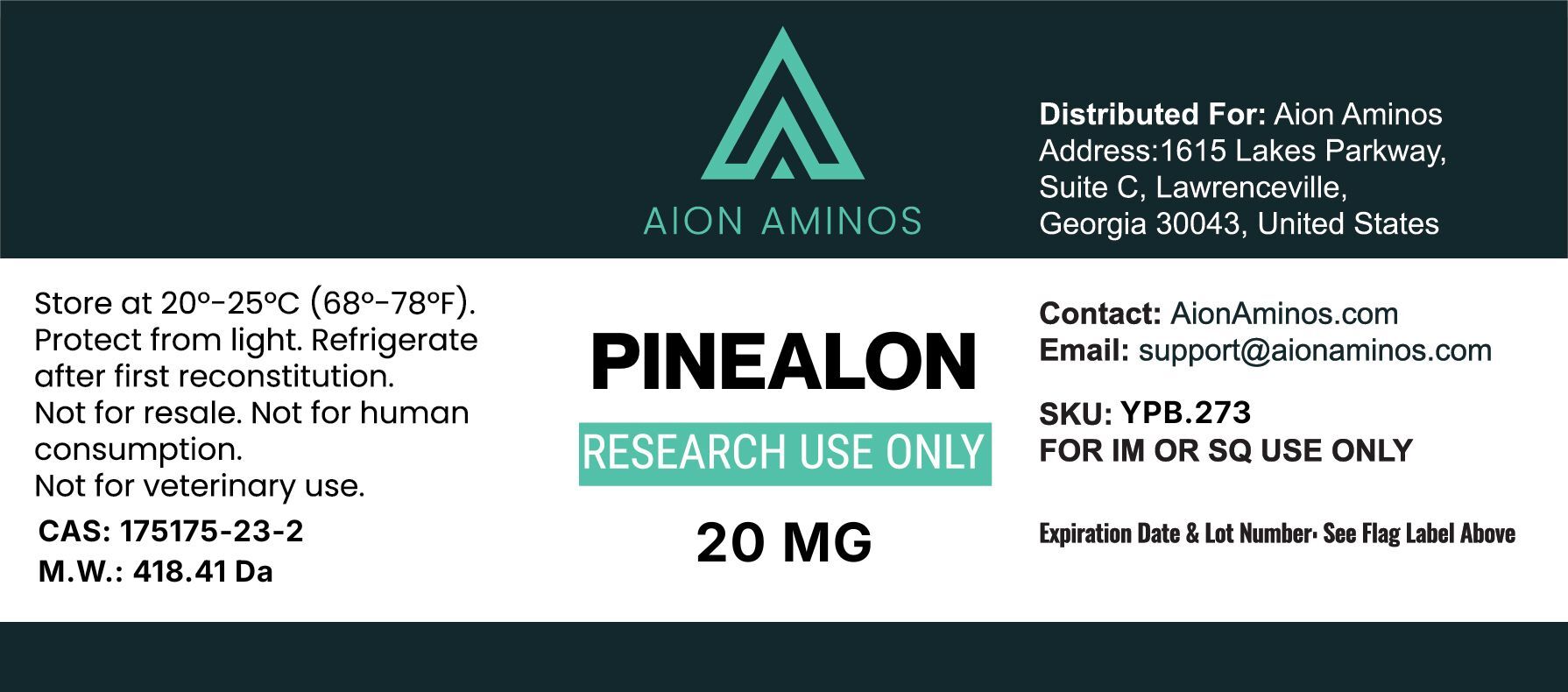
Pinealon peptide is used by researchers as a reference synthetic tripeptide in studies examining its association with pineal gland function and pineal gland tissue. In published experimental biology, Pinealon administration has been examined in models exploring gene expression, protein synthesis, and cell viability in nerve cells and brain tissue. Researchers describe possible mechanisms by which this short peptide interacts with nuclear material, offering valuable context for research applications in neuroscience.
A significant body of Pinealon research has focused on oxidative stress and reactive oxygen species, with laboratory studies examining the peptide’s reported association with neuronal survival, cellular resilience, and mitochondrial function under experimental stress conditions. Related studies referenced in the National Center for Biotechnology Information literature — including work by Khavinson V, Arutjunyan A, and Vanyushin BF — have explored the peptide’s documented association with a neuroprotective effect in cell models, including models relevant to Alzheimer’s disease research.
Additional research applications examine Pinealon in the context of circadian rhythm regulation, melatonin synthesis, and synaptic plasticity, reflecting the peptide’s historical link to the pineal gland. Researchers study how this peptide bioregulator may relate to cognitive function endpoints in experimental systems, generating insights into gene expression and cellular function. The Pinealon peptide is frequently compared alongside the related EDR peptide in bioregulator research. All work described here is conducted for laboratory research use only and is not intended to diagnose, treat, cure, or prevent any disease.
Pinealon peptide is a synthetic tripeptide supplied as a lyophilized powder for laboratory research purposes.
Peptide type: Synthetic tripeptide bioregulator (short peptide)
Amino acids: Glutamic acid, aspartic acid, arginine (Glu-Asp-Arg)
Molecular formula: C₁₅H₂₆N₆O₈
Molecular weight: Approximately 418.4 g/mol
Form: White lyophilized powder
Purity: Verified for laboratory research use
The molecular formula and molecular weight listed above describe Pinealon as a reference peptide for research use. This synthetic peptide is one of the class of short peptides studied by Vladimir Khavinson and colleagues in experimental biology. Pinealon peptide is not a dietary supplement and is intended solely for laboratory research. Aion Aminos aims to supply the best peptides for qualified researchers, with each bioregulatory peptide offered strictly for laboratory research use.
Pinealon peptide is a synthetic tripeptide composed of glutamic acid, aspartic acid, and arginine. It is a short peptide bioregulator associated with the pineal gland and is supplied as a lyophilized powder for laboratory research use only.
This peptide is commonly used in laboratory settings to investigate neutral mechanisms such as gene expression, protein synthesis, oxidative stress, and neuronal survival in brain tissue and nerve cells. Pinealon research, including work by Professor Vladimir Khavinson, has explored possible mechanisms relating the peptide to cell viability and cognitive function endpoints in experimental models. It is not intended for human use.
No. There is no Pinealon FDA approval for human use. Pinealon peptide is sold strictly for laboratory research purposes and is not a dietary supplement, drug, or approved product. It is not intended for diagnostic or therapeutic use.
No. Pinealon peptide is sold strictly for laboratory research use and is not for human consumption. It is not intended for diagnostic or therapeutic use. Buyer assumes full responsibility for proper handling and research use.
New to Aion? Use the code below at checkout and save 25% on your first purchase.
Valid on first purchase only. One use per customer. Cannot be combined with other offers.