
$169.00
You’ll be briefly redirected to Link Money, our secure ACH payment partner, to connect your bank and complete payment.
– Your bank login is never visible to or stored by us
– Encrypted, bank-level security
– A standard, trusted payment process
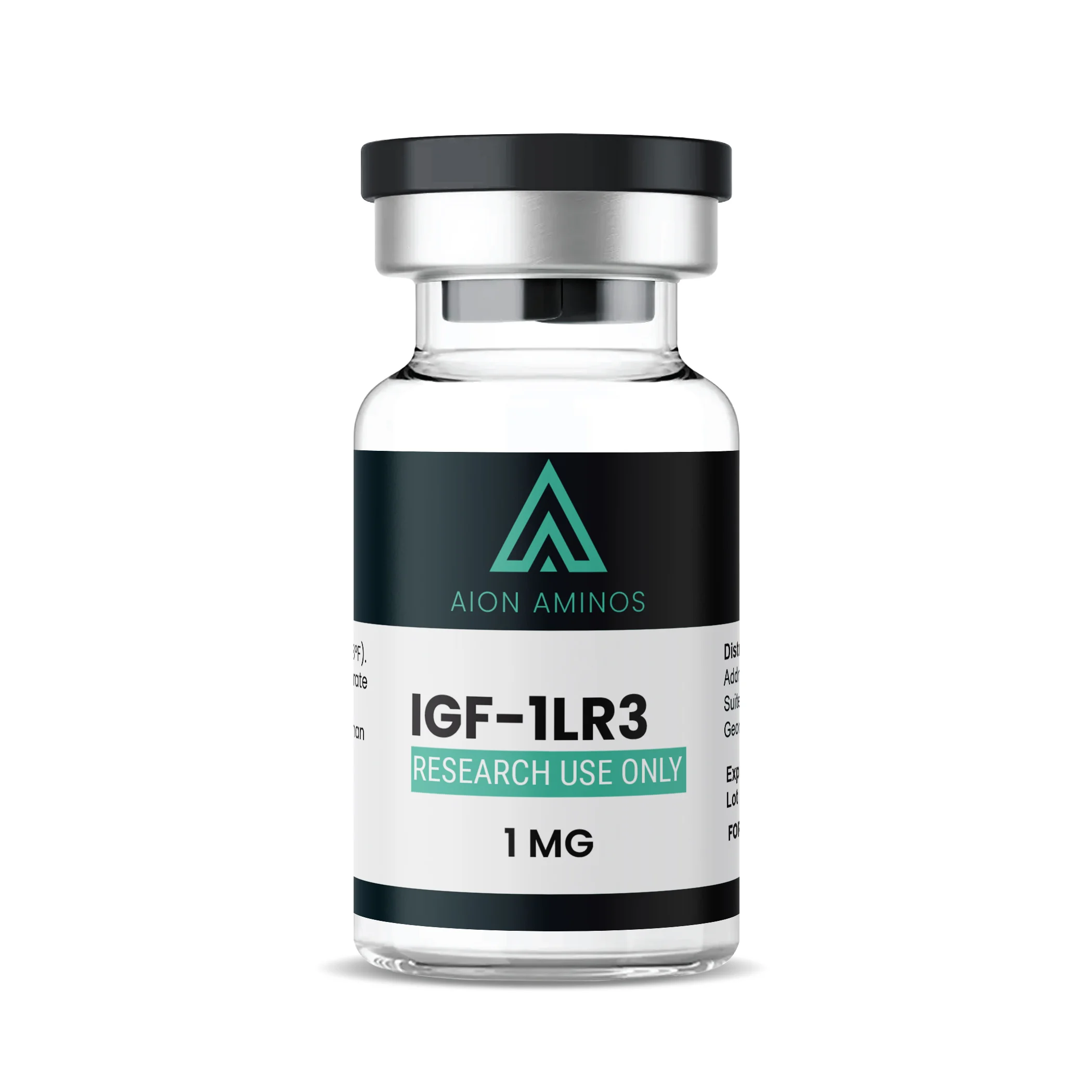
In laboratory environments, IGF-1 LR3 is commonly studied as a growth factor that activates receptor-mediated signaling pathways influencing cell proliferation, cell growth, and metabolic regulation. Researchers frequently investigate how the IGF 1 receptor responds to this analog in experimental models examining endocrine and metabolic communication.
Scientific studies often explore interactions between insulin like growth factor, growth hormone, and insulin signaling pathways. These investigations frequently examine mechanisms related to protein synthesis, glucose uptake, and cellular energy utilization in metabolic research systems.
Experimental research may also analyze biological pathways involving muscle cells, muscle tissue, and skeletal muscle signaling networks. Studies commonly investigate mechanisms associated with muscle growth, muscle hypertrophy, and structural adaptation processes in cellular models.
Additional literature explores frameworks involving recovery, muscle repair, muscle regeneration, and cellular responses to metabolic signaling within laboratory models. Some studies also reference pathways related to fat metabolism, nutrient partitioning, and theoretical metabolic frameworks involving fat loss, though these references remain confined strictly to research contexts.
IGF-1 LR3 is a modified analog of insulin like growth factor designed with structural changes that reduce binding to IGF binding proteins, resulting in prolonged receptor activity in laboratory research models.
IGF-1 LR3 contains structural modifications compared with regular IGF 1, natural IGF 1, or native IGF 1, allowing researchers to study differences in receptor signaling and growth factor activity.
Scientific literature commonly references IGF-1 LR3 in research examining growth factor signaling, cell proliferation, protein synthesis, metabolic signaling pathways, and cellular responses in muscle cells and other biological systems.
No. This peptide is supplied strictly for research use and is not intended for supplementation, peptide therapy, or human consumption.
New to Aion? Use the code below at checkout and save 25% on your first purchase.
Valid on first purchase only. One use per customer. Cannot be combined with other offers.