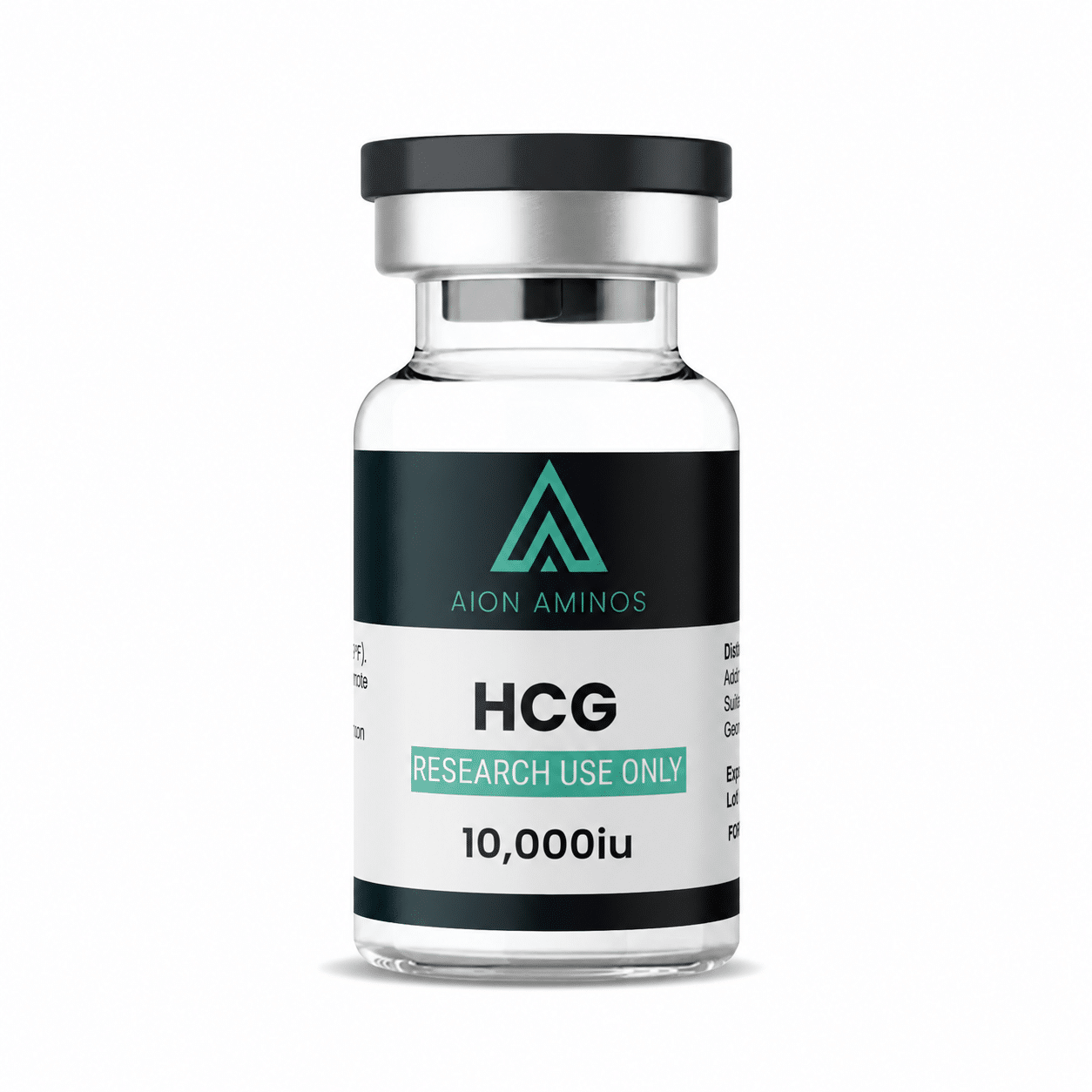
Human Chorionic Gonadotropin (HCG) is a glycoprotein hormone studied extensively in clinical endocrinology and reproductive medicine for its role in luteinizing hormone (LH) receptor activation, gonadal steroidogenesis, and reproductive hormone regulation. HCG consists of two noncovalently associated subunits, alpha and beta, with the beta subunit providing its distinctive molecular identity. It is widely examined for its interaction with the LHCGR receptor, a key regulator of steroid hormone production and reproductive signaling.
In laboratory research, HCG signaling is central to understanding how luteinizing hormone receptors regulate testosterone synthesis in testicular Leydig cells and progesterone production in ovarian luteal cells. Research has demonstrated that HCG activates intracellular cyclic AMP (cAMP) and protein kinase A (PKA) pathways, influencing steroidogenic enzyme activity, cholesterol transport, and downstream hormone biosynthesis. Its prolonged receptor activity relative to endogenous LH makes it particularly valuable for investigating sustained gonadotropin signaling and endocrine responses.
Studies often examine how exogenous HCG influences testicular steroidogenesis, intratesticular testosterone production, ovarian follicular maturation, and corpus luteum function. Research involving HCG administration also explores its effects on reproductive hormone feedback, gonadal function, and the relationship between LH receptor stimulation and spermatogenic activity. Additional investigations examine HCG-mediated signaling in implantation, early pregnancy, and placental communication, providing insight into the broader physiological roles of this hormone.
This compound is supplied as a stable, lyophilized powder for laboratory research applications.