

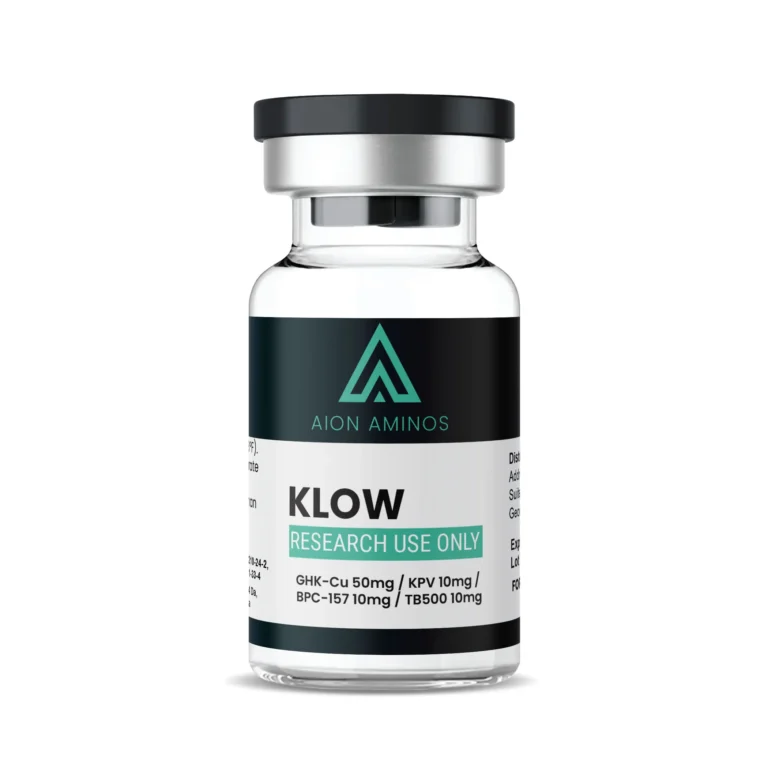
KLOW Peptide Blend: A Research Overview of GHK-Cu, BPC-157, TB-500 and KPV
What the KLOW peptide blend contains, how each of its four components is studied in laboratory models, and what the research does and does not show.
Longevity peptides are an emerging area of scientific investigation focused on molecular signaling systems involved in aging, cellular stress adaptation, and metabolic regulation. Researchers studying aging biology examine how specific signaling molecules influence cellular function, mitochondrial communication, and tissue resilience over time.
Aging is not controlled by a single biological mechanism. Instead, it involves interconnected pathways associated with:
Among the molecules explored in longevity research are several specialized peptide compounds often categorized as anti aging peptides or bioactive peptides in scientific literature.
Several peptides commonly discussed in this field include:
Although these compounds differ structurally and mechanistically, each peptide is studied for its interaction with biological pathways related to longevity, stress adaptation, and cellular resilience.
Modern research into aging focuses on several interconnected biological mechanisms often referred to as hallmarks of aging.
One major area of focus is cellular senescence, a state in which cells stop dividing while remaining metabolically active. These senescent cells release signaling molecules that can influence surrounding tissues and inflammatory pathways.
Mitochondria regulate cellular energy production and metabolic adaptation. Over time, mitochondrial dysfunction may alter signaling networks related to oxidative stress and cellular metabolism.
Because mitochondria influence nearly every tissue system, maintaining mitochondrial function has become an important topic in longevity medicine and experimental biology.
DNA damage accumulates throughout the lifespan, influencing gene regulation and cellular communication networks involved in biological aging.
As organisms age, changes in endocrine and inflammatory signaling can affect:
Researchers investigating longevity peptides often explore how these compounds interact with one or more of these mechanisms.
Epitalon is a synthetic tetrapeptide originally developed during investigations into pineal gland signaling and circadian biology.
This research peptide is structurally related to epithalamin, a peptide complex derived from the pineal gland and studied in endocrine signaling research.
Research involving Epitalon often examines pathways related to telomere regulation and circadian signaling.
Telomeres are protective structures located at chromosome ends that shorten during cellular replication. Experimental studies have explored how this specific peptide may influence pathways associated with telomerase signaling and cellular adaptation.
The pineal gland regulates circadian rhythms through signaling molecules such as melatonin. Researchers investigate how circadian regulation influences healthy aging, metabolic coordination, and endocrine communication.
FOXO4-DRI is a synthetic peptide designed to interfere with interactions between FOXO4 and p53, proteins involved in stress signaling and cell-cycle regulation.
This peptide is widely studied in models involving cellular senescence and apoptotic signaling.
FOXO4 is a transcription factor involved in cellular stress responses. In senescent cells, FOXO4 may bind to p53 in ways that contribute to maintenance of the senescent state.
FOXO4-DRI is designed to disrupt this interaction, allowing researchers to study pathways associated with:
Because of these properties, FOXO4-DRI has become an important compound in experimental longevity research.
Humanin is a mitochondrial derived peptide encoded within mitochondrial DNA rather than nuclear DNA.
Unlike many signaling peptides, Humanin originates from the mitochondrial genome and participates in mitochondrial-to-nuclear communication systems.
Research involving Humanin frequently focuses on pathways related to:
Because Humanin originates from mitochondrial DNA, researchers study how it influences communication between mitochondria and the nucleus during metabolic stress.
Experimental models examine how Humanin interacts with pathways involved in maintaining cellular integrity under environmental or metabolic stress conditions.
Mitochondria are central regulators of metabolism and energy production. Changes in mitochondrial signaling influence:
Because mitochondrial signaling is closely tied to longevity, mitochondrial peptides have become increasingly important in experimental biology.
Humanin represents one example of how mitochondrial-derived signaling molecules may influence cellular communication networks involved in healthy aging.
The accumulation of senescent cells is another important focus in studies of aging biology.
These cells often exhibit:
Researchers investigate peptides such as FOXO4-DRI to better understand how cells regulate apoptosis and stress signaling during aging.
Certain endocrine pathways associated with growth hormone signaling are also explored in longevity research.
Researchers investigate how:
may interact with broader systems involved in longevity and endocrine communication.
This area overlaps with discussions involving:
However, these remain separate from approved medical applications.
Beyond Epitalon, FOXO4-DRI, and Humanin, researchers may also study other compounds relevant to aging and immune signaling, including:
Some studies explore how these signaling molecules influence:
Researchers also investigate how peptide signaling interacts with broader physiological systems involving:
Additional areas of interest include:
These investigations remain within experimental and theoretical research contexts.
| Peptide | Primary Research Focus | Mechanistic Pathways |
| Epitalon | Circadian and telomere signaling | Pineal and telomerase pathways |
| FOXO4-DRI | Cellular senescence | FOXO4-p53 interaction |
| Humanin | Mitochondrial signaling | Stress adaptation and apoptosis |
Each peptide allows researchers to study distinct aspects of aging biology and cellular adaptation.
Researchers studying longevity peptides seek to better understand how cells respond to stress and maintain structural integrity throughout the lifespan.
These compounds are used to investigate:
This work contributes to a broader understanding of longevity, metabolic adaptation, and cellular resilience.
Longevity peptides represent an expanding area of scientific investigation focused on the molecular systems that regulate aging, cellular communication, and stress adaptation.
Compounds such as Epitalon, FOXO4-DRI, and Humanin interact with pathways involving:
Although research into these molecules continues to evolve, they remain important tools for studying the biology of aging and cellular resilience across the lifespan.
This article is provided for scientific and educational discussion only.
Compounds referenced within the Aion Research Library are research grade peptides intended strictly for laboratory investigation. They are not approved drugs and are not intended to diagnose, treat, cure, or prevent any disease.
What the KLOW peptide blend contains, how each of its four components is studied in laboratory models, and what the research does and does not show.
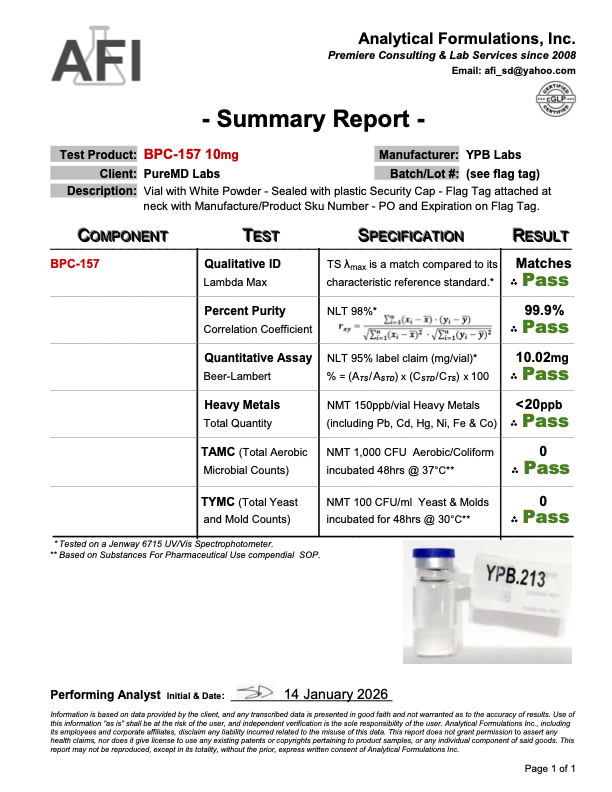
A practical guide to peptide certificates of analysis: what HPLC, mass spectrometry and UV-Vis results mean, how to read purity and assay numbers, and which red flags to watch for.
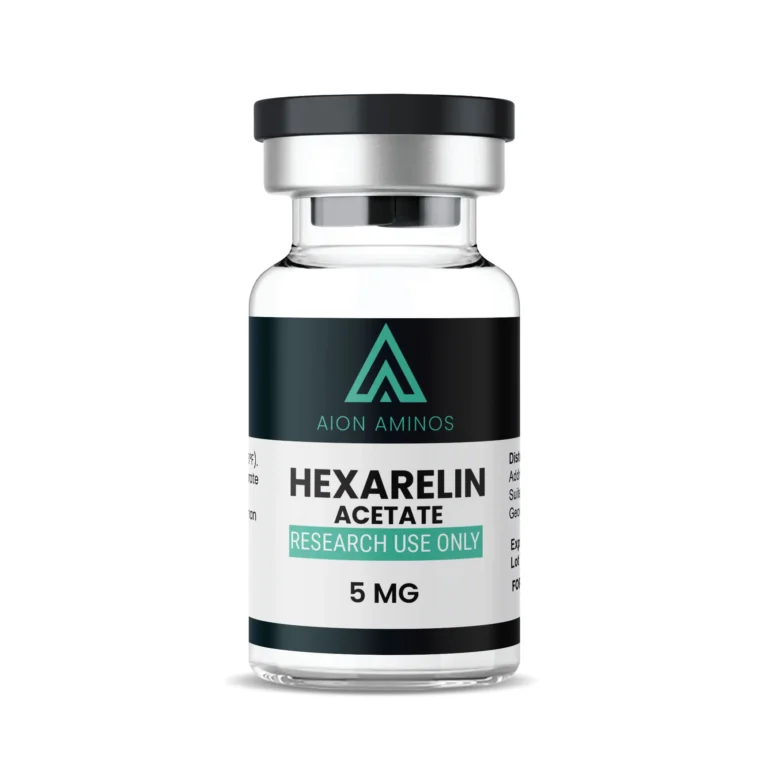
Hexarelin acetate explained for researchers: structure, receptor targets including GHS-R1a and CD36, key preclinical findings and the limits of the evidence.
New to Aion? Use the code below at checkout and save 25% on your first purchase.
Valid on first purchase only. One use per customer. Cannot be combined with other offers.