The Glow peptide has become a frequent point of reference in modern peptide research, appearing across a growing body of preclinical literature. As a combination compound, the Glow peptide brings together several individually studied sequences into a single research-grade formulation. This article explores how the Glow peptide is examined in laboratory studies, what components define the glow blend, and which scientific pathways researchers investigate when working with the Glow peptide in controlled models. Everything described here is presented for research use only and does not represent guidance for human use.
What Defines the Glow Peptide Blend
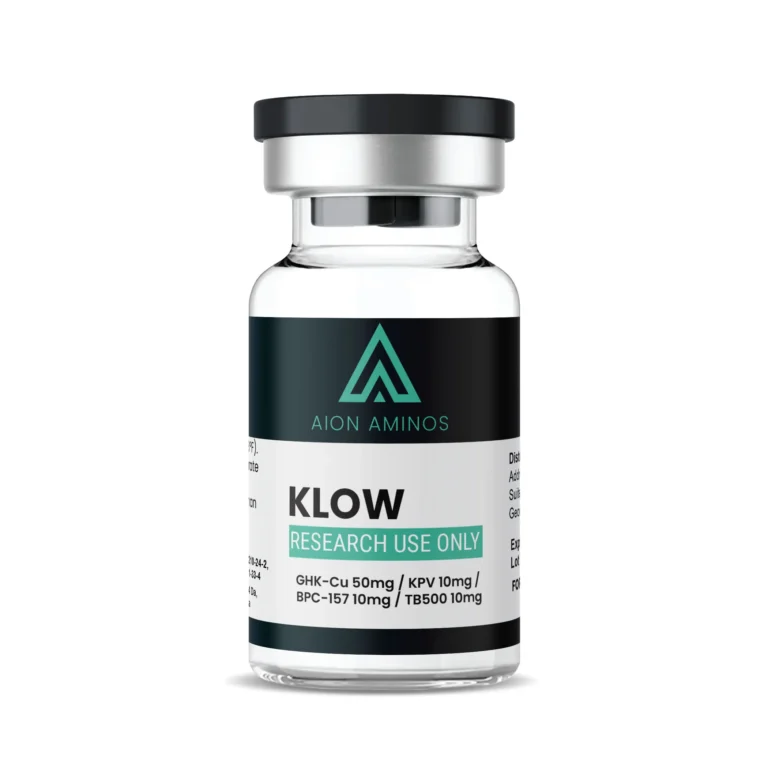
The Glow peptide, sometimes cataloged as the glow stack or the glow peptide protocol, is a blend composed of several well-characterized sequences. In most research references, the glow blend combines a copper peptide known as the GHK Cu peptide (ghk cu peptide) with the sequences commonly abbreviated as BPC 157 TB 500. The TB 500 fragment is associated with thymosin beta 4, also written thymosin β4 or thymosin beta, a peptide widely studied in tissue research models.
Each peptide within the glow blend is characterized individually before researchers examine the sequences together, which is why the combined glow peptides attract interest in comparative lab studies. The copper peptide component is frequently referenced alongside collagen peptides and collagen chemistry, while the remaining sequences appear in connective tissue and tissue support contexts. Studied as a unit, the Glow peptide gives peptide therapy research a single reference formulation rather than several separate ones.
Research Areas Associated with the Glow Peptides
Within peptide therapy research models, the Glow peptide is examined for its relationship to collagen synthesis and collagen production pathways. Investigators studying collagen support often reference co-factors such as vitamin C, which participates in collagen formation at the cellular level. In this peptide therapy research context, the glow peptides serve as a convenient way to study several collagen-associated sequences at once. These studies remain confined to controlled research and preclinical models.
Researchers also examine parameters associated with skin in controlled models. Endpoints such as skin texture, skin quality, skin elasticity, and skin health are recorded as measurable research variables rather than outcomes. Related studies reference skin repair, skin regeneration, and skin rejuvenation as pathway-level phenomena within in-vitro and animal systems, always inside a research framework. Because these sequences and the glow blend are so closely tied to skin biology in the literature, skin remains a central theme across Glow peptide research.
Some literature within peptide therapy research also references hair follicle models, where hair-related tissue parameters are documented alongside skin observations. Because hair and skin share similar tissue characteristics, hair and skin models are sometimes studied together, and hair endpoints appear in the same preclinical datasets as skin endpoints.
Mechanisms Studied at the Cellular Level
At the cellular level, the Glow peptide is investigated for pathways tied to regeneration, tissue healing, and general healing responses observed in preclinical models. The thymosin beta 4 component is frequently referenced in tissue and connective tissue research, while the BPC 157 sequence appears in literature examining healing and tissue support. This makes healing pathways one of the more studied themes for the Glow peptide.
Inflammation is another area of study. Research literature references anti inflammatory effects and markers of systemic inflammation observed in laboratory models, describing how these peptides interact with signaling associated with inflammation. As with all peptide therapy research, this inflammation-related work is characterized strictly in experimental systems and does not describe effects in humans. The therapy research field treats these mechanisms as questions to investigate, not conclusions.
How the Glow Stack Is Analyzed in Laboratory Research
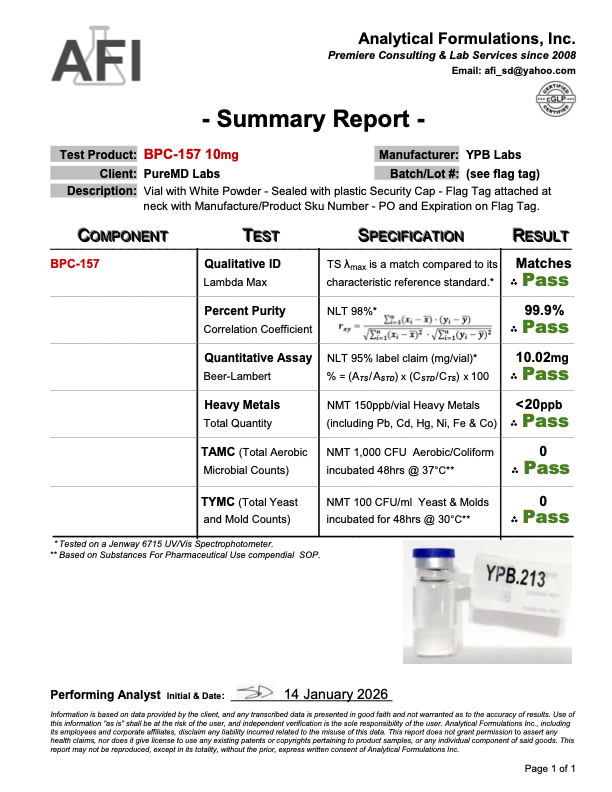
Before the glow peptides enter any research application, analytical work confirms identity and composition. Techniques such as mass spectrometry are used to verify sequence composition, and each peptide is characterized to a high specification, commonly referenced as 99 purity (99% purity). Confirming this ensures that research peptides behave consistently across repeated study and that the glow blend performs the same way from batch to batch.
Research documentation may reference peptide injection methodologies used in animal models strictly for protocol description. No dosing, peptide injection, or administration guidance for human use is provided or implied. This keeps every part of the therapy research literature grounded in controlled study.
Product Details
The Glow peptide is supplied as a research-grade blend for laboratory research only. These product details describe a compound intended solely for controlled study within qualified research environments. The Glow peptide is not a therapy, a treatment, or a product for human use, and no therapy claims are made or implied.
Key Insight
The central key insight for researchers is that the Glow peptide is useful precisely because its components have each been individually studied, allowing the combined glow blend to act as a single reference point across collagen, tissue, and skin pathway research. Framed this way, the glow peptides become a practical tool in structured preclinical research models rather than a finished therapy, and the Glow peptide continues to earn its place in peptide research libraries.
Important Disclaimer
Products are sold strictly for laboratory and research purposes. Not for human use. The information provided is for educational purposes only and is not intended to diagnose, treat, cure, or prevent any disease. Nothing in this article constitutes medical advice or peptide therapy guidance for humans.