
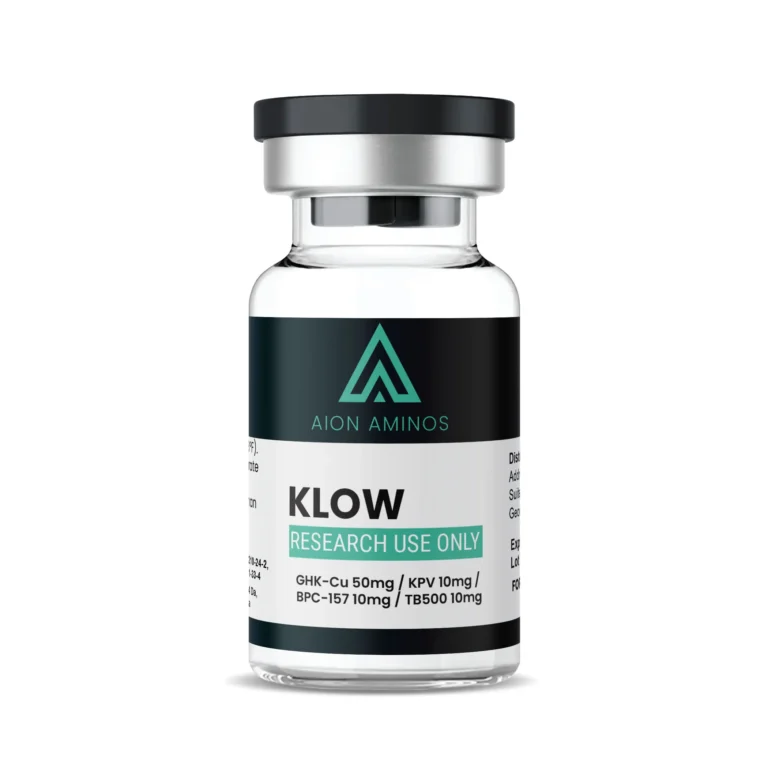
KLOW Peptide Blend: A Research Overview of GHK-Cu, BPC-157, TB-500 and KPV
What the KLOW peptide blend contains, how each of its four components is studied in laboratory models, and what the research does and does not show.
Delta sleep inducing peptide (DSIP) is a naturally occurring neuropeptide that has been examined in experimental research on sleep regulation, neuroendocrine signaling and circadian rhythm biology. The DSIP peptide was first isolated in the 1970s during work on molecules associated with delta wave sleep, the deep stage of sleep marked by slow, high amplitude brain activity.
Since that discovery, the sleep inducing peptide has been studied in laboratory settings for its interaction with central nervous system pathways tied to sleep architecture, stress response systems and hormonal regulation. Because DSIP peptides sit at the intersection of the brain and the endocrine system, research interest has never been limited to sleep alone. Investigators have used this substance as a tool for studying how a single small peptide can influence sleep structure, stress hormones and recovery signaling at the same time.
That breadth is why DSIP appears so often in sleep neuropeptide research, and why it continues to be referenced in discussions of peptide therapy, functional medicine and general health sciences even though it remains a research compound rather than an approved product.
DSIP is a short chain of nine amino acids, which classifies it as a nonapeptide. The sequence reported throughout the research literature is:
Trp-Ala-Gly-Gly-Asp-Ala-Ser-Gly-Glu
This compact structure is part of what makes the peptide interesting to study. Its small size and amino acid composition allow it to interact with signaling pathways in the central nervous system and the neuroendocrine network, and published work indicates the peptide is able to cross the blood brain barrier, which is unusual for many larger peptide molecules.
Endogenous DSIP has been identified in cerebrospinal fluid, plasma and several tissues, which supports the view that it functions as a natively produced signaling substance rather than a purely synthetic construct. Research grade DSIP is manufactured using solid phase peptide synthesis so that investigators can study its biochemical behavior under controlled conditions.
Human sleep moves through repeating cycles made up of distinct sleep stages. One of the most studied is slow wave sleep, often called delta sleep because of the delta frequency brainwaves recorded by electroencephalography.
Delta dominant sleep has been associated in the research literature with several processes central to overall health:
Health researchers pay close attention to this stage because reductions in delta sleep track with declines in daytime function, mood and metabolic health, and because the quality of slow wave sleep is often a better marker than total hours in bed.
Because the delta sleep inducing peptide was first identified during studies of delta wave activity, it has been used repeatedly as a probe for understanding how sleep structure is organized and what neurochemical signals shape sleep quality. Modern sleep research places less emphasis on total time asleep and more on architecture, meaning the proportion, order and stability of the sleep stages across the night. The DSIP peptide is studied within that architectural framework rather than as a simple sedative.
The full DSIP mechanism remains an open question, and the research literature is honest about that. Rather than a single receptor target, the peptide appears to influence several overlapping systems.
The hypothalamus coordinates sleep wake cycles and endocrine output. DSIP has been investigated in experimental models examining how neuropeptides modulate hypothalamic regulatory pathways, including those governing sleep drive and hormone release.
Preclinical study designs have looked at the relationship between DSIP and several neurotransmitter systems relevant to sleep physiology, including:
A large portion of the research record concerns hormones rather than sleep alone. Investigations have reported that DSIP administration can influence growth hormone release, somatostatin activity and corticotropin related signaling. Because cortisol and related stress hormones follow a strong circadian pattern, these findings are usually interpreted as evidence that the peptide acts on timing and regulation rather than on any single hormone in isolation. Most of these results come from cellular and animal models designed to map neuroendocrine mechanisms.
Sleep regulation depends on the circadian system, which aligns physiology with the day and night cycle. Key components include:
Research involving DSIP frequently asks how a neuropeptide interacts with these overlapping networks. Some work has examined the peptide alongside melatonin because both are studied as signals that communicate biological timing rather than as agents that force sleep directly. Understanding these relationships helps scientists study the mechanisms behind sleep architecture, circadian alignment and long term health.
DSIP has an older clinical research record that is worth describing accurately. During the 1980s, several small studies with human patients were published in journals including European Neurology.
Participants were generally patients with long standing sleep complaints, many of whom had already tried conventional hypnotic medications without durable results.
One line of work examined whether DSIP could normalize sleep in middle aged and elderly chronic insomniacs, reporting changes in sleep continuity, sleep structure and self reported sleep quality in some participants. Other reports from the same era described DSIP in the treatment of withdrawal symptoms associated with alcohol and opiate discontinuation, and additional investigators studied the peptide in patients living with chronic pain who also had disturbed sleep.
Several points matter when reading this material:
This historical record explains why the peptide is still discussed today, and it also explains why claims about its possible effects should be framed carefully. The evidence base is interesting rather than settled.
Most of what is known about this peptide comes from animal studies. Work in rats and other models has explored:
Several rodent reports describe an apparent stress buffering effect, with treated rats showing altered corticosterone patterns and reduced oxidative stress markers compared with controls. Other work in rats has focused on recovery, examining whether improved delta sleep supports physical recovery after strain. These findings are hypothesis generating. They describe animal physiology and cannot be translated into human health outcomes.
The nervous system and the endocrine system communicate through the hypothalamic pituitary axis, and stress is where that conversation is most visible. Chronic stress alters cortisol rhythm, that disruption in turn degrades sleep architecture, and shallow sleep then impairs recovery. Sleep and stress are two of the most closely watched variables in modern health research, so a peptide studied for both draws sustained attention.
Investigators studying DSIP in this context typically look at:
Mapping these relationships remains a central goal of neurobiological research rather than a finished body of knowledge.
DSIP is often mentioned in the broader peptide therapy and functional medicine conversation, usually grouped with other compounds discussed for sleep, recovery and stress. That visibility is a matter of public interest, not regulatory status, and its presence in consumer health content does not make it a health product.
To be clear about what this product is and is not:
Researchers evaluating this substance should design their study protocols according to their institutional standards and applicable regulations.
Published research involving DSIP spans several biological systems tied to sleep and health:
Most of this work has been conducted in animal models and cellular systems built to isolate specific signaling pathways.
Researchers studying sleep and neuroregulatory peptides often examine related compounds alongside DSIP.
Epitalon A peptide studied in experimental models of circadian signaling and pineal regulation.
Semax A neuropeptide analog examined in research on cognitive and neurochemical signaling pathways.
Selank A peptide investigated in models of neuropeptide signaling, stress adaptation and anxiety like behavior.
Studied together, these compounds let investigators probe multiple components of central nervous system peptide signaling networks.
Delta sleep inducing peptide is a naturally occurring nonapeptide of nine amino acids, studied since the 1970s in research on sleep physiology, circadian biology and neuroendocrine signaling. The DSIP peptide has been examined for its interaction with hypothalamic pathways, its reported influence on growth hormone and cortisol, its behavior in animal studies of stress and pain, and its historical appearance in small human trials published in journals such as European Neurology.
The evidence remains preliminary. What makes DSIP peptides scientifically interesting is not a proven effect but the way a single small molecule sits at the junction of sleep architecture, stress regulation and hormonal timing. Ongoing research continues to investigate those mechanisms.
For Research Use Only (RUO).
This product is intended strictly for laboratory research and educational purposes. DSIP is not approved for human or veterinary use and is not intended to diagnose, treat, cure or prevent any disease. Nothing on this page constitutes medical advice or a health claim, and nothing here should be used to guide decisions about sleep disorders, medications or any other aspect of personal health.
What the KLOW peptide blend contains, how each of its four components is studied in laboratory models, and what the research does and does not show.
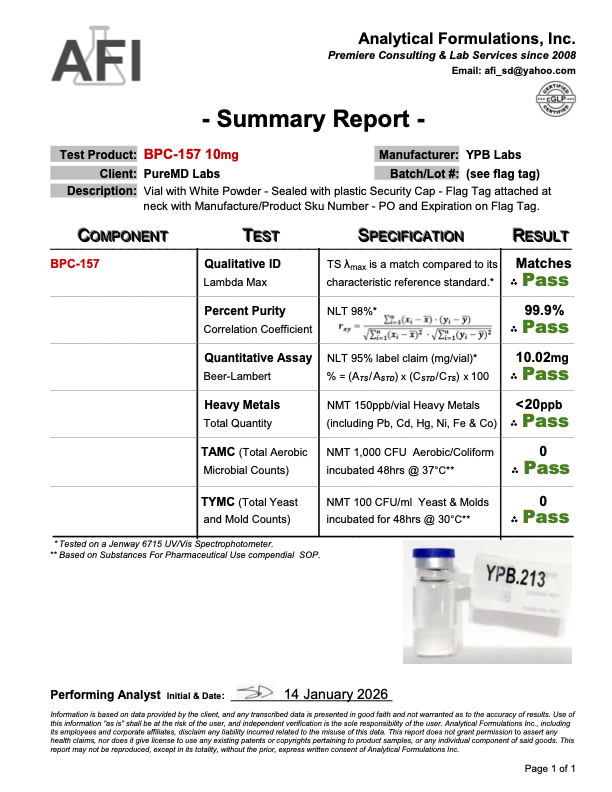
A practical guide to peptide certificates of analysis: what HPLC, mass spectrometry and UV-Vis results mean, how to read purity and assay numbers, and which red flags to watch for.
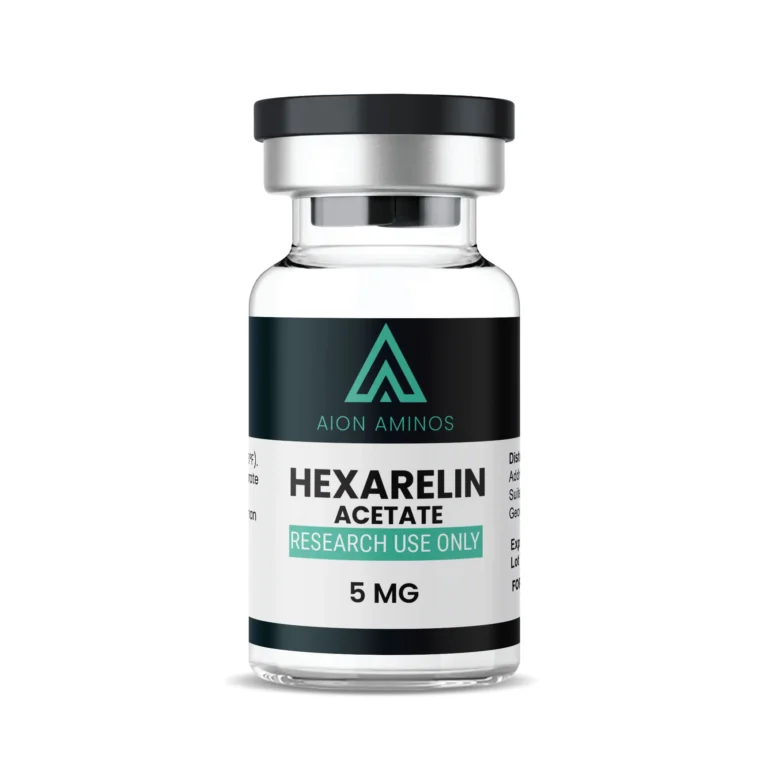
Hexarelin acetate explained for researchers: structure, receptor targets including GHS-R1a and CD36, key preclinical findings and the limits of the evidence.
New to Aion? Use the code below at checkout and save 25% on your first purchase.
Valid on first purchase only. One use per customer. Cannot be combined with other offers.