
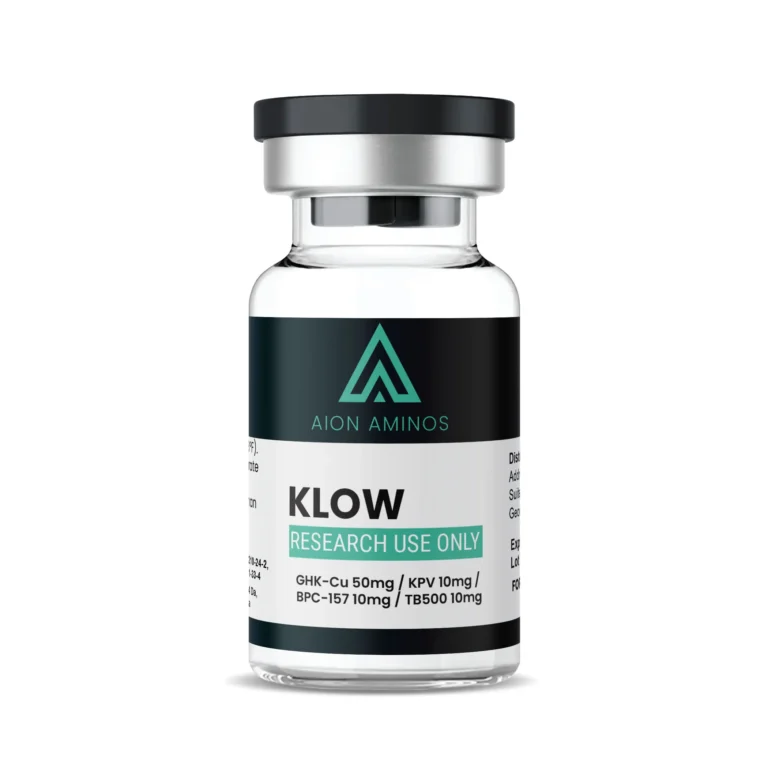
KLOW Peptide Blend: A Research Overview of GHK-Cu, BPC-157, TB-500 and KPV
What the KLOW peptide blend contains, how each of its four components is studied in laboratory models, and what the research does and does not show.

Search for SLU-PP-332 and you will find the phrase exercise in a bottle within the first three results. That framing did not come from the scientists who made the compound. It came from headlines, and it has traveled far enough that the underlying research is now harder to see than the marketing wrapped around it.
The actual research is genuinely interesting. It is also entirely preclinical. Both things are true, and separating them is the point of this article.
SLU-PP-332 is a small synthetic molecule developed in the laboratory of Thomas Burris, whose group carried out the foundational work at Saint Louis University. The SLU prefix in the name comes directly from that institution.
It is frequently listed as the SLU-PP-332 peptide, and that label is simply wrong. The compound contains no amino acid chain. It is a synthetic ERRα, ERRβ and ERRγ agonist, meaning it binds and activates all three estrogen related receptors. Because it hits all three, the research literature describes it as a pan ERR agonist rather than a selective ERRγ agonist or a synthetic ERRα agonist alone. Anyone cataloguing this compound alongside research peptides should know it belongs to a different chemical class entirely.
Estrogen related receptors are nuclear receptors, which means they act as transcription factors. Despite the name they are not activated by estrogen. They sit upstream of a large set of genes governing energy production and mitochondrial biology.
ERR receptors regulate programs including the following.
This is the mechanistic reason SLU-PP-332 drew attention. ERR activation switches on a metabolic gene program that normally turns on during exercise. The compound engages that program pharmacologically rather than through exertion, which is where the exercise mimetic shorthand originated.
The shorthand is not baseless. It is just far narrower than how it gets used, since activating a transcriptional program is not the same as producing the full physiology of training.
Published work from the Burris group, including research appearing in ACS Chemical Biology and the Journal of Pharmacology and Experimental Therapeutics, reported the following in rodents.
Mice given SLU-PP-332 at 50 mg/kg showed increased running distance and running time compared with controls. Muscle tissue analysis indicated a shift toward type IIa oxidative fibers, the fiber population associated with endurance capacity rather than peak force. Markers of fatty acid oxidation increased in skeletal muscle, consistent with a compound acting through ERR driven energy pathways.
In animals on a high fat diet, SLU-PP-332 treatment was associated with reduced fat mass and reduced fat accumulation without a measured reduction in food intake, alongside improved glucose tolerance and improved insulin sensitivity. Those metabolic findings are what put the compound into conversations about metabolic syndrome and metabolic disease research.
Separate work on pan ERR agonists and cardiac energy metabolism appeared in Circulation, examining fatty acid metabolism and mitochondrial function in heart failure models, with collaborating groups including researchers at Washington University in St. Louis. Portions of this research area have been supported through National Institutes of Health funding.
That is the evidence base. Mice, cells and cardiac models.
Endurance is fundamentally an energy supply problem. A muscle cell sustaining prolonged work needs a steady flow of energy, and the rate limiting factor is how efficiently that cell converts stored substrate into usable energy. Training improves endurance largely by improving that conversion, expanding mitochondrial density and shifting metabolism toward fat oxidation so that muscle glycogen lasts longer.
ERR agonism targets the transcriptional layer beneath that adaptation. By activating genes tied to mitochondrial energy production, the compound pushes muscle metabolism toward the oxidative pattern normally built through repeated endurance work. This is why every meaningful finding in the literature is a metabolism finding first and an endurance finding second. The running data in mice is downstream of the energy metabolism changes, not separate from them.
It also explains the interest from metabolic syndrome research. The same energy handling defects that limit endurance in muscle overlap with the metabolism problems seen in metabolic syndrome models, which is why one compound produced findings in both endurance capacity and glucose handling from a single mechanism.
Here is the gap between the data and the discourse.
There is no human data. Zero completed clinical trials. Every reported outcome in endurance, fat loss, weight loss, muscle composition and insulin sensitivity comes from preclinical studies in animals. Extrapolating a 50 mg/kg mouse result to a person is not a conservative estimate. It is an unsupported leap across species, dosing scale and physiology.
Exercise does far more than activate ERR. Training produces cardiovascular remodeling, tendon and bone adaptation, neurological changes, hormonal shifts and effects on cognitive function that no single receptor agonist reproduces. A compound that increases fatty acid oxidation and endurance capacity in mice has replicated one slice of a much larger response.
Body composition findings are not weight loss claims. Reduced fat mass in a mouse on a controlled high fat diet is a measurement inside a designed experiment. It is not evidence that any product produces fat loss or weight loss in humans, and it says nothing about safety over time.
Muscle mass was not the finding. The reported change was fiber type distribution and oxidative capacity in existing muscle, not growth. Content promising muscle gains from this compound is describing something the research did not show.
Popular coverage accelerated ahead of the science. Fitness media discussion, including commentary from figures such as Jay Campbell, moved SLU-PP-332 into consumer awareness years before any human trial existed. Attention is not evidence.
The honest version of this compound’s profile includes real unknowns.
Pharmacokinetics are a live issue, since early characterization pointed to a short half life and limited oral bioavailability, which is part of why follow up analogs have been developed. Long term safety in any species has not been established. Chronic pan ERR activation across three receptor subtypes in many tissues raises questions that short rodent studies cannot answer, particularly for tissues where sustained metabolic acceleration might not be desirable. Whether the fat metabolism and glucose findings hold outside a high fat diet model is unresolved.
These are not reasons to dismiss the compound. They are the reasons it remains a research tool rather than a therapy.
Material in this category is supplied for laboratory research and research use only.
Compounds ship as lyophilized powder in sealed vials, with purity documentation and lot analysis available for verification. Reconstitution is performed by the receiving laboratory, commonly with bacteriostatic water or another solvent appropriate to the experimental design. Storage follows cold chain conditions with protection from light. Handling is restricted to trained personnel working under institutional protocols.
Experimental concentrations are determined by the investigator for the model system in question. No guidance for human use is provided, because no human use is authorized.
SLU-PP-332 is not approved by any regulatory authority. It is not a treatment for obesity, metabolic syndrome, metabolic disease or any other condition. It is not a supplement, not a therapy and not a performance product. Nothing here should be read as a claim about fat loss, weight loss, endurance, muscle mass or cognitive function in humans.
Compounds sold for research are supplied strictly for laboratory use by qualified investigators.
SLU-PP-332 is a synthetic pan ERR agonist from Saint Louis University that activates a metabolic gene program overlapping with the exercise response. In mice it increased endurance capacity, shifted muscle toward type IIa oxidative fibers, raised fatty acid oxidation and reduced fat mass while improving insulin sensitivity. Those are real preclinical research findings from a legitimate laboratory.
What they are not is evidence about people. The exercise mimetic label captures a mechanism and then quietly implies an outcome nobody has measured in humans. The science of ERR driven metabolism is worth following closely. The marketing around it is worth reading skeptically.
For Research Use Only.
This product is intended strictly for laboratory research and educational purposes. SLU-PP-332 is not approved for human or veterinary use and is not intended to diagnose, treat, cure or prevent any disease. Nothing on this page is medical advice.
What the KLOW peptide blend contains, how each of its four components is studied in laboratory models, and what the research does and does not show.
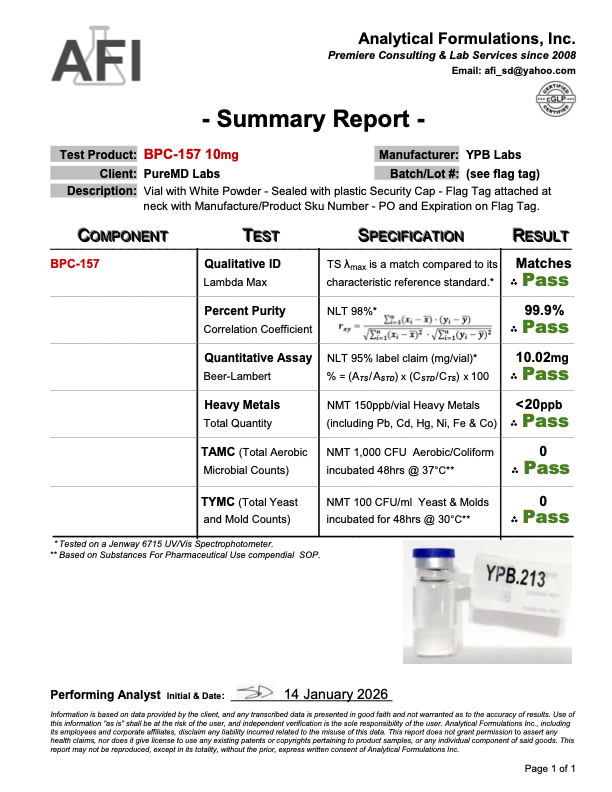
A practical guide to peptide certificates of analysis: what HPLC, mass spectrometry and UV-Vis results mean, how to read purity and assay numbers, and which red flags to watch for.
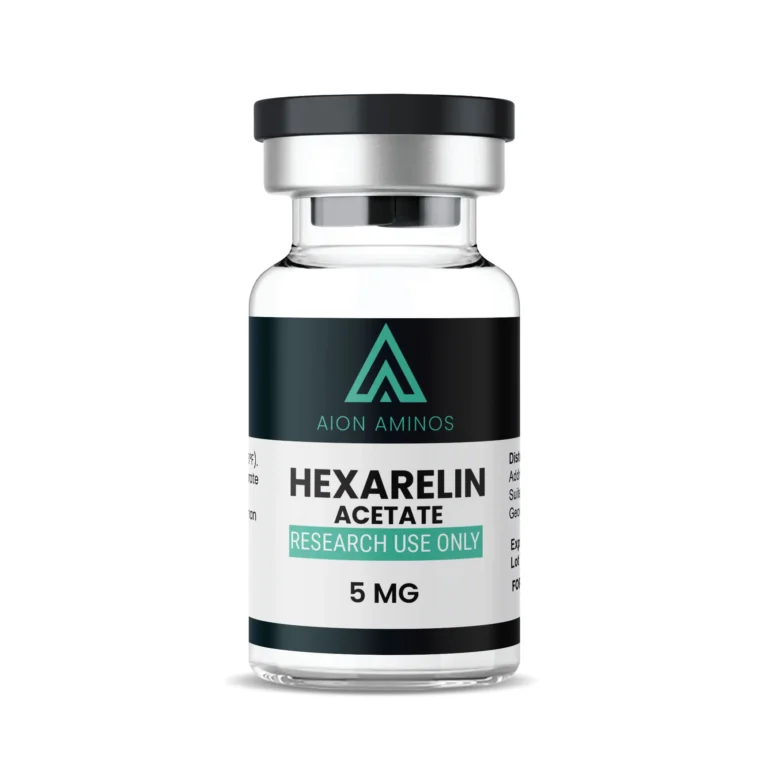
Hexarelin acetate explained for researchers: structure, receptor targets including GHS-R1a and CD36, key preclinical findings and the limits of the evidence.
New to Aion? Use the code below at checkout and save 25% on your first purchase.
Valid on first purchase only. One use per customer. Cannot be combined with other offers.