

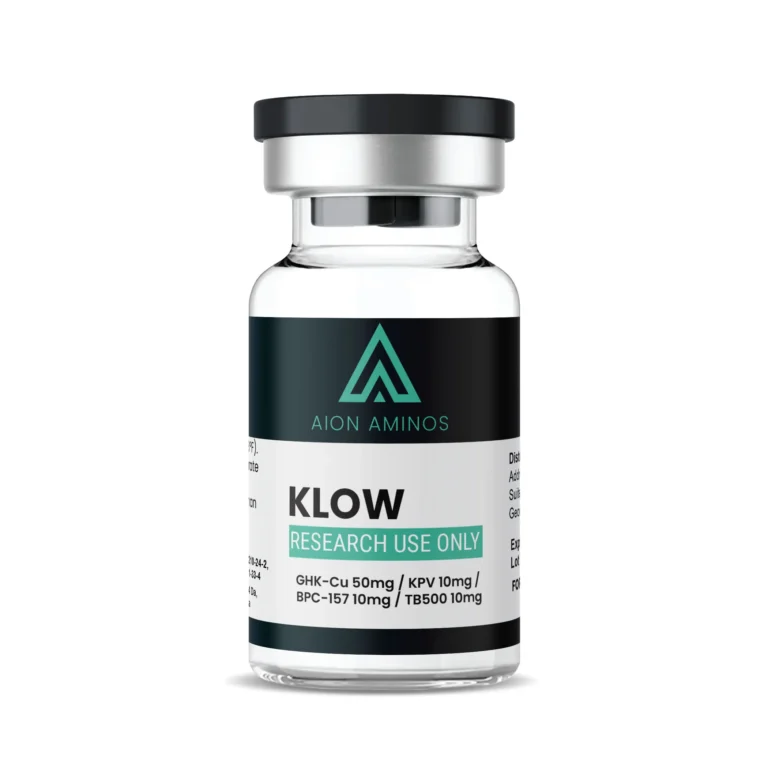
KLOW Peptide Blend: A Research Overview of GHK-Cu, BPC-157, TB-500 and KPV
What the KLOW peptide blend contains, how each of its four components is studied in laboratory models, and what the research does and does not show.
Every cell in the body runs on a molecule most people have never heard of. It is not a hormone, it is not a protein, and it does not build tissue. It carries information. Understanding what a NAD peptide signals inside the cell means starting with that molecule and following the pathways it touches.
NAD stands for nicotinamide adenine dinucleotide. Chemically it is a dinucleotide with a molecular weight of 663.43 g/mol, built from an adenine containing nucleotide joined to a nicotinamide containing nucleotide. It is not itself a peptide, and it contains no amino acid at all.
So why does the phrase NAD peptide appear everywhere? Because the research market groups compounds by what they act on rather than by strict chemistry. Researchers studying NAD metabolism often work with peptides and small molecules in the same experiment, and the category label followed. When you see NAD peptides listed alongside a research catalog, the accurate reading is compounds studied within NAD dependent pathways, not peptides made of NAD. Getting that distinction right is the difference between a page that informs and a page that misleads, and it matters more in this category than in most.
NAD functions as a coenzyme, which means it works as a partner molecule that a given enzyme requires in order to function. It cycles between an oxidized form and a reduced form, accepting and donating electrons as it moves through cellular metabolism.
Cells hold nicotinamide adenine dinucleotide in separate pools, and the levels in each pool move independently, which is why cells can run short in one compartment while levels elsewhere look normal.
That cycling supports several core cellular processes.
That last category is where the signaling story begins.
Most descriptions of NAD stop at metabolism. The more interesting biology sits with the enzymes that spend NAD as a substrate, because their activity rises and falls with how much is available.
Sirtuins. Sirtuin activation depends directly on NAD availability. These enzymes remove acetyl groups from proteins including histones, which changes how tightly DNA is packaged and which genes get read. When cellular NAD declines, sirtuin activity declines with it, and the cell shifts its expression program. Work from Imai S and colleagues established this dependency and made sirtuins central to NAD research.
PARPs. Poly ADP ribose polymerases consume NAD during DNA damage detection and cellular repair. Heavy damage means heavy consumption, which draws down the same pool sirtuins need.
CD38 and related enzymes. These degrade NAD and increase in activity across many tissues over time, which is one proposed reason NAD level measurements trend downward with age.
Put together, this is the actual answer to what a NAD peptide category compound is studied for. NAD is not just fuel moving through metabolism. It is a currency that several separate pathways compete for, and the balance between those pathways tells the cell whether to build, repair or conserve.
Cells do not make NAD from scratch most of the time. They recycle it through the salvage pathway, and they can build it from dietary inputs.
The relevant precursor compounds include the following.
These precursors are what most oral supplements in this space actually contain. When a label references NAD supplementation, the contents are usually a vitamin B3 derivative, a nicotinamide riboside product, or a nicotinamide mononucleotide product rather than NAD itself. Each NAD precursor enters the cycle at a different point, which is exactly why researchers compare them rather than treating them as interchangeable.
The reason this molecule attracts attention is a pattern reported across many tissue types. Measured NAD levels decline with age, and that decline tracks with reduced mitochondrial function.
Verdin E summarized the case connecting NAD to aging, metabolism and neurodegeneration, and the framework has held up as a research organizing principle. In animal models, restoring NAD levels through precursor administration has been reported to improve markers of mitochondrial function in tissues including skeletal muscle, along with changes in cellular energy production and metabolic flexibility.
Research groups have extended this into models of cognitive function and neurodegeneration, including work on Parkinsons disease models, where mitochondrial dysfunction is a recognized feature. Related work in cell biology has examined NAD dependent mechanisms in cellular repair and mitochondrial quality control.
Two cautions belong here. These findings come from animal models and cell culture, and a change in a biomarker is not the same as a change in health. Cellular aging is a research construct, not a diagnosis. Measured levels also vary widely between tissue types, between cells within the same tissue, and between measurement methods, so reported levels from one study rarely translate cleanly to another.
Skin turns up in NAD literature more than most people expect, and there is a clean mechanistic reason for it.
Skin cells absorb ultraviolet radiation, and UV exposure causes DNA damage in those cells within minutes. DNA damage activates PARP enzymes, and PARP activity consumes NAD. That makes skin tissue a useful and accessible model for studying how NAD supply responds to a defined stressor. Researchers can apply a controlled dose of UV to skin cell cultures and watch NAD pools fall in real time, which is far harder to do in internal organs.
This is also why nicotinamide has a long history in skin research specifically. Dermatology literature has examined topical and oral nicotinamide in the context of skin cell repair after UV exposure, and those studies helped establish that NAD availability limits how quickly damaged skin cells complete repair. Skin models continue to be used in NAD metabolism research because the tissue is layered, replaceable and easy to sample, giving cell biology researchers a window into pathways that are otherwise buried.
The takeaway is not that NAD is a skin product. It is that skin gave researchers a clear experimental system, and much of what is understood about NAD consumption under stress came from that work.
Anyone researching this category encounters a wide range of administration formats in consumer facing content. Describing them accurately matters, so here is the plain version.
IV therapy and IV infusion protocols marketed as NAD therapy deliver NAD or its precursors directly into circulation. Clinics also market IV NAD sessions, NAD injection formats and subcutaneous injection formats. Others sell oral supplements or NAD supplements built on precursors. All of these appear in the same conversation as peptide therapy offerings, which is how the NAD peptide phrase spread in the first place. Clinics that market peptide therapy frequently list NAD formats on the same menu, and that adjacency does more to explain the naming than any shared chemistry does.
What the evidence supports is narrower than the marketing suggests.
Compliance is not a footnote in this space, so this section is written plainly.
Compounds sold for NAD pathway research are supplied for laboratory use only. They are not medicines, not therapy, and not intended for personal use. Any therapy framing applied to this category belongs to clinics and marketers, not to the research literature, and no therapy outcome should be inferred from mechanism data. No dosing, administration route or protocol guidance is offered. Nothing in NAD research to date establishes that raising a NAD level in a person produces a defined health outcome, and no statement here should be read as a claim about disease, aging or cellular health.
Researchers evaluating any compound in this category should verify purity documentation and lot analysis, then design protocols under their own institutional standards.
A NAD peptide category compound is studied because of what nicotinamide adenine dinucleotide does as a signal rather than as fuel. Levels of nicotinamide adenine dinucleotide report the metabolic state of cells to sirtuins, PARPs and other consuming enzymes, and those enzymes decide how cells spend their resources. When levels fall, the pattern of metabolism inside those cells changes with them. Precursors including vitamin B3 forms, nicotinamide riboside and nicotinamide mononucleotide feed that pool through the salvage pathway, and cellular NAD availability shapes everything downstream from mitochondrial function to gene expression.
The pathways of NAD metabolism are real and well mapped, and the levels question sits at the center of them. The applications are still being investigated.
For Research Use Only.
Products referenced on this page are intended strictly for laboratory research and educational purposes. They are not approved for human or veterinary use and are not intended to diagnose, treat, cure or prevent any disease. Nothing here is medical advice.
What the KLOW peptide blend contains, how each of its four components is studied in laboratory models, and what the research does and does not show.
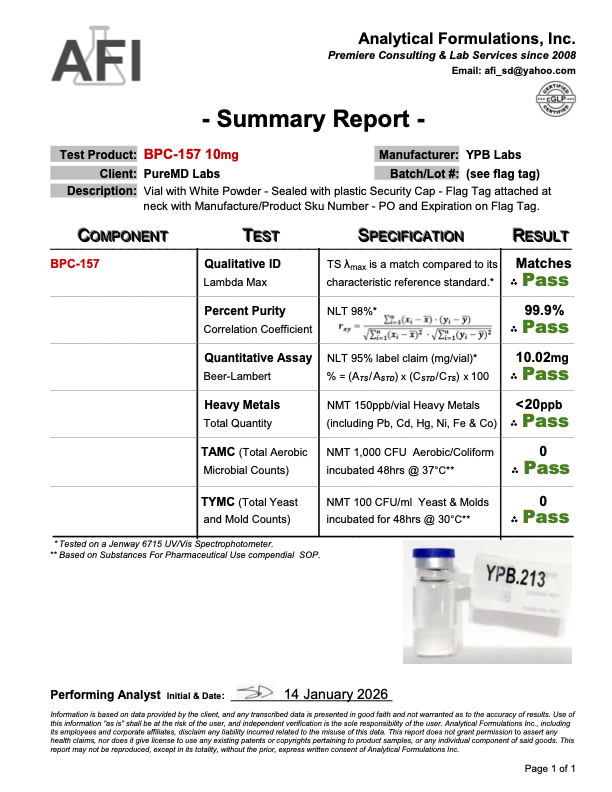
A practical guide to peptide certificates of analysis: what HPLC, mass spectrometry and UV-Vis results mean, how to read purity and assay numbers, and which red flags to watch for.
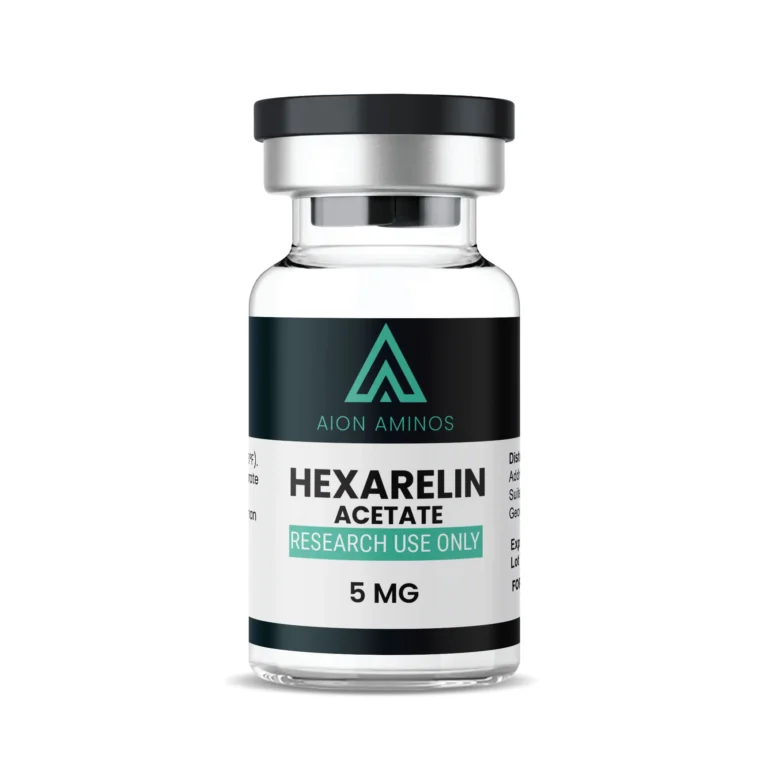
Hexarelin acetate explained for researchers: structure, receptor targets including GHS-R1a and CD36, key preclinical findings and the limits of the evidence.
New to Aion? Use the code below at checkout and save 25% on your first purchase.
Valid on first purchase only. One use per customer. Cannot be combined with other offers.