$97.00 – $260.00Price range: $97.00 through $260.00
You’ll be briefly redirected to Link Money, our secure ACH payment partner, to connect your bank and complete payment.
– Your bank login is never visible to or stored by us
– Encrypted, bank-level security
– A standard, trusted payment process
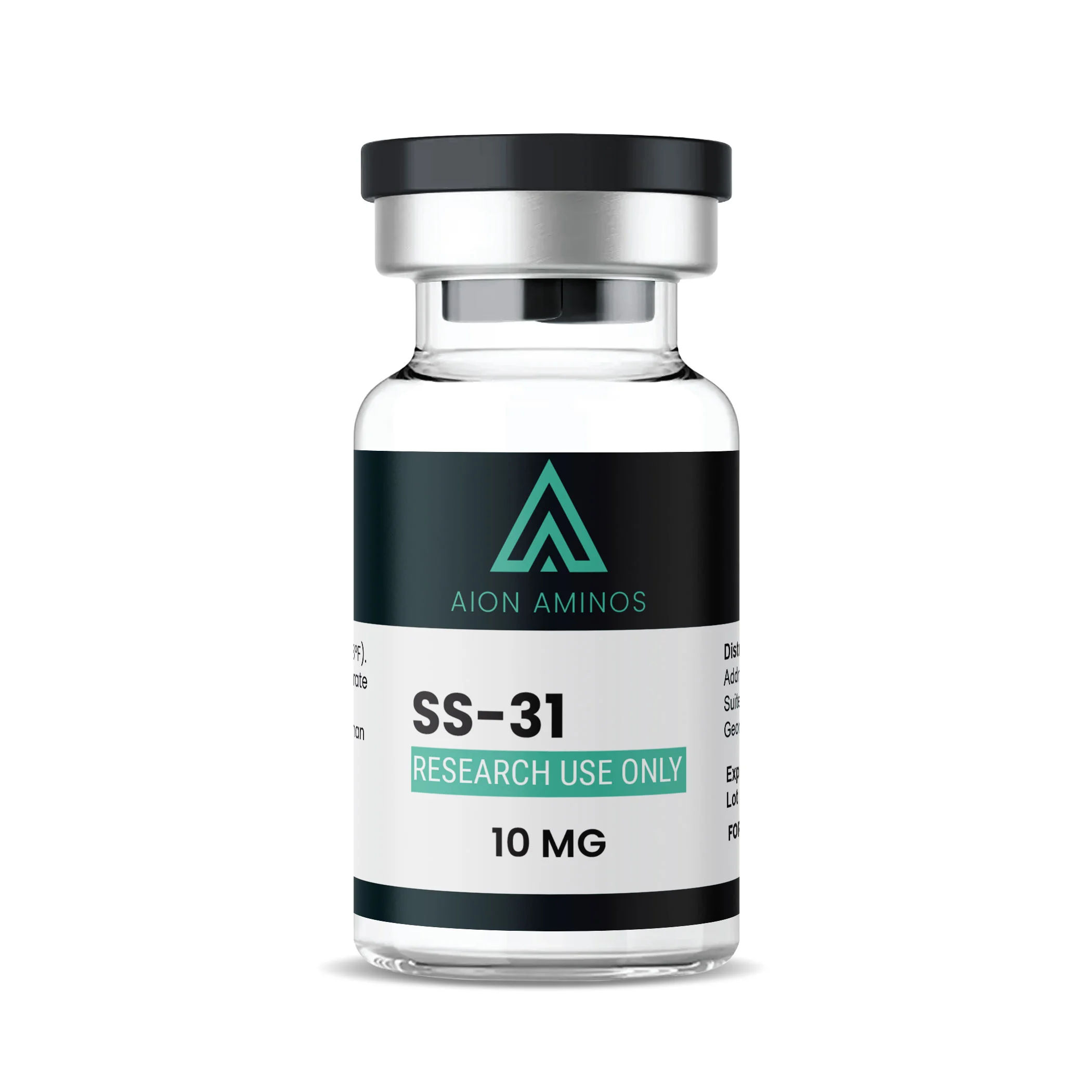
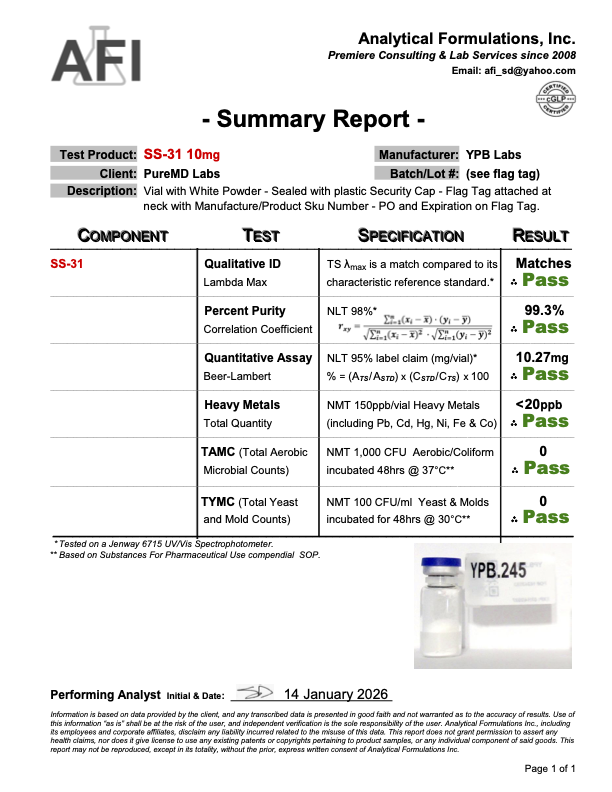
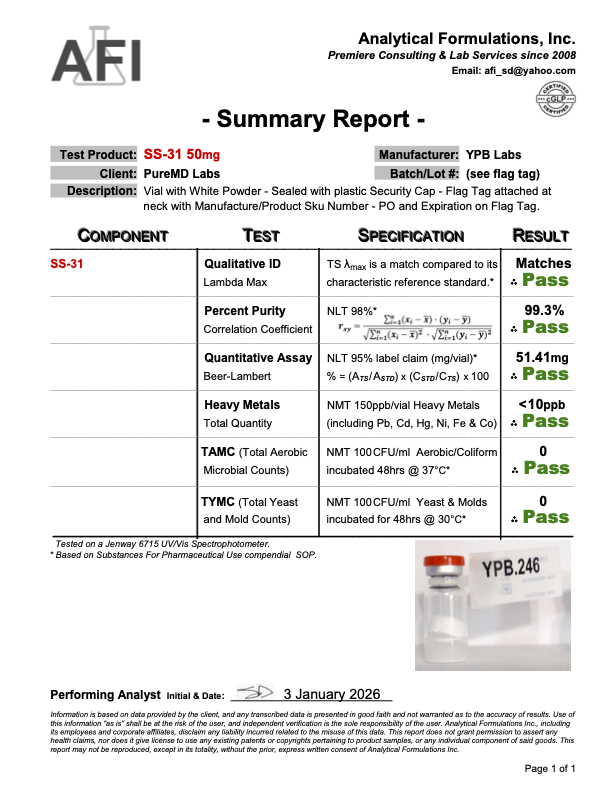
In controlled laboratory environments, SS-31 is widely used in mitochondrial research examining the structural and functional roles of cardiolipin within the inner mitochondrial membrane. Research indexed on Google Scholar frequently investigates how the peptide interacts with cardiolipin-rich regions of the mitochondrial membrane to study mitochondrial biology, mitochondrial respiration, and cellular bioenergetics.
Experimental studies often explore mechanisms involving reactive oxygen species, mitochondrial ROS, and pathways associated with oxidative stress and oxidative damage in cellular models. Investigations examine how cardiolipin interactions influence electron transport, complex I activity, and ATP production in isolated mitochondria and other laboratory systems.
Research literature also references experimental frameworks involving mitochondrial dysfunction, mitochondrial myopathy, and conditions associated with mitochondrial impairment, including studies involving primary mitochondrial myopathy and Barth syndrome models. These investigations remain confined to laboratory systems and do not represent approved medical use.
Additional studies examine mitochondrial morphology, mitochondrial dynamics, and cellular responses to mitochondrial oxidative stress, including experimental models evaluating cell death, redox homeostasis, and cellular adaptation to oxidative stress conditions. Some research references animal models, including work involving aged mice, to evaluate mitochondrial signaling in experimental systems.
SS-31 is a synthetic tetrapeptide studied in laboratory settings for its interaction with cardiolipin within the inner mitochondrial membrane and its role in mitochondrial signaling research.
Scientific literature indexed on Google Scholar commonly references SS-31 in studies investigating mitochondrial function, oxidative stress, reactive oxygen species, ATP production, and mitochondrial signaling pathways.
No. Although research literature may reference conditions such as mitochondrial myopathy, Barth syndrome, or heart failure, this product is not approved for treatment and is supplied strictly for laboratory research use.
No. This product is not intended for SS 31 administration, clinical use, or human consumption. It is provided solely as a research-grade peptide.
New to Aion? Use the code below at checkout and save 25% on your first purchase.
Valid on first purchase only. One use per customer. Cannot be combined with other offers.