$99.00
You’ll be briefly redirected to Link Money, our secure ACH payment partner, to connect your bank and complete payment.
– Your bank login is never visible to or stored by us
– Encrypted, bank-level security
– A standard, trusted payment process
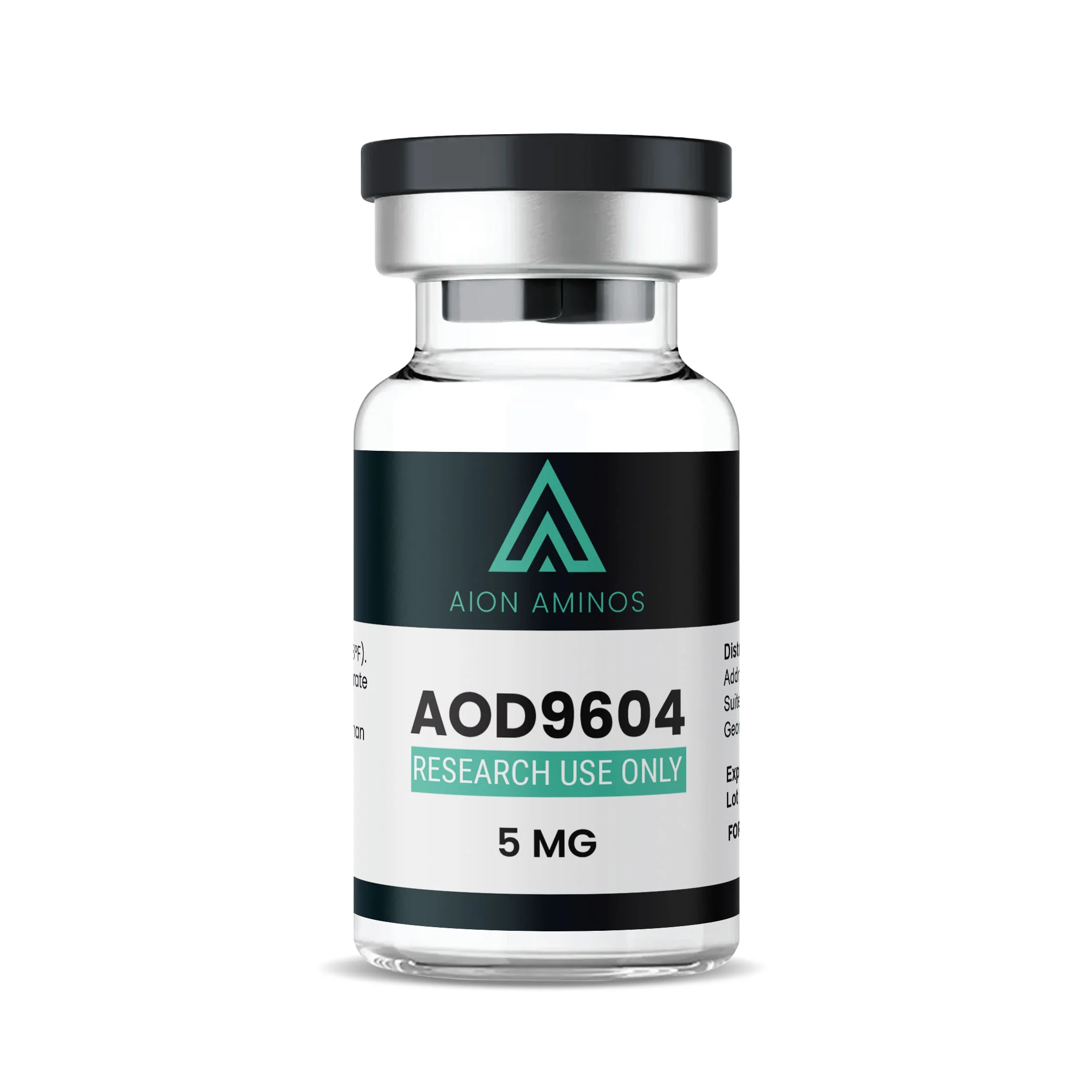
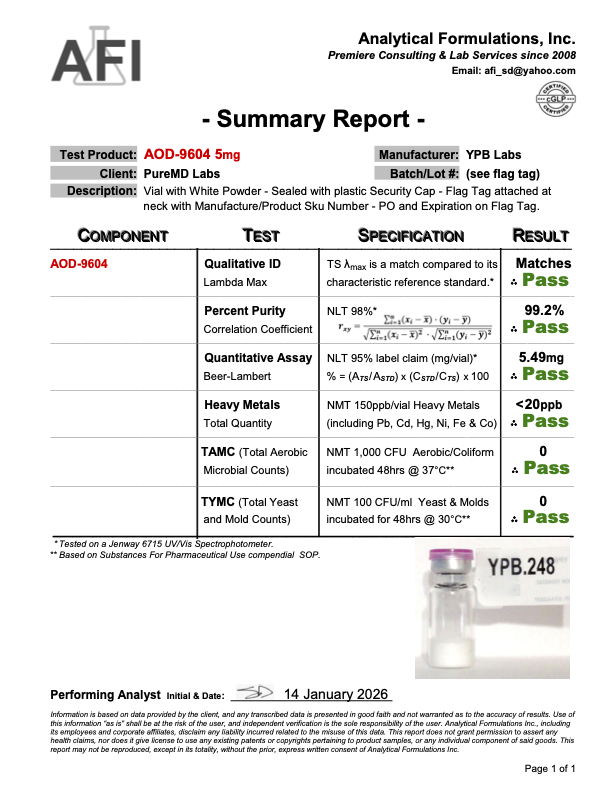
In laboratory environments, AOD9604 is studied to investigate cellular signaling pathways associated with metabolic regulation and energy balance. Researchers frequently examine how this peptide interacts with metabolic signaling networks involved in lipid metabolism and cellular energy utilization.
Experimental studies often analyze intracellular communication pathways regulating metabolic enzyme activity and biochemical signaling related to cellular energy processes. Investigations commonly evaluate how peptide fragments derived from human growth hormone interact with metabolic pathways involved in energy regulation.
Scientific literature also references research frameworks examining metabolic signaling models and cellular responses to peptide-mediated signaling within metabolic regulatory systems. These investigations remain confined strictly to laboratory research contexts and do not represent approved therapeutic use.
Not intended for human consumption or therapeutic use
AOD 9604 is used in laboratory studies to investigate fat metabolism, lipolysis, fat breakdown, and stored fat regulation. Researchers also study its effects on metabolic function, metabolism, energy expenditure, insulin sensitivity, and insulin resistance. It is strictly for research purposes and not for human consumption.
This synthetic peptide is supplied as a lyophilized powder for stability. Researchers reconstitute it for in vitro studies, examining fat burning, fat reduction, stubborn fat deposits, and peptide therapy interactions. It is also used in AOD 9604 peptide therapy research, peptide treatment, and studies of blood sugar and blood sugar levels.
AOD 9604 supports laboratory investigations into weight, weight loss, significant weight loss, energy expenditure, metabolic pharmaceuticals, and anti obesity drug pathways. It is studied in mice, preclinical models, and referenced in clinical trials and clinical evidence to understand metabolic function, IGF 1 levels, and IGF 1 LR3 interactions. Researchers also explore its effects on joint health, chronic treatment, and peptide therapy mechanisms.
AOD 9604 peptide works by targeting molecular pathways involved in lipolysis and fat tissue metabolism without triggering the IGF-1 receptor. It is used to study fat loss, weight loss journey, fat accumulation, metabolic function, metabolism, energy expenditure, and the peptide’s role in peptide treatment and peptide therapy research. Its molecular weight and amino acid sequence are well-characterized, making it suitable for synthetic peptide laboratory applications.
New to Aion? Use the code below at checkout and save 25% on your first purchase.
Valid on first purchase only. One use per customer. Cannot be combined with other offers.