

SLU-PP-332 and the Exercise Mimetic Label That Overshoots the Data
Search for SLU-PP-332 and you will find the phrase exercise in a bottle within the first three results. That framing did not come from the
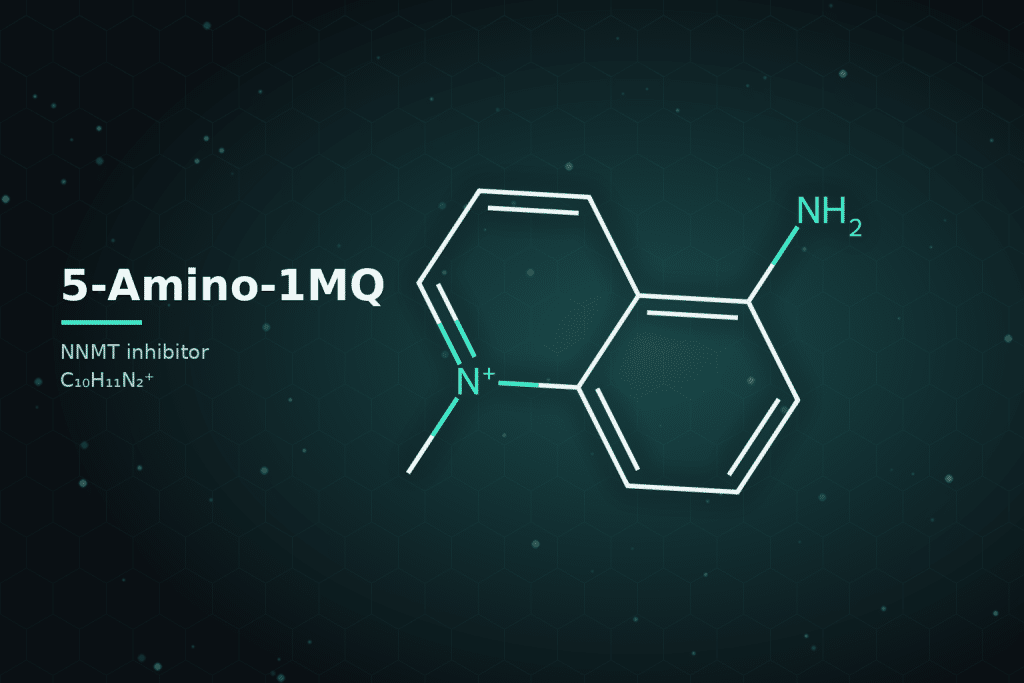
5-Amino-1MQ (5-amino-1-methylquinolinium) is a small molecule studied in laboratory research as an inhibitor of nicotinamide N-methyltransferase (NNMT), an enzyme that sits at the crossroads of cellular energy metabolism and methylation balance.
Although it is often grouped with research peptides, 5-Amino-1MQ is not a peptide. It is a compact, positively charged quinolinium compound that was designed to fit the binding pocket of NNMT. Its appeal in research comes from what NNMT does: by consuming nicotinamide and methyl groups, the enzyme influences two pools that cells depend on, NAD+ and S-adenosylmethionine (SAM).
Most of the published work on 5-Amino-1MQ comes from preclinical models of diet-induced obesity and age-related muscle decline. This article summarizes what that research describes, how the proposed mechanism works, and where the evidence currently stops.
Nicotinamide N-methyltransferase is a cytosolic enzyme expressed mainly in the liver and in adipose tissue, with lower levels in skeletal muscle and other tissues. It catalyzes a single reaction: it transfers a methyl group from SAM onto nicotinamide, a form of vitamin B3.
That reaction produces two outputs:
Because nicotinamide is the starting material for the NAD+ salvage pathway, and SAM is the main methyl donor for DNA, histone and protein methylation, NNMT activity can act as a metabolic drain on both. In simple terms, every nicotinamide molecule that NNMT methylates is one that is no longer available for recycling into NAD+.
Interest in NNMT grew after a 2014 study in Nature by Kraus and colleagues. The researchers reported that NNMT expression was elevated in white adipose tissue and liver of obese and diabetic mice. When they reduced NNMT expression in fat and liver using antisense oligonucleotides, the mice were protected against diet-induced obesity.
The study linked this effect to higher energy expenditure in adipose tissue. Knockdown raised tissue levels of SAM and NAD+ and increased flux through the polyamine pathway, a set of reactions that consumes energy. Oxygen consumption in fat cells rose in a way that depended on polyamine enzymes, which suggested that NNMT helps set how much energy adipocytes burn.
These findings positioned NNMT as a potential lever on adipose metabolism and prompted the search for small molecules that could block it directly.
5-Amino-1MQ belongs to a family of quinolinium analogs developed by researchers at the University of Texas Medical Branch. The team screened a series of related structures and identified quinolinium compounds that inhibit NNMT at low micromolar concentrations.
The compound resembles the nicotinamide substrate closely enough to occupy the enzyme’s binding site. It was described as selective for NNMT relative to related methyltransferases and as membrane permeable, meaning it can enter cells and act on the enzyme where it resides.
In laboratory models, the proposed mechanism follows directly from NNMT biology. When the enzyme is inhibited, less nicotinamide and SAM are consumed by the methylation reaction.
With NNMT blocked, more nicotinamide remains available to the NAD+ salvage pathway. In cultured adipocytes, NNMT inhibitors raised intracellular NAD+ levels. NAD+ is a central cofactor in energy metabolism and is required by sirtuin enzymes that regulate metabolic gene expression.
Inhibition also preserved intracellular SAM. Because SAM supplies methyl groups for many cellular reactions, researchers study how NNMT activity may shape the wider methylation environment, including epigenetic marks on histones.
As expected for an enzyme inhibitor, treated cells produced less 1-MNA. Researchers use this drop as a readout confirming that the compound is engaging its target.
The central study on this compound was published in Biochemical Pharmacology in 2018 by Neelakantan and colleagues. They treated mice with diet-induced obesity with a potent NNMT inhibitor from the quinolinium series and reported:
The unchanged food intake is notable for researchers because it points to effects on how tissue handles energy rather than on appetite.
A 2022 study in Scientific Reports by Dimet-Wiley and colleagues combined 5-Amino-1MQ with a reduced calorie diet in obese mice. The combination brought adiposity measures down to levels comparable to lean control mice, which diet change alone did not achieve within the study period. The treated mice also developed a distinct gut microbiome profile, including shifts in Lactobacillus and Erysipelatoclostridium abundance.
NNMT is also expressed in skeletal muscle, and its levels have been reported to rise with age. That observation led the same research group to test 5-Amino-1MQ in models of age-related muscle decline.
In a 2019 study in Biochemical Pharmacology, 24-month-old mice received the NNMT inhibitor after an experimental muscle injury. Compared with controls, treated mice showed:
Cell culture work in C2C12 myoblasts supported these results, with enhanced differentiation and shifts in NAD+/NADH redox balance.
A 2024 follow-up in Scientific Reports examined aged mice with and without an exercise program. Sedentary mice given 5-Amino-1MQ showed roughly 40 percent greater grip strength than sedentary controls, and combining the compound with exercise produced larger gains than either intervention alone. Proteomic and metabolomic analyses suggested that the compound and exercise acted through partly distinct molecular pathways.
The findings above are consistent and mechanistically coherent, but they come with clear limits:
5-Amino-1MQ is not approved by the FDA or any other regulator for human use.
This research compound is supplied as lyophilized powder in sealed vials for laboratory use.
Experimental concentrations are determined by the investigator for their own model system. Because this material is sold strictly for research purposes, no dosing guidance is provided.
View product details for 5-Amino-1MQ.
Investigators studying NAD+ metabolism and metabolic signaling often work with complementary compounds.
5-Amino-1MQ, MOTS-c and SLU-PP-332 are also available together in the Metabolic Optimization Stack. For a side-by-side introduction to all three, see Peptides for Metabolism Explained.
5-Amino-1MQ is a small molecule inhibitor of NNMT, an enzyme that methylates nicotinamide and in doing so draws on the cell’s NAD+ and SAM pools. In mouse models, inhibiting NNMT with this compound reduced body weight and fat mass without changing food intake, and improved muscle regeneration and strength in aged animals. These results make NNMT a well-defined target in metabolic and aging research, while human data, long-term safety and independent replication remain open questions.
For Research Use Only (RUO).
This product is intended strictly for laboratory research and educational purposes. 5-Amino-1MQ is not approved for human or veterinary use and is not intended to diagnose, treat, cure or prevent any disease. Nothing on this page is medical advice, and no statement here should inform decisions about weight, metabolism, muscle health or any other aspect of personal health.
Search for SLU-PP-332 and you will find the phrase exercise in a bottle within the first three results. That framing did not come from the

Every cell in the body runs on a molecule most people have never heard of. It is not a hormone, it is not a protein,
Product Overview MOTS-c is a mitochondrial derived peptide studied in laboratory research on metabolic signaling pathways, mitochondrial communication and cellular energy regulation. Unlike most peptides
New to Aion? Use the code below at checkout and save 25% on your first purchase.
Valid on first purchase only. One use per customer. Cannot be combined with other offers.