LL-37 is a synthetic 37–amino acid peptide derived from the human cathelicidin antimicrobial protein (hCAP18). It is commonly studied for its role in innate immune response, antimicrobial activity, and cellular signaling pathways.

$67.00
You’ll be briefly redirected to Link Money, our secure ACH payment partner, to connect your bank and complete payment.
– Your bank login is never visible to or stored by us
– Encrypted, bank-level security
– A standard, trusted payment process
LL-37 is a synthetic 37–amino acid peptide derived from the human cathelicidin antimicrobial protein (hCAP18). It is commonly studied for its role in innate immune response, antimicrobial activity, and cellular signaling pathways.
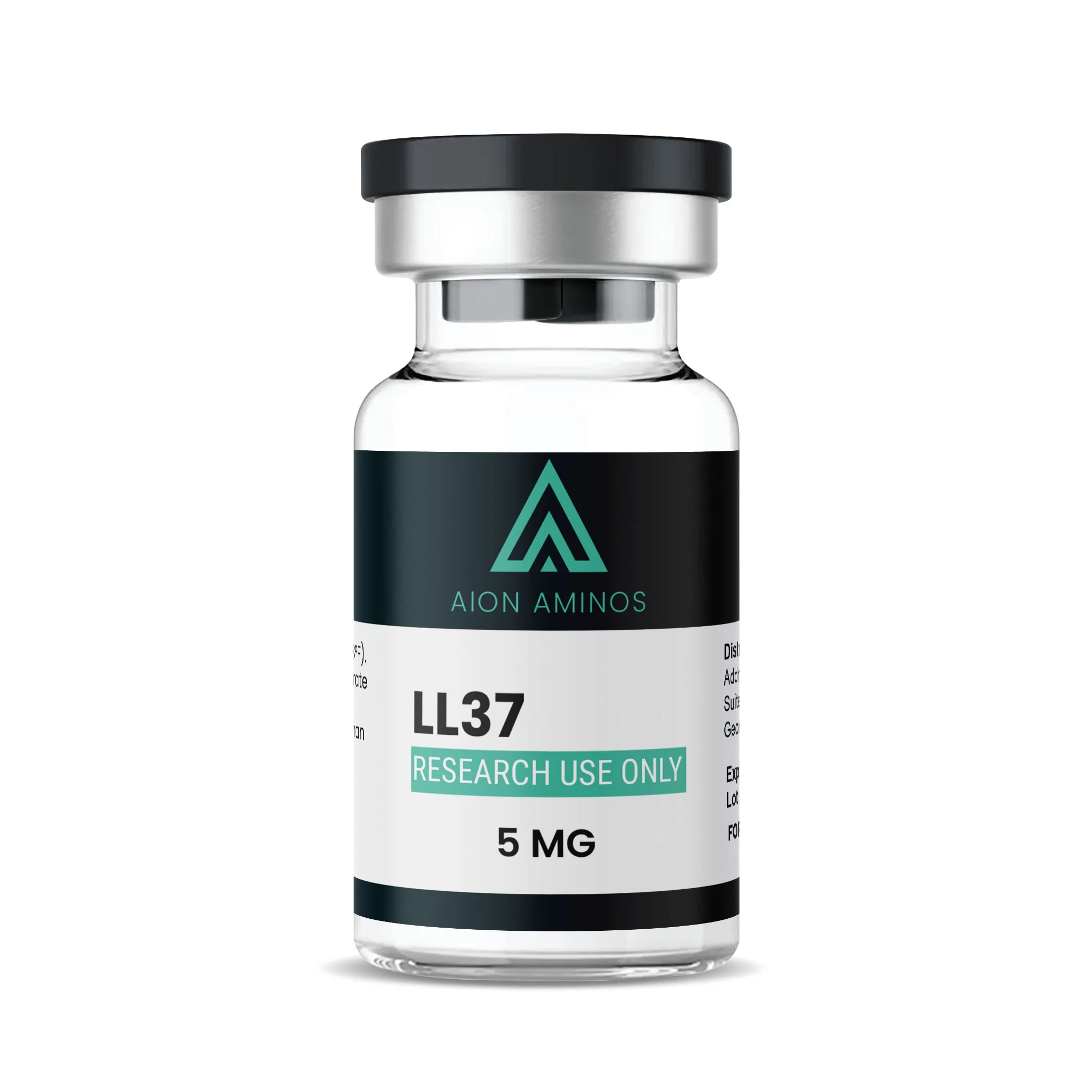
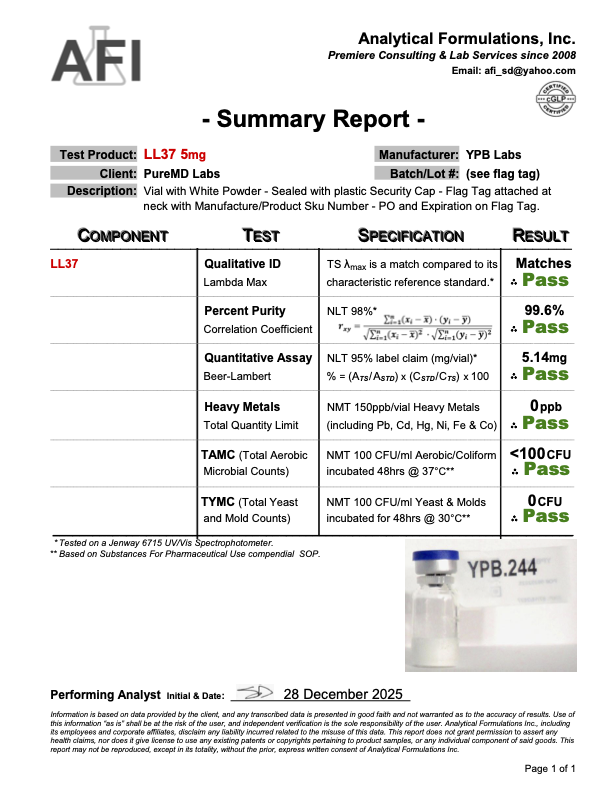
In controlled laboratory environments, LL-37 is used in experimental research examining mechanisms of antimicrobial activity and antimicrobial defense, along with broader host defense and innate immunity pathways. Studies indexed on Google Scholar reference LL-37 in investigations involving regulation of immune response and overall immune system signaling, including interaction with microbial organisms such as S aureus.
Research models frequently evaluate this peptide in various cells, including epithelial cells, immune cells, dendritic cells, and T cells. Additional experimental systems examine inflammatory response, chronic inflammation, and excessive inflammation in vitro. Published literature also discusses laboratory investigations involving cancer cells, chronic infections, and extracellular traps, as well as gene expression research related to vitamin D, human cathelicidin, and associated signaling pathways.
Comparative laboratory studies may evaluate an LL 37 derivative alongside other research peptides such as Thymosin Alpha 1 within experimental frameworks. All references to these areas are strictly limited to laboratory and research contexts.
LL-37 is a synthetic 37–amino acid peptide corresponding to the active fragment of human cathelicidin LL 37, derived from the cathelicidin antimicrobial peptide (hCAP18). It is classified as a human antimicrobial peptide and is widely referenced in academic research indexed on Google Scholar.
LL-37 belongs to the family of cationic antimicrobial peptides. As an antimicrobial peptide LL 37, it has documented antimicrobial activity in laboratory research and is studied for its involvement in host defense and innate immunity mechanisms.
Research publications available on Google Scholar associate LL-37 with studies on antimicrobial resistance, immune modulation, inflammatory response, and signaling in multiple types of cells within the immune system, including dendritic cells and T cells, as well as investigations involving S aureus and conventional antibiotics.
No. LL-37 is sold strictly for laboratory and research purposes only. It is not for human consumption and is not intended to diagnose, treat, cure, or prevent any disease.