$58.00
You’ll be briefly redirected to Link Money, our secure ACH payment partner, to connect your bank and complete payment.
– Your bank login is never visible to or stored by us
– Encrypted, bank-level security
– A standard, trusted payment process
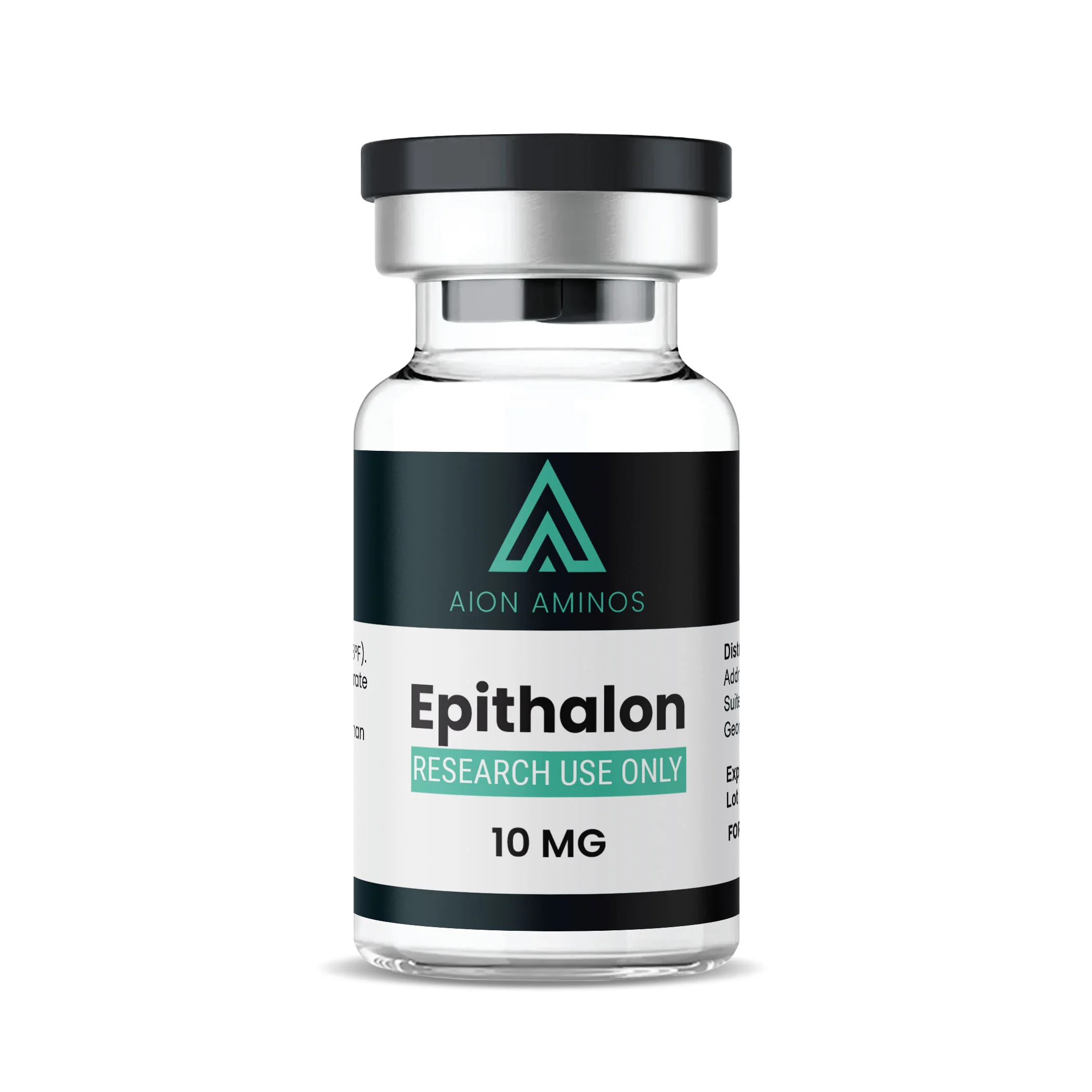
The Epithalon peptide is studied for its role in cellular aging, telomerase activity, and gene regulation. Research focuses on how this peptide interacts with telomeres and telomerase—protective structures at the ends of chromosomes that influence cellular senescence, lifespan, protein synthesis, mitochondrial function, and oxidative stress response in preclinical and cell-based models.
Epithalon research is most commonly associated with Professor Vladimir Khavinson and collaborators including Malinin VV, V. N. Anisimov, Linkova N, and Trofimova S. Their findings have been published in peer-reviewed journals such as Bulletin of Experimental Biology and Medicine and Neuroendocrinology Letters, contributing to the experimental understanding of peptide signaling and aging mechanisms.
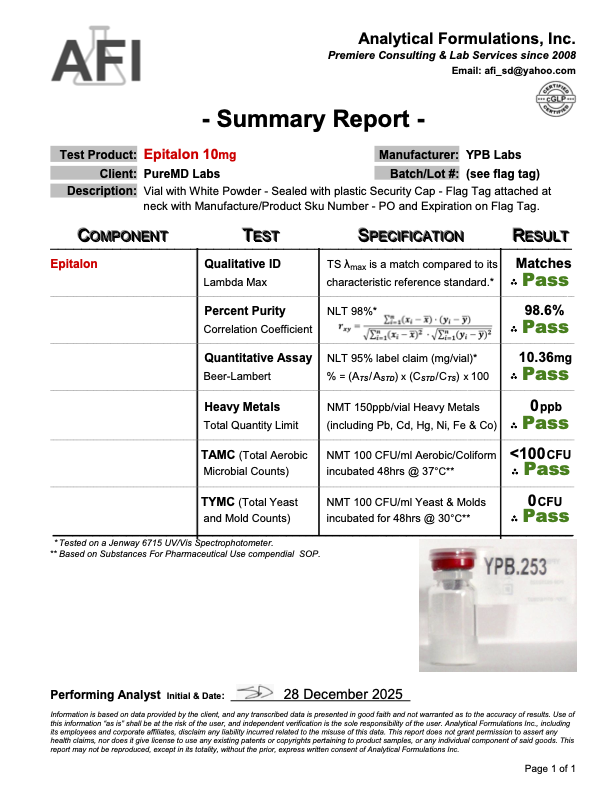
In experimental settings, the Epitalon peptide has been examined for its influence on telomere length and telomerase activation. These studies explore how changes in telomerase signaling may affect cellular regeneration, immune markers, spontaneous tumor development, and cellular health in animal models and cultured human somatic cells. All findings remain investigational and mechanistic in nature.
No. Epithalon is not approved for medical treatment, diagnosis, or human consumption. Although some literature may reference Epithalon or peptide therapy, Aion Aminos supplies the Epithalon peptide solely for laboratory research purposes. The peptide is a tetrapeptide (AEDG sequence) provided as a lyophilized powder and is handled according to institutional research protocols, without dosing or administration guidance.