
$97.00
You’ll be briefly redirected to Link Money, our secure ACH payment partner, to connect your bank and complete payment.
– Your bank login is never visible to or stored by us
– Encrypted, bank-level security
– A standard, trusted payment process
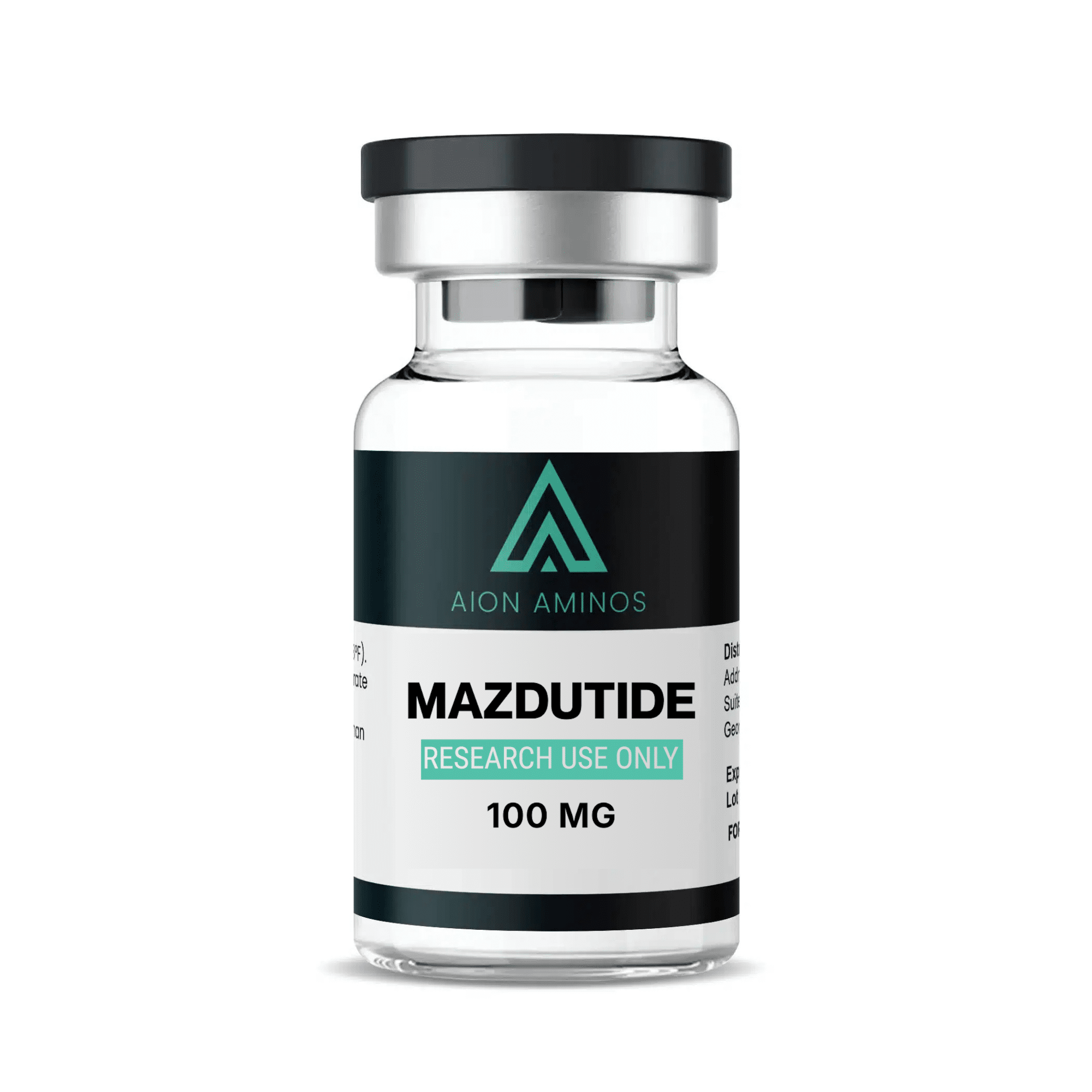
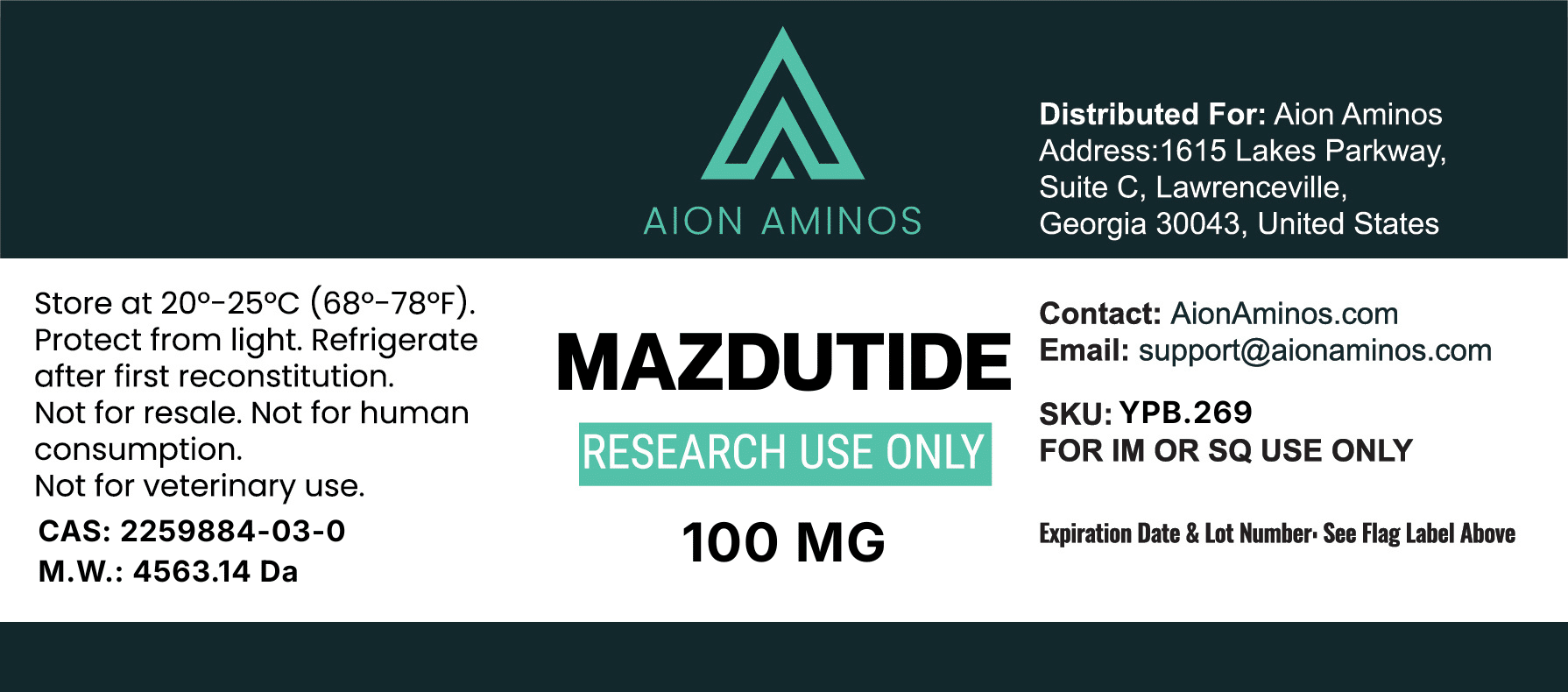
Mazdutide is used by researchers as a reference dual agonist in studies examining receptor signaling in metabolic pathways. In published clinical trials and clinical studies — including a phase 3 study, the DREAMS-1 study, and various controlled trial designs — mazdutide has been characterized as a glucagon receptor agonist and GLP-1 receptor agonist. This body of research, sourced from Innovent Biologics and referenced in journals such as Nature Communications, the New England Journal of Medicine, and Diabetes Res Clin Pract, documents the compound’s clinical development history.
Published clinical research in Chinese adults, Chinese patients, and Chinese participants — including T2D patients and adults evaluated against placebo — has examined mazdutide endpoints such as changes in body weight, weight management, HbA1c 7 thresholds, and a primary endpoint of weight reduction. Reported findings describe once weekly mazdutide dosing in humans within these trials (for example, 6 mg arms) alongside safety profile and adverse event data and standard forward looking statement disclosures. These references describe third-party human clinical trials and are provided as neutral scientific context only; Aion Aminos does not sell mazdutide for any such use.
Additional research references examine mazdutide in the context of metabolic endpoints such as fatty liver and liver fat, appetite suppression mechanisms, and preclinical models. Academic work associated with investigators such as Dr. Lei Qian and Ji L, and research institutions including MD Anderson Cancer Center, has contributed to the published literature. A citation manager reference list is available to support researchers reviewing the phase clinical data. All work described here relates to laboratory research use and published third-party studies only, and is not intended to diagnose, treat, cure, or prevent any disease.
Mazdutide is a synthetic acylated peptide analog supplied as a lyophilized powder for laboratory research purposes.
Peptide type: GLP-1 receptor / glucagon receptor dual agonist peptide (synthetic reference compound)
Class: Fatty-acid acylated peptide analog
Molecular weight: Approximately 4800 g/mol (verify against Certificate of Analysis)
Form: White lyophilized powder
Storage: Store lyophilized powder cold; avoid prolonged exposure at ambient conditions such as 28 °C
Purity: Verified for laboratory research use
The molecular characteristics listed above describe mazdutide as a reference peptide for research use. This synthetic peptide is not a dietary supplement and is intended solely for laboratory research. Aion Aminos supplies mazdutide strictly for laboratory research use by qualified researchers.
Mazdutide is a synthetic dual agonist peptide studied for its documented association with the GLP-1 receptor and glucagon receptor. Developed by Innovent Biologics under a license from Eli Lilly, it is referenced widely in metabolic research literature. Aion Aminos supplies it as a lyophilized powder for laboratory research use only.
This peptide is commonly used in laboratory settings to investigate neutral mechanisms of receptor agonist signaling in metabolic pathways. Published third-party clinical trials in Chinese adults and T2D patients have studied endpoints such as body weight and HbA1c 7, including the DREAMS-1 study and other phase 3 study designs. It is not intended for human use.
Mazdutide has received NMPA approval in China through the National Medical Products Administration for human clinical use as developed by Innovent Biologics. However, the mazdutide supplied by Aion Aminos is a research-grade peptide sold strictly for laboratory research use only and is not for human consumption.
No. This mazdutide is sold strictly for laboratory research use and is not a dietary supplement or approved product for use in the United States. It is not intended for diagnostic or therapeutic use and is not for human consumption. Buyer assumes full responsibility for proper handling and research use.
New to Aion? Use the code below at checkout and save 25% on your first purchase.
Valid on first purchase only. One use per customer. Cannot be combined with other offers.